
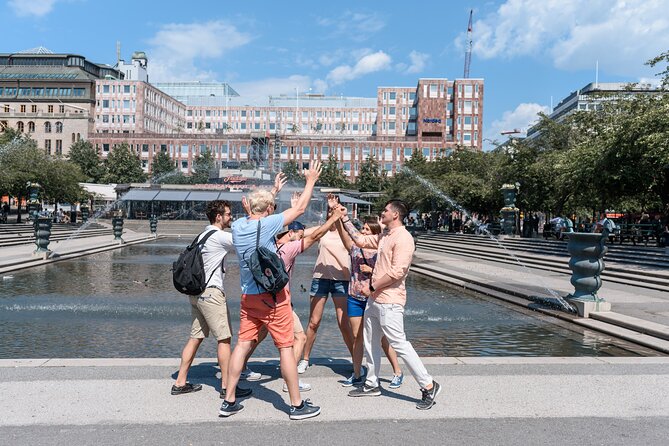
REVIEW · STOCKHOLM
CityQuest in Stockholm – To See Stockholm and Die
Stockholm has a way of turning ordinary streets into something story-like. This CityQuest lets you see the city as a detective agency, solving clues as you walk between famous landmarks. You get a ready-made set of evidence at the start, plus access to a case journal online as the mystery unfolds.
Two things I especially like: the route is time-managed (about 2.5 hours), and the challenge does not require specialist knowledge to enjoy. One drawback to keep in mind is that it depends on your own phone and working internet, and a tech issue at the start can ruin your day if you are not prepared.
In This Review
- Key things to know before you start
- From Centralstation to the Royal Opera: how this quest moves
- Price and value: what $20.31 gets you
- Your case file: evidence, a journal, and how the “murder mystery” works
- Stop-by-stop: what each location adds to the mystery
- Stop 1: The Royal Swedish Opera
- Stop 2: Royal Academy of Fine Arts
- Stop 3: Kungstradgarden
- Stop 4: Karl XII staty at Kungstradgarden
- Stop 5: Statue of Nils Ericson
- Stop 6: Sergels Torg
- The phone and the web journal: what you should plan for
- How this works for different travel styles
- Weather, timing, and where the quest fits in your day
- Support and reliability: the one thing to respect
- My take: should you book CityQuest in Stockholm?
- FAQ
- How long is the Stockholm CityQuest experience?
- Where does the quest start?
- Where does the quest end?
- What do I receive when I book?
- What do I need to bring?
- How do I play the game during the quest?
- Is it a group tour or private for my party?
- Can I cancel for a refund?
Key things to know before you start

- Smartphone-first gameplay: you use your phone for the quest experience and to access the criminal journal web application.
- A real storyline, not random tasks: the case has a narrative that drives you stop to stop.
- From Centralstation area to Royal Opera: the investigation starts near Centralplan and wraps near the Royal Opera.
- Plenty of sightseeing built in: each clue lands you at major sights like the Royal Swedish Opera and Sergels Torg.
- Private for your group: only your party participates, so you can move at your own pace within the game timer.
Stockholm is a big menu. Here is what else we tried
- Stockholm: City Archipelago Sightseeing Cruise with Guide★ 4.3 · 10,798 reviews
- Stockholm: Skansen Open-Air Museum Admission Ticket★ 4.5 · 3,427 reviews
- Stockholm: Archipelago Boat Tour★ 4.4 · 3,110 reviews
- Stockholm: Highlights Boat Tour★ 4.3 · 2,542 reviews
From Centralstation to the Royal Opera: how this quest moves

CityQuest is built like a walking investigation. You start in the Centralplan 15 area, then follow clues through central Stockholm, working toward a final mystery by the time runs out.
The structure is straightforward. You begin with a set of evidence and simple instructions. Then you move through the city as your phone guides you to the next clue, with a web-based criminal journal that supports the case as you go. In practice, that means you are not just sightseeing, you are constantly making decisions: which hint matters, which direction makes sense, and how your answers line up with the case.
One nice part of this format is pacing. At about 2 hours 30 minutes, it fits well into a weekend plan when you want activity without committing to a full day.
Price and value: what $20.31 gets you
At about $20.31 per person, this is priced for people who want a game-based way to tour the center rather than hire a guide for a whole morning.
You are paying for three things:
- The evidence pack and instructions that kick off your mission
- Access to the criminal journal web application
- The timed structure that turns walking between sights into a solvable challenge
What you do not pay for is also important. The listing says you need your own mobile phone and you need internet connection. So your real cost is not just money. It is also having the setup that lets the app and journal work smoothly.
If you go with friends or family who enjoy puzzles, this format can feel like a strong value. It turns iconic spots into checkpoints, and it gives you a goal so the walk does not feel like wandering.
Your case file: evidence, a journal, and how the “murder mystery” works
The basic premise is detective work with a Stockholm twist. You and your team are investigating a mysterious murder of a Russian scientist who came to visit Stockholm as a tourist. The game pushes you to figure out whether it was bad luck and wrong place, wrong time, or something more intentional.
At the start, you receive a set of evidence designed to help you navigate and answer questions later. You also get access to a web application with the case journal, which supports your reasoning as you move through town.
The game ends with a summary of what happened, so you can compare what you answered against the final outcome. That is a satisfying finish because it turns the ending into a payoff, not just a walk that stops when time runs out.
Two practical tips to make this work well:
- Start with a plan for team roles. One person can handle phone reading, another can spot clues on the street, and someone else can keep track of answers.
- Pay attention to details near each monument or square. The puzzle logic is built on what you can notice on-site, not just what you already know.
Stop-by-stop: what each location adds to the mystery
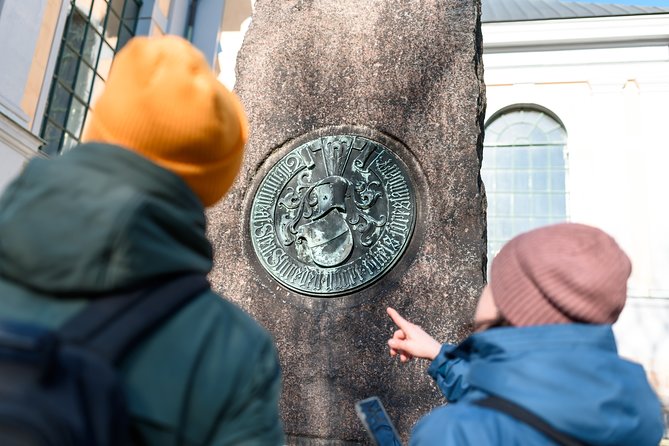
The route is anchored in central Stockholm. You are guided through key sites that are visually memorable, which helps when you are moving fast and trying to stay focused on clue hunting.

Stop 1: The Royal Swedish Opera
Your quest begins at the Royal Swedish Opera. This is a strong starting point because it is instantly recognizable and easy to orient around.
As a puzzle location, it works because you get a chance to calibrate. In the early stage, you will likely be learning how the evidence and phone prompts fit together. Use this first stretch to get your team rhythm: where to look, how to interpret the clue prompt, and how quickly you should move.
Potential drawback: if you start at a busy time, you may find distractions around the area. Keep the group together and check your phone before stepping into the flow of foot traffic.
Stop 2: Royal Academy of Fine Arts
Next you head to the Royal Academy of Fine Arts. This stop adds a more academic, architectural vibe to the story. It also gives you a change of scenery so the quest does not feel repetitive.
In detective terms, this is the kind of location that can support clues connected to symbols, plaques, and visual details. Even if you do not have strong art history knowledge, you can still benefit by using your eyes and teamwork.
Stop 3: Kungstradgarden
Kungstradgarden is one of those central Stockholm spaces that feels like a natural breathing point. For the quest, that matters. You need spots where you can slow down and actually think.
This is a place where I would expect your team to pause, read prompts carefully, and compare what you think you learned at earlier stops. The garden setting gives you a calm moment in an otherwise puzzle-driven schedule.
Stop 4: Karl XII staty at Kungstradgarden
Here you meet the Karl XII statue. Statues are built for close looking, and that is exactly what clue-based walking tours need.
From a game perspective, statues are useful because they create obvious “anchor points.” If you are trying to confirm you are in the right place while the timer runs, a statue does the job.
Practical note: if you have limited time and you are stuck on a clue, do not circle the area endlessly. Take a minute, check what the clue is asking, then move with purpose.
Stop 5: Statue of Nils Ericson
The statue of Nils Ericson keeps the quest in the realm of strong public landmarks. This helps you maintain orientation as the story develops.
It is also a good moment to verify how your team is answering questions. If you start making guesses early, you might regret it later. Treat each statue as both a location check and a reasoning check.
Stop 6: Sergels Torg
Finally, the action reaches Sergels Torg. This is a major square area, which makes it a logical place to wrap up a timed city puzzle.
When you solve the final mystery, this is where the “detective work” feels like it hits its climax. It also gives you a sense of completion because Sergels Torg is a place you recognize as central, which makes it easier to connect the quest ending to the rest of your day in Stockholm.
The phone and the web journal: what you should plan for
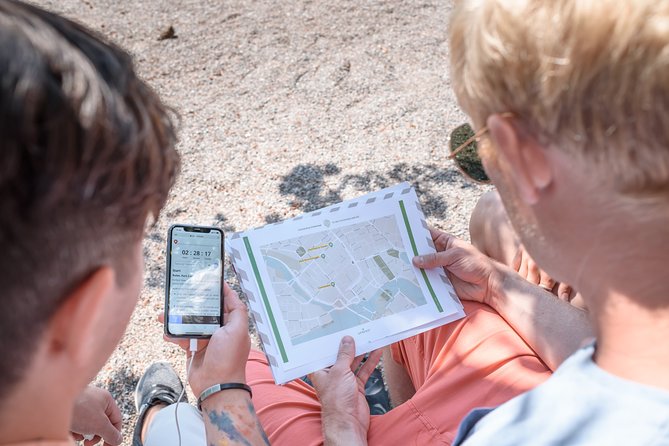
This is a mobile ticket quest, and it relies on a cellphone app plus a web application for the criminal journal. The listing explicitly says mobile phone and internet connection are not included, which is a big deal.
So go prepared:
- Bring a fully charged phone. A 2.5-hour walk can chew through battery if the screen stays bright.
- Make sure you have a plan for internet access. The criminal journal is web-based, so you need connectivity to use it.
If you want this to feel fun instead of stressful, treat setup time as part of the activity. Before you start walking in earnest, open the materials, confirm you can access the journal, and test the app flow once.
Also, keep in mind that the earliest stage matters. If your link or instructions do not arrive right away, your whole mystery may feel stuck. I like having a backup mindset: if anything looks wrong at the start, you want to sort it quickly so your timer does not punish you.
How this works for different travel styles
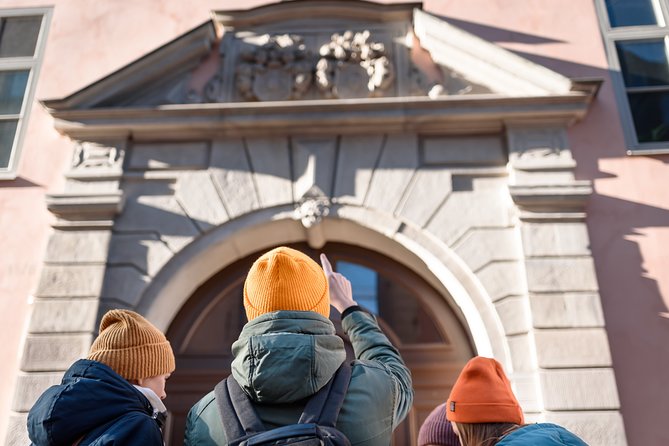
This quest fits a specific kind of traveler: people who like puzzle challenges while walking, and people who want to see a concentrated part of the city without paying for a guided tour.
It is a good fit if:
- You enjoy detective stories, escape-room style logic, or team problem solving
- You want outdoor sightseeing instead of being stuck indoors
- You like an activity with a clear start and finish rather than an open-ended itinerary
It might be less ideal if:
- You hate using your phone while walking
- Your internet connection is unreliable
- You want a traditional guided explanation of history at each site (this is more about solving a case than listening to a lecture)
The good news is that the mission is designed to be enjoyable without needing deep local expertise. You will still have to look closely, but you are not expected to already know Stockholm’s answers.
Weather, timing, and where the quest fits in your day
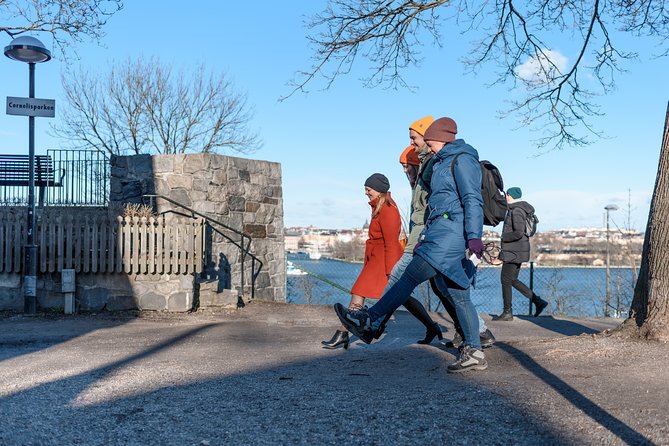
The experience says it requires good weather. That makes sense with a 2.5-hour walk through open-air streets and squares.
For scheduling, I like putting it in the afternoon or early evening when you want something active but not exhausting. The listing also shows broad operating hours, running essentially all day in the listed schedule, so it is usually easier to slot in.
If your schedule is tight, aim to arrive at the start area with a little buffer. Even if everything works, puzzle games still take time to coordinate.
One more planning point: the route description says you start at Centralstation and finish next to the Royal Opera. The meeting point notes also state the activity ends back at the meeting point. That usually translates into a loop back near where you started, with the official “game finish” described near the Royal Opera. In real life, bring a little flexibility, because city routes do not always map perfectly onto one straight line.
Support and reliability: the one thing to respect
Most of the feedback I’m taking from the experience is positive about the app and story flow, including quick responsiveness and friendly help when things go right. That matters, because quest gameplay depends on working instructions and a functional app.
But there are also clear cautionary stories. One account described a no-show with no instructions delivered, and a disconnected contact number in their situation, which led to hours wasted. Another account involved a technical issue with the game link not being sent, and the provider response indicated a rescheduling offer and platform upgrades.
So here is my practical advice: once you book, treat your confirmation and instructions as urgent. Check them early, not at the last minute. If you do not see what you need, contact support as soon as possible so you can fix it before your planned start time.
That small step can turn a potential bad morning into a smooth game.
My take: should you book CityQuest in Stockholm?
I’d book it if you want a fun, puzzle-driven way to see central Stockholm in about 2.5 hours. The story setup and the clue structure make it more engaging than a normal walk, and the landmarks are perfect for orientation and quick teamwork.
I would think twice if you are phone-shy, traveling with poor connectivity, or you are the type who hates technical uncertainty. In those cases, the requirement for your own phone and internet matters more than the price.
If you do book, bring patience and a charged phone, and you will have a better shot at solving the mystery and actually enjoying the walk.
FAQ
How long is the Stockholm CityQuest experience?
It runs for about 2 hours 30 minutes.
Where does the quest start?
The start location is Centralplan 15, 111 20 Stockholm, Sweden.
Where does the quest end?
The mission finishes next to the Royal Opera, and the activity is listed as ending back at the meeting point.
What do I receive when I book?
You get instant confirmation at booking time.
What do I need to bring?
You need your own mobile phone and internet connection. A mobile phone and internet are not included.
How do I play the game during the quest?
You receive a set of evidence and simple instructions at the start, then you use a phone app to access a criminal journal web application as you explore.
Is it a group tour or private for my party?
It is a private tour/activity, so only your group participates.
Can I cancel for a refund?
Yes, free cancellation is available. You can cancel up to 24 hours in advance for a full refund, but cancellations within 24 hours are not refunded.
Reviewed Across Sweden





Stockholm, A Few More Ways
Other Swedish trips from the review pile
- ROYAL Castle Skokloster and Viking Sigtuna (private tour)
★ 4.5 · 3 reviews - Stockholm Port to Stockholm Arlanda Airport (ARN) – Departure Private Transfer
★ 3.5 · 3 reviews - Stockholm Ghost Hunt: Self-Guided Tour and Puzzle Adventure
★ 4.5 · 3 reviews - Private Photography workshop in Stockholm
★ 5.0 · 3 reviews - Private blood, ghosts and folklore Old Town 2h Stockholm tour
★ 4.0 · 3 reviews - Ghosts of Stockholm: A Guided Tour of Horror and Dark Folklore
★ 4.5 · 3 reviews
Stockholm City Tours, compared.
 ★ 4.3City Archipelago Sightseeing Cruise with GuideFrom $4110,798 reviews
 ★ 4.5Skansen Open-Air Museum Admission TicketFrom $273,427 reviews
 ★ 4.4Archipelago Boat TourFrom $393,110 reviews
 ★ 4.3Highlights Boat TourFrom $392,542 reviews
 ★ 4.1Stockholm Pass: Save up to 50% – Includes Vasa Museum TicketFrom $952,392 reviews
 ★ 4.7Ghost Walk and Historical TourFrom $312,206 reviews
 ★ 5.0Walking Tour of Stockholm Old TownFrom $241,175 reviews
 ★ 4.5The Original Stockholm Ghost Walk and Historical Tour – Gamla StanFrom $381,165 reviews
Browse the lists this tour appears in