
REVIEW · DJURGåRDEN
Stockholm Pass: Save up to 50% – Includes Vasa Museum
This pass is built for museum marathons. The Vasa Museum inclusion plus phone-based QR code entry makes it an efficient way to stack major sights without standing in ticket lines all day.
I also like that you get a digital guide through the Go City app, so you can map your day in advance instead of guessing on the sidewalk. The pass is designed for self-paced touring, so you can choose what fits your energy.
One real drawback to think about is tech and timing. A few included options are seasonal, and some stops run on schedules where a missed time window can cost you extra if you are not set up with reservations when needed.
In This Review
- Key points before you go
- Stockholm Pass in plain terms: QR entry and your countdown clock
- Price and value math for a $101.70 per person pass
- How to plan your days: museum clusters that reduce transit stress
- Vasa Museum to royal landmarks: where the pass feels instantly useful
- Skansen and the Viking Museum: traditional Sweden, in two very different styles
- Grona Lund, ICEBAR, and oddball experiences that break up the museum grind
- Nobel Prize Museum and Fotografiska: modern culture with a Stockholm pulse
- Art and museums for different moods: from Nationalmuseum to ceramics and design
- Tekniska Museet and hands-on science that works for adults too
- Systrarna Andersson fika and the Spritmuseum stop for food-and-drink lovers
- Views at Globen Skyview and camera-friendly stops that reset your perspective
- Boats, canals, Birka, and Vaxholm: the archipelago day you will remember
- Hop-on, hop-off buses: useful for orientation, but check the operator
- Quick hits and extra stops: Chinese Pavilion, museums of wrecks, and more
- Practical tips to avoid the common QR code and schedule traps
- Should you book the Stockholm Pass for Stockholm?
Key points before you go
- Vasa Museum is included, a big-ticket anchor sight on your first day.
- Show QR codes on your phone for select attractions, skipping voucher redemption.
- Digital guide in the Go City app helps you plan routes ahead of time.
- Archipelago cruises and island trips are part of the mix, but many are seasonal.
- Some attractions require reservations, so you should plan early in the app.
- Each attraction is only once, so you want a sensible day-by-day plan.
Stockholm is a big menu. Here is what else we tried
- Stockholm: City Archipelago Sightseeing Cruise with Guide★ 4.3 · 10,798 reviews
- Stockholm: Skansen Open-Air Museum Admission Ticket★ 4.5 · 3,427 reviews
- Stockholm: Archipelago Boat Tour★ 4.4 · 3,110 reviews
- Stockholm: Highlights Boat Tour★ 4.3 · 2,542 reviews
Stockholm Pass in plain terms: QR entry and your countdown clock
This is a digital pass for admission to 50+ activities in Stockholm over 1, 2, 3, 4, or 5 consecutive calendar days. You activate the pass when you visit your first included attraction, then it stays valid for the number of consecutive calendar days you bought, not for 24-hour blocks. That time rule matters, especially if you buy a 2-day pass and start late on day one.
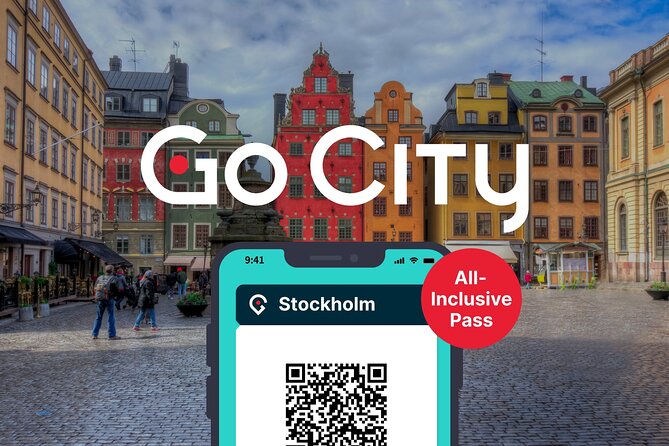
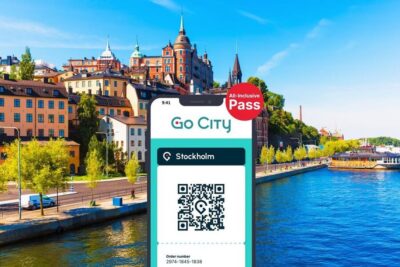
You will use the Go City app with your mobile ticket. Once your ticket is confirmed, you can hit Get ticket to sync your pass, and then show QR codes on your phone at participating attractions. Transportation to and from places is not automatically included, so you should expect to use public transit or taxis unless a specific stop says otherwise.
A smart way to think about this pass is simple: it is not a tour bus with a guide herding you around. It is a way to pay once, then spend your time doing the sights you actually came for.
Price and value math for a $101.70 per person pass

At $101.70 per person, the pass only feels like a bargain if you use it more than casually. The stops include a mix of large-name museums and experiences, like Vasa Museum, the Royal Palace, Nobel Prize Museum, Skansen, and Fotografiska Stockholm, plus boats and hop-on hop-off sightseeing options in the network.
From the value angle, I’d aim for at least 3 meaningful paid sights per day if you want the math to work. In practice, you can make the day easier by choosing clusters that are close together, then using the pass for the higher-cost entries first. If you only plan to hit one museum and a quick church, you might end up wishing you bought something cheaper.
Also, the pass is flexible across multiple days, which helps if you want to breathe. Stockholm can eat your schedule fast, so knowing you can jump from a palace to a museum to a boat cruise helps you stay on track.
How to plan your days: museum clusters that reduce transit stress
Stockholm is easier when you treat it like a set of neighborhoods. Your best day often looks like one city-center loop plus one waterfront or island chunk, depending on what your day length is.
- Old Town and royal stops pair well together. You can do Vasa Museum early, then move toward the Royal Palace area, with cathedrals like Storkyrkan and historic churches nearby.
- Djurgården is a museum-friendly zone. That is where you find Skansen, Nordiska Museet, the Nobel Prize Museum, Tekniska Museet, and several other included options.
- If you want views, add the south side for Avicii Arena and Globen Skyview.
- For archipelago time, plan a full day segment when boats are operating, and keep a backup option because many island options are seasonal.
This pass works best when you pick your priorities first, then fill gaps around them. The app guidance is built for that kind of planning, and it is worth taking 15 to 20 minutes to map your day before you start scanning QR codes.
Vasa Museum to royal landmarks: where the pass feels instantly useful

Start with Vasa Museum, because it is the kind of place that can genuinely anchor your whole trip. You get the story of the warship Vasa, which sank in 1628 on its maiden voyage from Stockholm, and you see the restored wreck salvaged from beneath the water. It is a museum that rewards steady time, not rushing through.
From there, the royal cluster makes sense. At the Royal Palace, you get a look at Swedish royal life and the baroque architecture, with its many rooms and floors. Pair it with the Royal Armoury, which focuses on royal wardrobe items and ceremonial armor, parade pieces, plus coaches used in historical events. If you like material culture, costumes, and how power looks in objects, these two together hit hard.
In the Old Town, Storkyrkan is a solid add-on. This cathedral dates back to the 1300s and has been part of religious and political life for centuries. Nearby, Riddarholmen Church is tied to royal burials and is a free stop in the pass network, which is a nice bonus when you want something short and atmospheric.
Drottningholm Palace is another royal win if you plan the timing. It is UNESCO-listed and is described as Sweden’s most well-preserved royal castle built in the 1600s, representative of European architecture from that period. In season, Drottningholms Slottsteater adds another layer because the court theatre is one of the best-preserved theatres from that era.
One consideration: royal sites and churches are often time-sensitive, so don’t stack too much in one day if you like to linger. If your priorities are Vasa and one palace, build around that rather than forcing everything.
More of Djurgarden's museum island, reviewed
Skansen and the Viking Museum: traditional Sweden, in two very different styles
Skansen is Sweden’s world-famous open-air museum, and it is free within this pass network. You can explore Sweden’s history, flora, and fauna in an outdoor format that is different from typical indoor museum days. It also helps you slow down, especially if your weather is cooperative.
The Viking Museum gives you the other side of the story. It is interactive, with exhibits about everyday Viking life and a Viking ride. There is also a DNA-related element mentioned in the experience description, aiming to connect you to a real person replicated using archaeological discoveries. If you like hands-on learning, this is the kind of stop that keeps energy up.
A pairing idea: do Skansen for atmosphere, then switch to the Viking Museum for a more direct storyline. That rhythm keeps your day from feeling like endless galleries.
Grona Lund, ICEBAR, and oddball experiences that break up the museum grind

Gröna Lund Amusement Park is included and seasonal. If you are traveling with teens or you want something fun between museums, it is a good reset button. The listing also suggests you plan for special events, and it includes rides and food options inside the park footprint.
Then there is ICEBAR Stockholm, which is a very different kind of stop. It is adults-only, and the visit is 45 minutes, with gloves and a cozy cape provided. You are essentially getting a themed North Pole moment in the middle of the city, and the ice is described as coming fresh from the Torne River each year.
These two are not for everyone, but they are the kind of experiences that make a Stockholm trip feel like more than a photo walk. Just keep your expectations realistic: ICEBAR is not a long stay, and amusement park time depends heavily on season and day-of access.
Nobel Prize Museum and Fotografiska: modern culture with a Stockholm pulse

Nobel Prize Museum is included with a self-guided audio tour. It focuses on Alfred Nobel and the laureates since 1901 across medicine, literature, physics, chemistry, economics, and peace. If you like ideas and storytelling that connects to global events, this one can surprise you, even if you do not plan to read everything.
Fotografiska Stockholm is a high-energy photography destination. It is internationally known and founded in Stockholm in 2010, with expansion mentioned to other cities. It is a great stop when you want visual art that feels contemporary instead of historic rooms and portraits.
If you are trying to manage time, these two are easier to schedule than big multi-floor institutions because they tend to work well as 1-hour style visits. It also means you can keep your day moving without feeling like you are stuck in one building all afternoon.
Art and museums for different moods: from Nationalmuseum to ceramics and design
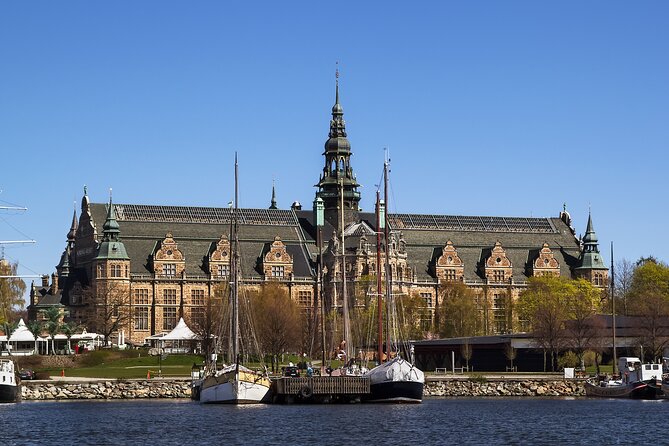
Stockholm has strong museum options that cover more than one personality. Nationalmuseum is the big art-house option, with European masterpieces shown in grand rooms. The focus is described as spanning six centuries, and you can expect major names like Rembrandt, Renoir, Rubens, Cézanne, and Degas among others. If you want a classic museum day with famous works, this is where you’d put your pass time.
Nordiska Museet adds a broader Nordic culture angle. It focuses on Nordic lifestyle and traditions from the 16th century onward, and it includes an exhibition related to living in the Arctic while ice is melting. It also mentions an exhibition focusing on the Sami, which is a meaningful subject if you want context beyond what most cities teach.
For Swedish modern art and accessible galleries, try Sven-Harrys Konstmuseum. It is described as unpretentious, with a broad range of contemporary and classical art. Hallwyl Museum is another distinct one, because it is an opulent private palace turned museum, with one of the country’s largest collections of art, porcelain, and antique furniture.
If you like sculpture, Millesgarden Museum is a great change of pace. It is described as a home built in 1908 by sculptor Carl Milles and painter Olga Milles. The setting helps, too, since it is positioned as an oasis outside downtown.
For craft and materials, Gustavsbergs Porslinsmuseum is worth prioritizing. You get a museum of thousands of pieces produced at the Gustavsberg Factory from 1825 until it closed in 1993, including works by well-known ceramic artists and designers.
And if you like Swedish painters and refined collections, Prins Eugens Waldemarsudde is the art museum stop that fits that mood. It is described as renowned, stunning, and focused on Swedish works.
One practical note: these museums can be mentally heavy, so pick 1 major art stop per day, then balance with something more playful or scenic if you can.
Tekniska Museet and hands-on science that works for adults too
Tekniska Museet is included and it is science and innovation focused. The description calls out interactive stations and experiment-friendly activities, including things like creating art using your eyes and making music using the power of thought. It is a good choice if you want your brain engaged without needing to follow a scripted tour.
Tom Tits Experiment is another family-friendly science center. It is described as Sweden’s largest science center and a creative, curiosity-driven place where you experiment, learn, and play. Even if you are not traveling with kids, it is often a morale boost when you have been museum hopping all day.
For a lighter activity mix, there are also adventure golf options: Kristineberg and Nacka Strand. They are described as 18 literary-themed holes at Kristineberg and a waterfront mini-golf setup at Nacka Strand. These are the kinds of activities that make the pass feel fun, not just academic.
Systrarna Andersson fika and the Spritmuseum stop for food-and-drink lovers
Systrarna Andersson is a traditional Swedish fika stop included as free within this pass network. Fika is more than coffee, it is a social pause, and this stop gives you a built-in reason to slow down. For people who find museum days tiring, a fika break is how you avoid that end-of-day slump.
Spritmuseum is included too, and it is a Museum of Spirits on Djurgården. The description says you can taste, smell, and learn about Swedish drinking culture. Even if you do not plan to be adventurous with tastings, it is still a structured, story-based museum that fits well in a half-day plan.
And if you want the extreme cold drink theme, ICEBAR is the offbeat complement. Plan these carefully because they can become a timing trap if you are also trying to squeeze in a long museum.
Views at Globen Skyview and camera-friendly stops that reset your perspective
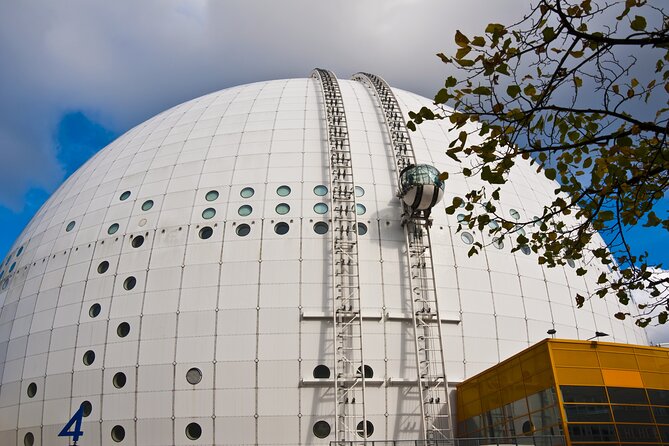
Globen Skyview is included and described as an experience from the Avicii Arena area. You ride up in a glass cabin, scaling the side of the arena, with a 20-minute ride time. The description specifically mentions views over the southern suburbs as you ascend, so it is a great way to get spatial orientation when you feel turned around in the city.
Fotografiska and the view from Globen Skyview also combine well. The photo-forward museum gives you creative inspiration, then the viewpoint gives you real-world angles for your own shots.
One important consideration, based on the kind of trip mistakes people make: always check whether the attraction is operating on your date in the Go City app. Closures can happen, and you do not want your pass to be a disappointment on a day you planned around it.
Boats, canals, Birka, and Vaxholm: the archipelago day you will remember
Stockholm is water, so this pass includes multiple ways to experience it. Start with the Historic Canal Tour, described as a Royal Canal Tour with Stromma. You travel through the Djurgården canal and can see places like Slussen, the Old Town, and the islands of Fjäderholmarna. It also acts like a moving sightseeing layer on top of your walking day.
Then there is the Stromma Stockholm Highlights Boat Tour. The description says you will go under the bridges and pass through locks connecting Lake Mälaren with the Baltic Sea. You should also expect to see districts like Södermalm and Essingen, plus Hammarby Sjöstad and Djurgården from the water.
For Viking-flavored island time, there is the boat to Birka. You take a boat to discover Birka Viking City. This is seasonal, so plan it when it is operating and build an alternate plan for weather or schedule changes.
Vaxholm is another big island option. There are stops tied to Vaxholm by boat and a Vaxholm Fortress visit. Vaxholm is described as the capital of the Stockholm archipelago, and the fortress is highlighted as a distinctive landmark with a museum. If you like forts, water towns, and short island getaways, this fits.
Fjäderholmarna is a seasonal island trip described as a shorter taste of the archipelago. The description notes a boat ride time, and it includes the idea of an outdoor café, a known smokery, and possible local crafts and museums during summer. This is the kind of add-on that makes your trip feel like it went beyond the center.
Practical pro tip: boats and seasonal items are where disappointment usually comes from when your date is near a shoulder season. In the Go City app, you should confirm operating status before you plan your whole day around it.
Hop-on, hop-off buses: useful for orientation, but check the operator
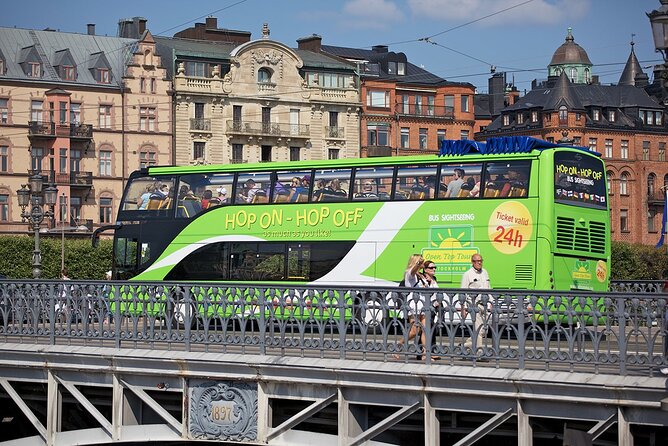
Hop-on hop-off is included through red bus options, and there is also a separate bus lineup with a departure point that references popular stop areas like Vasa Museum and the Royal Palace. This is handy when you want to cover ground quickly and avoid long walks between clusters.
However, the bus story can get confusing because there are multiple red-bus providers that run similar routes. If you want smooth entry, focus on using the operator that matches what your pass expects in the app.
Also watch for end times. In real-world use, the hop-on hop-off service may wrap up around early evening depending on the route and season, so you should not count on it to carry you late.
Quick hits and extra stops: Chinese Pavilion, museums of wrecks, and more
Some stops are short and meant for quick gratification. The Chinese Pavilion is described as built in 1753 as a birthday surprise, with chinoiserie interiors, and it has named rooms like the Silver Chamber. It is a quick architecture stop, and it works well as a 30-to-60-minute palate cleanser between bigger museums.
Vrak, Museum of Wrecks is a strong option if you like maritime stories and the darker side of history. It is described as about wrecks still lurking in the Baltic Sea and the dramatic stories behind them.
The Viking-themed and maritime-themed stops can work together: Viking Museum for mythology and daily life, Vrak for real wrecks, then a boat tour for the actual water context.
Other unique additions include the Royal Canal and historic water experiences, plus cultural museums like Judiska Muséet, which is about the first Jewish-Swedish immigrants and life from the 18th century onward. It highlights legal and community structure elements and is a short visit that can add important perspective to your Stockholm day.
There are also smaller but distinctive art and culture stops: Artipelag on the island of Värmdö combines modern architecture, art, and food, with public events and activities. It is a more nature-and-design balance if you want something calmer than central-city museum corridors.
Finally, there is Strindberg Museum, which is August Strindberg’s last residence turned into a museum. It includes rooms like his bedroom, workroom, dining room, and library, plus an exhibition about Strindberg and his center.
Practical tips to avoid the common QR code and schedule traps
Most passes work fine when you treat them like a system, not a gamble. Here is what will help you get clean entries:
- Make sure you have the correct QR code view ready on your phone before you show up at the ticket desk. Some QR setups are tied to app sync, and if you do not have it loaded, scanning can fail.
- Do a quick test on day one at your first included attraction. If anything looks off, you want time to fix it before you reach your big-ticket second day.
- Confirm any reservation requirements in the Go City app before you assume you can just walk in. The pass data says some activities require reservations, and that is a classic way trips go sideways.
- Check seasonal status for archipelago cruises, Grona Lund, and island trips. If it is a seasonal day, treat it like an important appointment.
- If a hop-on hop-off route matters to your plan, check the operator details in the app, because similar red buses can confuse your timing and where you actually need to board.
Should you book the Stockholm Pass for Stockholm?
Book it if you are the type who plans a real museum schedule and wants a smooth way to buy access across many attractions. It tends to be best when you stack big entries like Vasa Museum, one of the major art or culture museums, and at least one boat or hop-on option across your stay. If you can realistically use the pass for 3 or more attractions per day, the value usually lands well.
Skip it or think twice if you only want a couple of sights, you dislike troubleshooting on your phone, or you are traveling during dates when seasonal attractions may be limited. In those cases, the pass can feel expensive if your must-dos are the ones affected by closures or schedule gaps.
If you like your travel days structured but flexible, this pass can be an efficient way to see the full Stockholm picture, from royal rooms to Viking stories to water views.
Loops And Passes




The Museum Island, Room By Room




Stockholm, A Few More Ways



Other Swedish trips from the review pile
- ROYAL Castle Skokloster and Viking Sigtuna (private tour)
★ 4.5 · 3 reviews - Stockholm Port to Stockholm Arlanda Airport (ARN) – Departure Private Transfer
★ 3.5 · 3 reviews - Stockholm Ghost Hunt: Self-Guided Tour and Puzzle Adventure
★ 4.5 · 3 reviews - Private Photography workshop in Stockholm
★ 5.0 · 3 reviews - Private blood, ghosts and folklore Old Town 2h Stockholm tour
★ 4.0 · 3 reviews - Ghosts of Stockholm: A Guided Tour of Horror and Dark Folklore
★ 4.5 · 3 reviews
Vasa Museum & Djurgården Attractions, compared.
 ★ 4.5Skansen Open-Air Museum Admission TicketFrom $273,427 reviews
 ★ 4.1Stockholm Pass: Save up to 50% – Includes Vasa Museum TicketFrom $952,392 reviews
 ★ 4.5The Viking Museum Exhibition and Viking RideFrom $22667 reviews
 ★ 4.1Royal Djurgården Boat TourFrom $25639 reviews
 ★ 5.0Vasa Museum Guided Tour, Including Ticket & GuideFrom $60330 reviews
 ★ 4.0Entrance ticket to The Viking MuseumFrom $22301 reviews
 ★ 4.3Nordiska Museet Entry TicketFrom $19253 reviews
★ 4.0Stockholm Royal Djurgården Boat TourFrom $36150 reviews
★ 4.3Nordiska Museet Entry TicketFrom $19253 reviews
★ 4.0Stockholm Royal Djurgården Boat TourFrom $36150 reviews
Browse the lists this tour appears in