
REVIEW · STOCKHOLM
Stockholm Speed Boat 2 Hour Archipelago Tour
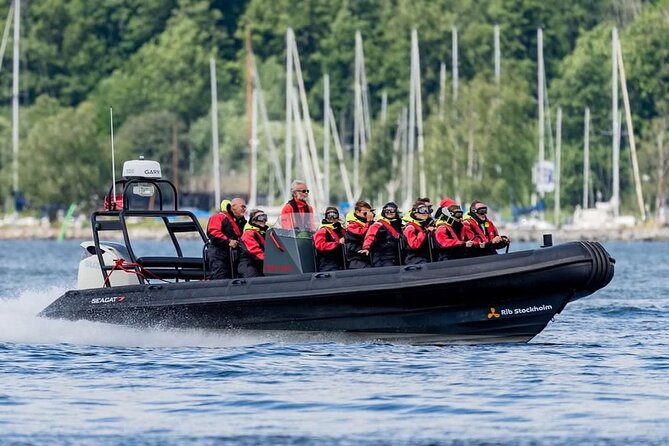
Speed plus islands, in just two hours. This Stockholm RIB speed boat tour turns the archipelago into your main attraction, not just a background view from a slow ferry. I love how you get a real burst of speed, hitting about 42 knots (78 km/h), while still getting plenty of time to ask questions.
I also love the practical comfort setup. They provide warm overalls, hats, and life jackets, so cold wind and spray feel manageable instead of miserable. One possible drawback: you do need to be able to climb in and out of the boat with some balance, because it’s an active getting-on style ride.
The payoff is that you’re out on the water with a small group, capped at 12 travelers, and the guides keep the trip lively and focused on what you’re passing. If you’re lucky, you’ll have an energetic captain like Adam, Anders, or William who mixes route facts with fun, and points out what locals actually do around here.
In This Review
- Key highlights worth prioritizing
- Why this 2-hour RIB tour is a smart Stockholm choice
- Rib Stockholm pickup and what to expect before you go fast
- The city exit: Old Town, Vasa, Gröna Lund, and fast waterfront viewing
- Fjäderholmarna and the jump to 42 knots toward Vaxholm
- What Vaxholm feels like on this route, and why locals boat here
- Archipelago cruising where summer houses stay in families
- Small-group energy and real Q&A time with guides
- The one practical caution: boarding and getting on safely
- Gear, spray, and dressing for an active cold-weather ride
- Photography tips that fit the speed (not just the scenery)
- Price and value: what you’re paying for
- Should you book this Stockholm Speed Boat archipelago tour?
- FAQ
- FAQ
- How long is the Stockholm Speed Boat 2 Hour Archipelago Tour?
- What language is the tour offered in?
- How many people are on the tour?
- What should I wear, and is gear provided?
- Is the tour suitable if I am not a strong swimmer?
- What happens if the weather is poor?
Key highlights worth prioritizing
- Speed that actually covers ground with bursts up to about 42 knots (78 km/h)
- Warm gear included so you can enjoy the ride even when it’s chilly
- Small group size, max 12 for more conversation with your guide
- Vaxholm focus plus a route through classic Stockholm waterfront sights
- Archipelago life, not just postcard islands where homes and summer houses stay in families
- A genuine local feel, including the simple habit of waving other sailors
Stockholm is a big menu. Here is what else we tried
- Stockholm: City Archipelago Sightseeing Cruise with Guide★ 4.3 · 10,798 reviews
- Stockholm: Skansen Open-Air Museum Admission Ticket★ 4.5 · 3,427 reviews
- Stockholm: Archipelago Boat Tour★ 4.4 · 3,110 reviews
- Stockholm: Highlights Boat Tour★ 4.3 · 2,542 reviews
Why this 2-hour RIB tour is a smart Stockholm choice
Stockholm can swallow time fast. You park yourself in one area, then suddenly it’s afternoon. This tour is built to solve that problem. In about two hours, you move from central Stockholm waters into the archipelago world, then back again, without spending your day watching the same shoreline slide by.
The RIB format matters. A bigger, slower boat often means more waiting and less “feel” for the water. Here, the speed is the point, and the guide uses that speed to keep your attention on what you’re seeing and why it’s there.
It also feels refreshingly direct. You’re not stuck reading signs or trying to stitch together a route from far away. Instead, you’re right on the water, learning what you’re passing as the day unfolds.
Rib Stockholm pickup and what to expect before you go fast
Your tour starts at Rib Stockholm – Archipelago Adventures at Strandvägen, Kajplats 19. The meeting point is described as near public transportation, which is handy because Stockholm is easier when you’re not fighting parking.
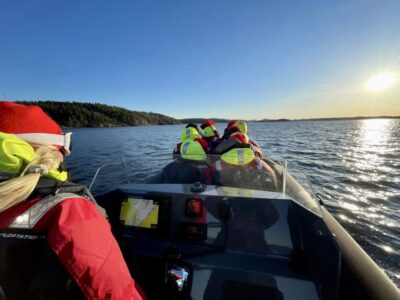
Once you arrive, the prep is all about getting you ready for wind and spray. You’ll suit up with the included gear: overalls, hats, and life jackets. Many people also mention goggles or waterproof additions, and that makes sense because at speed, your face will get the full outdoors version.
This is the part where I’d watch the vibe. If your guide like Adam or Anders is in a good mood, you’ll get that extra energy right away. They tend to handle the “how to sit, where to hold on, and when to brace” part with a calm confidence, which helps a lot if you’re nervous about boats.
The city exit: Old Town, Vasa, Gröna Lund, and fast waterfront viewing
As you leave Stockholm behind, the route is part sightseeing, part warmup. You pass sights including Gamla Stan (Old Town), Vasa Museum, and Gröna Lund. The fun here is timing. You get the city visuals without committing to a full museum day or walking circuit.
Old Town is the classic postcard layer, but from the water it reads differently. The shape of streets and building edges becomes about geometry and color, not just old walls. Vasa Museum brings a well-known anchor, and Gröna Lund adds that bright “we’re still in the city” contrast.
If you’re the type who gets restless on tours that start slow, this is where you’ll likely perk up. Speed begins after you clear the busiest central stretch, and the guide keeps commentary moving so you don’t feel like you’re waiting for the real part.
Fjäderholmarna and the jump to 42 knots toward Vaxholm
The route becomes more exciting when you reach Fjäderholmarna. That’s when the boat picks up and you start getting into the higher-speed rhythm. This is where the experience earns its reputation.
Hitting roughly 42 knots (78 km/h) means the water becomes texture, not just scenery. You’ll feel the boat cut through, and it can be exhilarating even if you’re not a thrill-seeker. If you want a “wow” moment early in your trip, this is it.
Then the target becomes Vaxholm, often called the Capital of the Archipelago. The vibe shifts from city waterfront into waterway navigation. You’ll see both inhabited islands and quieter, uninhabited ones, and the contrast helps you understand how the archipelago works day to day.
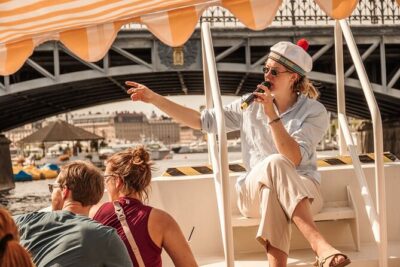
Sweden reads differently from the water. More boats here

What Vaxholm feels like on this route, and why locals boat here
You pass Vaxholm before heading back toward Stockholm. Even if you don’t get time to explore the town on foot, the sailing approach gives you a sense of why it’s a hub.
The big idea is simple: Vaxholm is where sailors “fuel up” before going out farther. You’ll also notice the pattern of summer activity around the area, with boats and shoreline life that feels seasonal but real.
From the water, it’s easier to grasp why people treat these islands like extended neighborhoods. The archipelago isn’t just a place you visit. It’s a place you plan around, depending on weather, family schedules, and boating traditions.
Archipelago cruising where summer houses stay in families
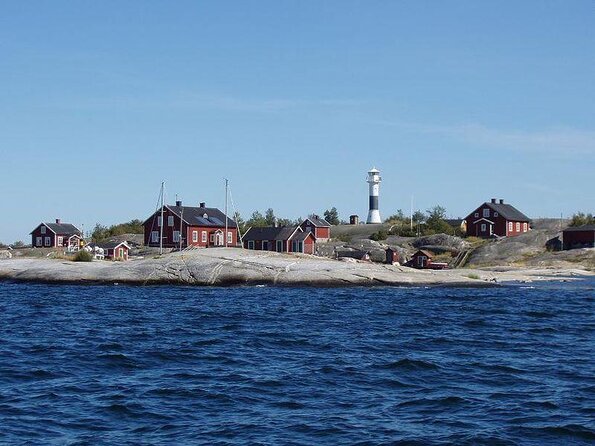
This is the part you’ll remember after you go home. The ride takes you through striking island country made up of lush and rocky islands, with a mix of homes, summer houses, and historic sites.
One of the most compelling aspects is the emphasis on places that many tourists miss. You’re not just seeing what’s famous from land. You’re traveling along water routes used by locals, which means you pass islands that feel lived-in rather than staged.
The tour also highlights the 17th-century connection, including summer houses with generational ties. That matters because it changes how you interpret what you see. You’re not imagining random buildings on a shoreline. You’re picturing family history and long-term habits, built around water access.
There’s also a little moment that adds authenticity: when you pass fellow sailors, you’re encouraged to wave. It sounds tiny, but it signals the whole tone of the trip. This is real seamanship culture, not just a tour script.
Small-group energy and real Q&A time with guides
A maximum of 12 travelers makes a difference on a speed boat. You’re close enough to hear the guide clearly, and you’re not buried in a crowd. That closeness is what allows for the back-and-forth, the questions, and the small clarifications that help you connect details to what you’re actually seeing.
The guides also show up in the feedback by name. People mention Adam, Marie, Martin, William, Anders, and Morten, and the repeated theme is that the guide doesn’t treat the tour like a one-way lecture. They add information in a way that feels timed to the route, plus a dose of humor that fits a high-energy boat.
If you’re a solo traveler, this matters even more. You’re likely to feel like you’re part of the ride, not just another body in seats.
The one practical caution: boarding and getting on safely
The boat is fast and it moves. That’s fun, but it also means you should be realistic about your own mobility.
The experience description says most travelers can participate. Still, one clear caution shows up in real-world feedback: you do have to be physically able to climb in and out. Even someone who was able with effort noted it was challenging.
So here’s the practical way to think about it. If you can handle short, active steps and you’re steady on your feet, you’re likely fine. If you have balance concerns, consider whether you can manage that step-down or step-up without help.
On the comfort side, multiple notes say safety equipment and protective clothing make a huge difference. People mention feeling safe throughout, including for non-swimmers who felt at ease in the life jacket setup.
Gear, spray, and dressing for an active cold-weather ride
This tour’s cold-weather reputation is mostly about gear. You’re provided warm overalls, hats, and life jackets. Many people also mention goggles or waterproof add-ons, and a common takeaway is that it changes the ride from unpleasant to genuinely comfortable.
I’d treat this as a get-ready-for-wind experience, not a flat-water afternoon. At speed, even good weather can mean spray on your face and damp patches. The included gear is designed for that, and it’s why you see so much praise for comfort.
Bring a mindset of layers and hands-on boating. Wear clothes that you can suit up over. Once you’re geared, focus on enjoying the motion instead of worrying about being cold.
Also, if it’s sunny, it can still feel sharp on the water. This is why the gear matters more than weather apps. You can get the sun and still get the chill.
Photography tips that fit the speed (not just the scenery)
Even if you love photos, this is a moving ride. The best photos often come when you accept motion and composition over perfect stillness.
Try this approach:
- Pick moments when the boat slows briefly for views, then shoot quickly.
- Keep your phone or camera secure and dry since spray can happen.
- Don’t expect every shot to be crisp during the fastest stretches.
If you’re wearing goggles or wind protection, you’ll likely see better too. Clear sightlines make it easier to capture the right islands, and the guide’s pointers can help you aim at the stuff worth photographing.
Price and value: what you’re paying for
At $182.87 per person for about two hours, you’re paying for three things: speed, time efficiency, and a smaller-group experience with serious gear.
Two-hour tours can feel expensive until you think about what you gain. You’re packing in a meaningful slice of Stockholm waterfront, then the archipelago world, then back again. Instead of spending half your day commuting or waiting on connections, you’re on a scheduled ride that uses the speedboat’s advantage.
You’re also paying for comfort. The included protective clothing is not an add-on you have to source yourself. That matters when the weather turns colder than you expected.
Finally, you’re paying for access to a smaller group experience, which shows up in the time you get with your guide. If you like asking questions, that’s part of the value, not a bonus.
Should you book this Stockholm Speed Boat archipelago tour?
Book it if you want your Stockholm day to feel active and efficient. This tour fits best when you enjoy boats, want faster access to the archipelago, and appreciate a guide who keeps the trip moving with stories and practical context. The small-group size and the included warm gear are major wins.
Skip it, or at least think carefully, if you have difficulty climbing in and out of a boat or if you hate the idea of wind and spray. Speed is central here, so the experience won’t feel like a slow, restful cruise.
If you’re choosing between “see Stockholm from the water” and “feel the Stockholm from the water,” this one leans hard toward the second option.
FAQ
FAQ
How long is the Stockholm Speed Boat 2 Hour Archipelago Tour?
It runs for about 2 hours.
What language is the tour offered in?
The tour is offered in English.
How many people are on the tour?
It has a maximum of 12 travelers.
What should I wear, and is gear provided?
You’ll be provided with warm overalls, hats, and life jackets. Some tours may also include additional protective gear like goggles.
Is the tour suitable if I am not a strong swimmer?
Some people who are non-swimmers have reported feeling safe and comfortable while wearing the provided life jacket. Still, you should be comfortable with boat safety basics and follow the guide’s instructions.
What happens if the weather is poor?
This experience requires good weather. If it is canceled due to poor weather, you’ll be offered a different date or a full refund. You can cancel for free up to 24 hours in advance for a full refund.
Other Swedish Outings We Reviewed





Reviewed Across Sweden



Stockholm, A Few More Ways
Other Swedish trips from the review pile
- ROYAL Castle Skokloster and Viking Sigtuna (private tour)
★ 4.5 · 3 reviews - Stockholm Port to Stockholm Arlanda Airport (ARN) – Departure Private Transfer
★ 3.5 · 3 reviews - Stockholm Ghost Hunt: Self-Guided Tour and Puzzle Adventure
★ 4.5 · 3 reviews - Private Photography workshop in Stockholm
★ 5.0 · 3 reviews - Private blood, ghosts and folklore Old Town 2h Stockholm tour
★ 4.0 · 3 reviews - Ghosts of Stockholm: A Guided Tour of Horror and Dark Folklore
★ 4.5 · 3 reviews
Stockholm City Tours, compared.
 ★ 4.3City Archipelago Sightseeing Cruise with GuideFrom $4110,798 reviews
 ★ 4.5Skansen Open-Air Museum Admission TicketFrom $273,427 reviews
 ★ 4.4Archipelago Boat TourFrom $393,110 reviews
 ★ 4.3Highlights Boat TourFrom $392,542 reviews
 ★ 4.1Stockholm Pass: Save up to 50% – Includes Vasa Museum TicketFrom $952,392 reviews
 ★ 4.7Ghost Walk and Historical TourFrom $312,206 reviews
 ★ 5.0Walking Tour of Stockholm Old TownFrom $241,175 reviews
 ★ 4.5The Original Stockholm Ghost Walk and Historical Tour – Gamla StanFrom $381,165 reviews
Browse the lists this tour appears in