
REVIEW · STOCKHOLM
Stockholm Walking Tour with Audioguide on Your Smartphone
A cheap audio walk, with big Stockholm payoff. You get 25 historian-narrated recordings plus an offline route map that keeps you moving as you go. The trade-off is simple: it is self-guided, so you must manage the app, headphones, and phone battery.
This route strings together some of the most memorable sights in Stockholm, from City Hall and Nobel history to Gamla Stan streets, royal buildings, and the city’s modern squares. You can listen at your pace, pause when something catches your eye, and still check off a lot of ground in about 2 hours.
If you want a person to herd you from stop to stop, this is not that. But if you like walking, reading the city in small details, and letting the audio do the talking, it is a very good deal.
In This Review
- Quick planning notes for this Stockholm smartphone walk
- Price and what you really get for $6.73
- Start at Klara Mälarstrand, then aim for City Hall views
- Riddarholmen island: publishing roots, medieval defense, and royal quiet
- Gamla Stan on foot: Västerlånggatan, Stortorget, and small surprises
- Nobel Prize Museum and the Royal Palace, in the same mental zone
- Riksdag and the Royal Opera House for a politics meets culture rhythm
- Kungsträdgården Park and Hallwyl Museum, a calmer mid-walk break
- Kreditbanken, Sergel’s Square, and Drottninggatan for modern Stockholm pulse
- How to handle the phone, headphones, and battery drain
- Who this self-guided walk suits best
- Should you book this smartphone audio tour?
- FAQ
- How long is the Stockholm walking tour?
- What language is the audio guide offered in?
- Is there a human guide on this tour?
- What do I need to bring?
- Do I need to have an internet connection?
- Where do I start and where does it end?
- What is included in the price?
- Are entrance fees included?
Quick planning notes for this Stockholm smartphone walk
- 25 audio stops by a professional historian so you get context, not just sign-by-sign facts
- Offline map and GPS-friendly route mean less stress when streets twist in Old Town
- Bring your own headphones because the tour does not supply them
- Phone battery can take a hit since audio playback plus GPS can drain it
- Some major sights may have separate entrance fees even if several stops are free
- You can stretch it out since it is self-guided and you get 1 year access to the tour audio
Stockholm is a big menu. Here is what else we tried
- Stockholm: City Archipelago Sightseeing Cruise with Guide★ 4.3 · 10,798 reviews
- Stockholm: Skansen Open-Air Museum Admission Ticket★ 4.5 · 3,427 reviews
- Stockholm: Archipelago Boat Tour★ 4.4 · 3,110 reviews
- Stockholm: Highlights Boat Tour★ 4.3 · 2,542 reviews
Price and what you really get for $6.73
At about $6.73 per person for an approximately 2-hour route, the value here is not the price tag alone. It is the amount of storytelling you get while walking: 25 recorded segments, a planned route with an offline map, and illustrations to help you spot the places as you pass them.
You should still plan like this is a phone-powered experience, not a traditional guided tour. You will use your smartphone for the audio guide and navigation, and you will need your own headphones. Also note that entrance fees and tickets are not included, so some stops that involve indoor areas may cost extra depending on what you choose to enter.
Start at Klara Mälarstrand, then aim for City Hall views
The walk begins at Klara Mälarstrand and loops back to the same spot at the end. That is a good setup because you are not relying on a complicated ending location, and it fits well with arriving by tram or metro and then walking the rest.
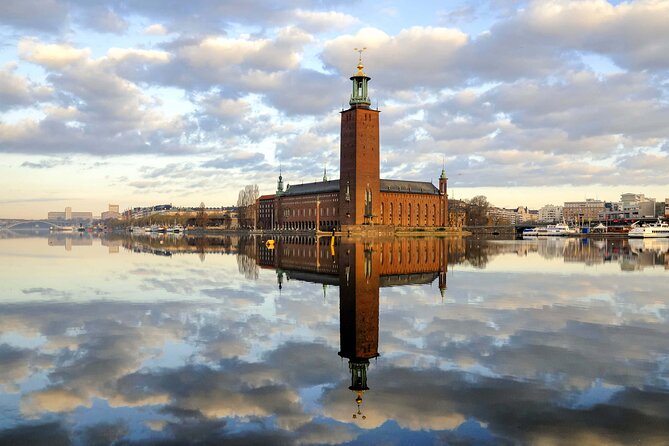
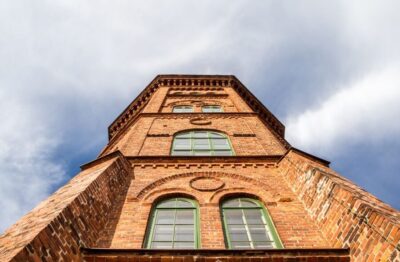
The early highlight is Stockholm City Hall. Completed in 1923, it is known for its brick façade and tall tower, and it is also your gateway to two famous interior spaces: the Golden Hall with its 18 million mosaic pieces, and the Blue Hall, tied to the annual Nobel Prize Banquet.
Why this stop matters: City Hall is one of those places where Stockholm’s civic pride shows up in architecture. If you only take photos from the outside, you miss the feeling of the halls. If you do go inside, you get a sense of why Sweden’s major international moments are staged in a setting built for public drama.
Practical consideration: City Hall is a big draw, so expect crowds during peak times. And because entrance fees are not included, you may want to check whether you are paying separately if you want the full interior experience.
Riddarholmen island: publishing roots, medieval defense, and royal quiet
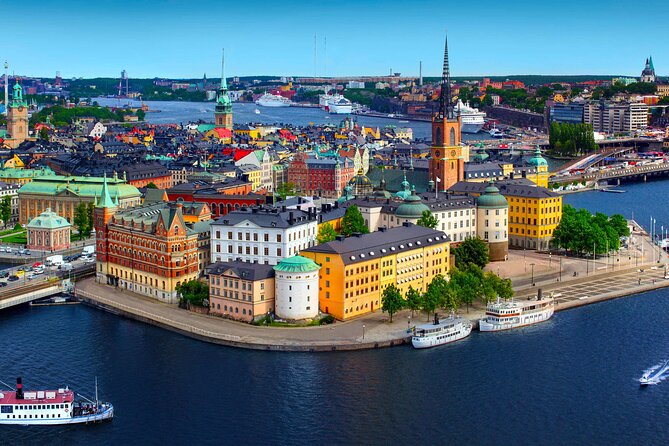
After City Hall, the route shifts to Riddarholmen, and this is where the walk starts to feel like a history book with great views. Several stops here are short and focused, so you can keep moving while still getting a clear sense of the island’s role in Stockholm.
First up is Norstedt Publishers (Norstedt Publishing House) on Norra Riddarholmshamnen 1. Established in 1823, it is described as Sweden’s oldest publishing house. Even if you are not a book nerd, this stop pays off because you see how cultural institutions are built into the city, not shoved to the edges.
Next is Birger Jarl’s Tower. Named for Birger Jarl, a 13th-century figure tied to the city’s founding, the tower dates back to the 16th century. The thick stone and fortress-like look give you a physical sense of early defense, and the top offers waterfront views.
Then comes Wrangel Palace on Riddarholmen. Originally built in the 16th century and expanded later, it served as a royal residence in the 17th century. Today it houses the Svea Court of Appeal, with guided tours offering a glimpse into the palace’s royal past.
From a visitor’s viewpoint, this cluster works because it connects power in three forms: ideas (publishers), protection (tower), and governance (court palace). You are walking through layers of Stockholm’s identity without needing to ride anywhere.
A few more short stops keep the story tight:
- Monument to Birger Jarl (1854), a statue by Bengt Erland Fogelberg, where Birger Jarl is shown in medieval attire holding sword and shield
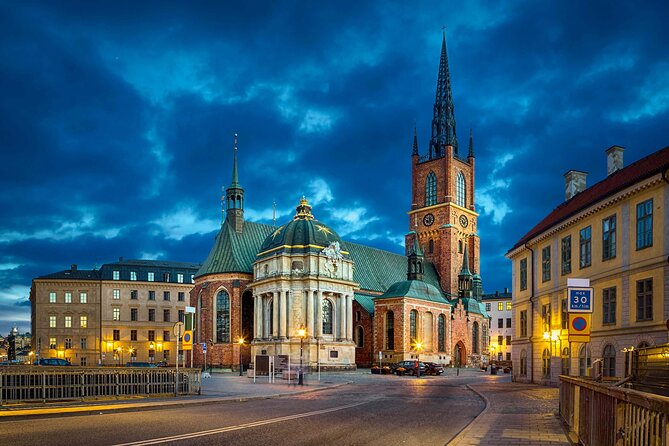
- Riddarholmen Church, dating to the late 13th century, known as a final resting place for Swedish monarchs. The cast iron spire is a standout, and the royal tombs make the inside feel intentionally solemn
If you want one area to slow down a little, this is it. Even though the stops are short, you get a lot of meaning per minute.
Gamla Stan on foot: Västerlånggatan, Stortorget, and small surprises
Next the route leans into Gamla Stan, where narrow streets and old stone make it easy to lose track of time. The key street here is Västerlånggatan, a medieval-era lane lined with shops, cafés, and courtyards. It is the kind of street that helps you understand why people still visit Stockholm’s Old Town even after they have seen the big sights.
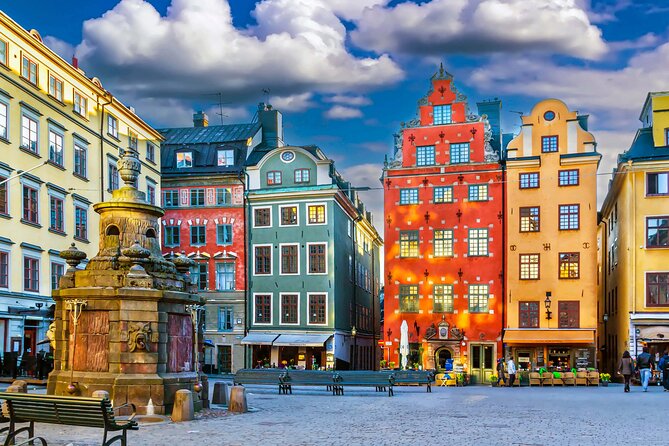
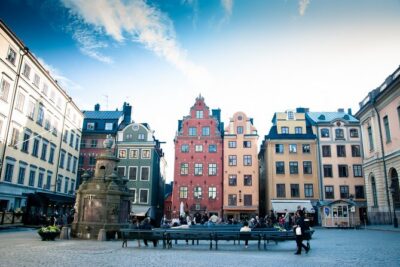
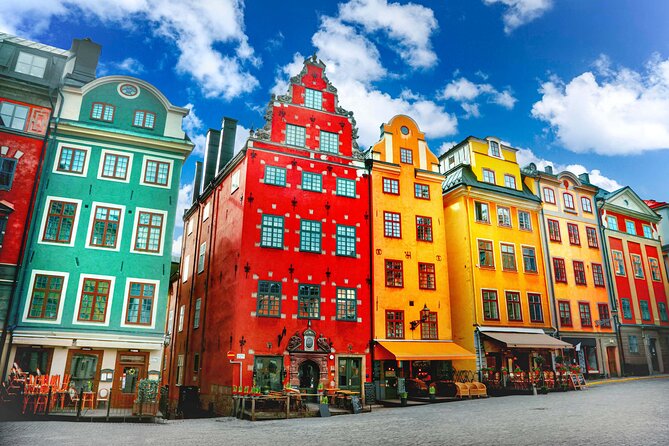
The walk also includes Stortorget Square, the city’s oldest public square. It is surrounded by colorful historic buildings and acts like a stage for events, including the Nobel Museum area and the annual Christmas Market. The square is also tied to the Stockholm Bloodbath of 1520, which is a reminder that this pretty cobblestone can also hold darker chapters.
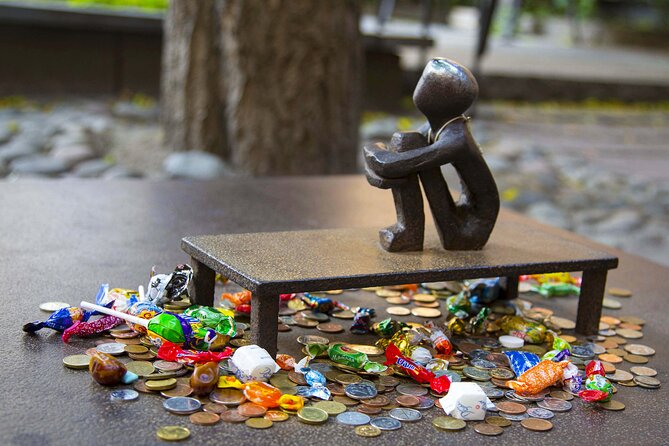
One of the best small stops is Iron Boy (Järnpojke), in the courtyard of the Finnish Church in Gamla Stan. He is tiny, only 15 centimeters tall, and the story is what makes him memorable: the artist Liss Eriksson created him in 1967, and in winter locals dress him with little hats and scarves and leave coins for good luck. It is the kind of detail you would miss if you were rushing.
Why I like this part of the route: it balances official history with everyday local quirks. That is when Stockholm starts to feel personal.
More Swedish streets covered on foot

Nobel Prize Museum and the Royal Palace, in the same mental zone
Two of the route’s biggest themed stops are tied to international ideas and Swedish monarchy.
The Nobel Prize Museum focuses on Nobel laureates across categories like peace, literature, and science. You get interactive-style storytelling, plus personal stories and artifacts tied to Nobel’s legacy. The point of placing this after Stortorget is that you are still in the same Old Town atmosphere, but your subject shifts from local square to global influence.
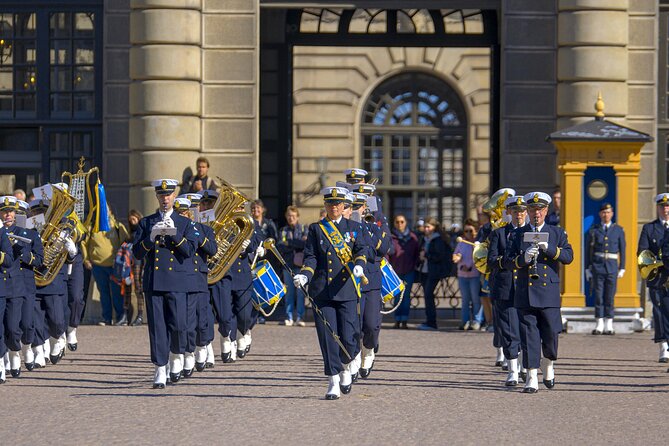
Then the route moves to the Royal Palace in Gamla Stan. It is described as one of Europe’s largest palaces, with the State Apartments, the Royal Chapel, and the Treasury. The daily changing of the guard ceremony is also highlighted as something you should not miss if it lines up with your timing.
A practical note: the Royal Palace and the Nobel Prize Museum likely involve paid entries depending on what you choose to see. Since entrance fees are not included, treat the audio as your guide to what is worth paying for.
If you are trying to plan for one indoor ticket, this is a good pair to think about. City Hall gives you civic symbolism, and the palace gives you monarchy in full theater mode. Nobel sits between them, showing Sweden as a small country with global reach.
Riksdag and the Royal Opera House for a politics meets culture rhythm
After the palace zone, the route offers a neat change of pace with the Riksdag and the Royal Opera House.
The Riksdag, Stockholm’s parliament building on Helgeandsholmen island, was completed in 1905. It uses a mix of neoclassical and baroque revival styles, and guided tours are mentioned as a way to see the chambers where legislative decisions happen. Even if you are not a political science person, the building is still worth your attention because it reflects how the state wants to present itself, visually and symbolically.
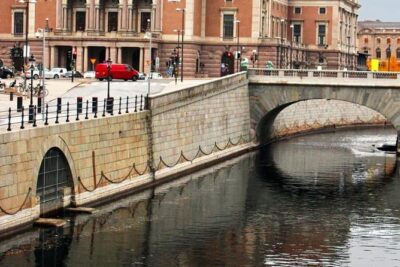
Next is the Royal Opera House, established in 1773 by King Gustav III and reconstructed in 1898. It is a major cultural venue near the Norrström river, with a reputation for architectural drama and rich interiors. The route frames it as a place where opera, ballet, and concerts bring international artists to Stockholm.
Why this works on an audio walk: it gives you Stockholm in two voices. One is political, formal, and rule-based. The other is artistic, emotional, and performance-based. Walking links them without you needing to bounce between distant neighborhoods.
Kungsträdgården Park and Hallwyl Museum, a calmer mid-walk break

Then the route gives you a breath of air with Kungsträdgården Park. It is known as King’s Garden and dates back to the 15th century. The audio points out cherry trees, fountains, and seasonal events like summer concerts and winter ice skating.
This is a great pause moment if your phone battery is getting low. Step aside, listen to the audio segment, and then decide if you want to keep going or take a longer rest.
Right after, you reach the Hallwyl Museum. It is housed in a late 19th-century palace and described as showing the extravagant lifestyle of Countess Wilhelmina von Hallwyl and her family. The tour notes that there are over 50 rooms with art, antique furnishings, and rare collectibles preserved in the original settings. If you like the feel of being in someone’s real home, this can be a satisfying counterpoint to royal and political buildings.
Kreditbanken, Sergel’s Square, and Drottninggatan for modern Stockholm pulse
Not everything here is medieval or royal. The route also goes through parts of Stockholm that explain the city’s modern energy.
One stop is Kreditbanken at Norrmalmstorg square. It is known for the 1973 Norrmalmstorg robbery, a case that helped popularize the term Stockholm Syndrome. The building is still a bank, but the story makes it a place for psychology and criminology curiosity, not just architecture photos.
Then you get Sergel’s Square, a modern hub named after sculptor Johan Tobias Sergel. It is known for its obelisk and patterned floor, and it sits near landmarks like Kulturhuset and shopping districts. This is a good place to pause and people-watch, because it is built for public movement and public events.
After that, the route walks down Drottninggatan, a pedestrian street connecting Old Town to the modern center. It is a mix of shops, cafés, and culture, and along the way you can see the statue of King Charles XII.
Finally, the walk moves through Hötorget, another central market square. It’s described with the iconic blue Concert Hall nearby, plus an open-air market on weekdays and a flea market on Sundays. If you want a simple way to feel everyday Stockholm, this is one of the best spots.
How to handle the phone, headphones, and battery drain
This tour lives on your smartphone. The audio guide is delivered through an app for iPhone and Android, and you get one year access in your preferred language (English for this tour). It also includes an offline map with a route, which helps a lot when data is spotty.
Two practical things will make this easier:
- Download and set up before you start. If the audio fails or won’t load properly, it is often because the content did not get downloaded for offline use.
- Bring a portable charger. Reviews point out that GPS plus audio can drain the battery quickly, especially if you keep the screen active while navigating.
Headphones are your responsibility here. They are not included, so pack a pair you already trust.
Who this self-guided walk suits best
This is a strong choice if you:
- Want an inexpensive way to hit a lot of Stockholm highlights in about 2 hours
- Prefer walking at your pace, with audio narration from a professional historian
- Like learning through specific stops, including small details like Iron Boy
- Would rather spend money on one or two paid interiors instead of a fully guided tour
It is less ideal if you:
- Want step-by-step directions from a human guide
- Get frustrated when you have to manage an app and navigation settings
- Plan a long day with little time to charge your phone
Should you book this smartphone audio tour?
If you want a cost-effective, very walkable way to understand Stockholm’s major themes, this is an easy yes. For the price, the amount of narration and route planning is hard to beat, and the mix of civic buildings, Old Town streets, and modern squares gives you a well-rounded first look.
Book it if you can handle a self-guided experience and you come prepared with headphones and a plan for battery life. Pass or rethink if you need a guided hand for navigation, or if you hate relying on your phone to do the heavy lifting.
Bottom line: for under ten bucks, you are buying direction, context, and a lot of memorable stops, with enough flexibility to pause when Stockholm pulls you in.
FAQ
How long is the Stockholm walking tour?
It runs for approximately 2 hours.
What language is the audio guide offered in?
The audio guide is offered in English.
Is there a human guide on this tour?
No. This is a self-guided experience using a smartphone audio guide app.
What do I need to bring?
Bring your own smartphone and headphones. Transportation is not included.
Do I need to have an internet connection?
The tour provides offline audio support via the app and an offline map, but you should download or activate your content as directed at checkout and in your confirmation.
Where do I start and where does it end?
You start at Klara Mälarstrand, Stockholm and the activity ends back at the meeting point.
What is included in the price?
Included are 25 audio recordings narrated by a professional historian, the audio guide app for iOS and Android, illustrations to identify landmarks, a 1-year access period, and an offline map with the route.
Are entrance fees included?
No. Entrance fees and tickets are not included, even though some specific stops are listed as free.
Other Swedish Outings We Reviewed





Reviewed Across Sweden



Stockholm, A Few More Ways
Other Swedish trips from the review pile
- ROYAL Castle Skokloster and Viking Sigtuna (private tour)
★ 4.5 · 3 reviews - Stockholm Port to Stockholm Arlanda Airport (ARN) – Departure Private Transfer
★ 3.5 · 3 reviews - Stockholm Ghost Hunt: Self-Guided Tour and Puzzle Adventure
★ 4.5 · 3 reviews - Private Photography workshop in Stockholm
★ 5.0 · 3 reviews - Private blood, ghosts and folklore Old Town 2h Stockholm tour
★ 4.0 · 3 reviews - Ghosts of Stockholm: A Guided Tour of Horror and Dark Folklore
★ 4.5 · 3 reviews
Stockholm City Tours, compared.
 ★ 4.3City Archipelago Sightseeing Cruise with GuideFrom $4110,798 reviews
 ★ 4.5Skansen Open-Air Museum Admission TicketFrom $273,427 reviews
 ★ 4.4Archipelago Boat TourFrom $393,110 reviews
 ★ 4.3Highlights Boat TourFrom $392,542 reviews
 ★ 4.1Stockholm Pass: Save up to 50% – Includes Vasa Museum TicketFrom $952,392 reviews
 ★ 4.7Ghost Walk and Historical TourFrom $312,206 reviews
 ★ 5.0Walking Tour of Stockholm Old TownFrom $241,175 reviews
 ★ 4.5The Original Stockholm Ghost Walk and Historical Tour – Gamla StanFrom $381,165 reviews
Browse the lists this tour appears in