
REVIEW · FOOD & FIKA
Culinary Kayaking Adventure – Saint Anna Archipelago of Sweden
Salt air, paddle power, and wild flavors await. This is a 4-day culinary kayaking adventure in the Saint Anna archipelago, where you paddle between island habitats, forage edible plants, and cook camp meals in the real outdoors with guides like Rob and chef Helena.
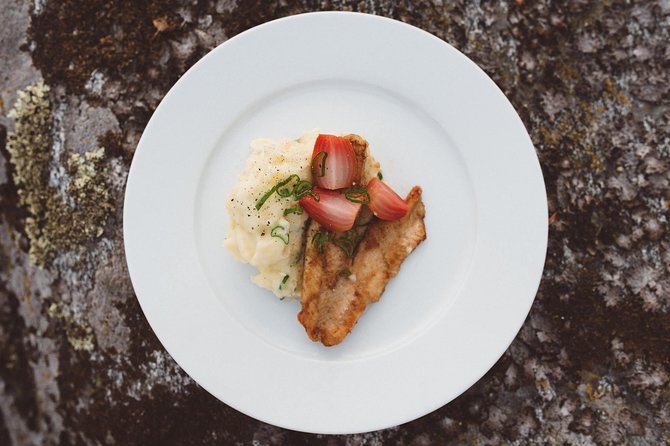
I love two things most. First, you get hands-on cooking with Helena, plus foraging lessons that turn sea-meadow greens, rose hips, and juniper into actual food. Second, the pace feels human, with a maximum group size of 8, and you share the work setting up camp and making meals.
One drawback to consider: you’re kayaking for real, and at least one day involves a strenuous paddle. If you do not pack warm, weather-ready gear, Sweden can remind you fast.
In This Review
- Quick hits before you paddle
- Entering the Saint Anna archipelago, where food starts before dinner
- Day 1: Do the North, sea-meadow foraging and a camp kitchen that starts planning
- Day 2: Aspöja Gården, bird sanctuaries and deciduous-forest herb harvesting
- Day 3: Outer archipelago salt-plants, a stronger paddle, and a fisherman’s feast
- Day 4: Tyrislöts Sommarlanthandel, a final paddle through bird sanctuaries to mainland life
- Price and what $1,954.27 buys you in real terms
- The guide team, and why their role changes the whole trip
- What kayaking difficulty feels like, and who should book
- Practical logistics that make arrival easier
- Should you book this culinary kayaking adventure?
- FAQ
- Where do I meet the group in Sweden?
- What time does the experience start?
- Do I need kayaking experience?
- How big is the group?
- What meals and drinks are included?
- What is not included in the price?
- Can I cancel and get a full refund?
Quick hits before you paddle
- Small group size (max 8) keeps the camp calm and the guide attention focused.
- Foraging-driven meals use what the islands provide, like rose hips, chives, juniper berries, and herbs from meadows.
- Camp life is part of the deal, you help cook, prep, and set up, not just watch.
- Guides by name matter, Rob and Helena are repeatedly praised for skill and care.
- Nature sightings are built in, from bird sanctuaries to possible sea eagles and seals.
- Weather can test you, including long rain stretches, but the team still cooks.
Still hungry? More Swedish plates and pints we tried
- Traditional Persian Cooking Class in Stockholm with a Local★ 5.0 · 20 reviews
Entering the Saint Anna archipelago, where food starts before dinner
This trip is not just kayaking with a side of snacks. It’s kayaking that feeds the kitchen, literally. You’re in the archipelago of Saint Anna, moving through different island “moods” each day, and your guide team uses that change as a lesson in both ecology and cooking.
The core idea is simple: paddle, learn, gather, cook. Then do it again tomorrow. That rhythm matters because it turns the trip into something active and memorable. You are not waiting for a meal, you are building it.
And yes, the food is the reason many people sign up. But what impressed me more than the final dishes is the way you get there: edible plants from salt-resistant sea-meadow edges, herbs from meadows and glades, and even a fisherman’s catch on the last full night. The result is meals that feel earned.
Day 1: Do the North, sea-meadow foraging and a camp kitchen that starts planning
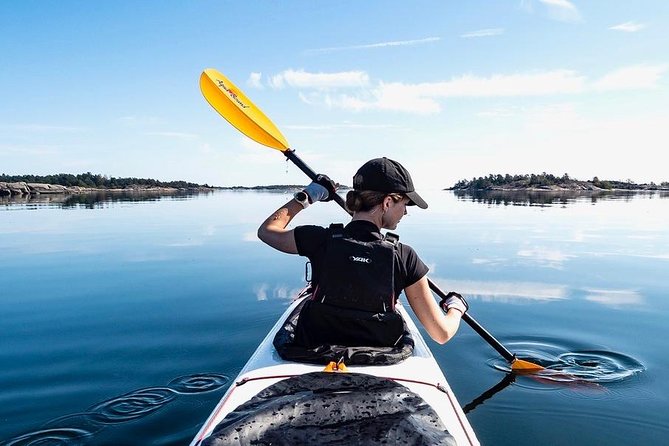
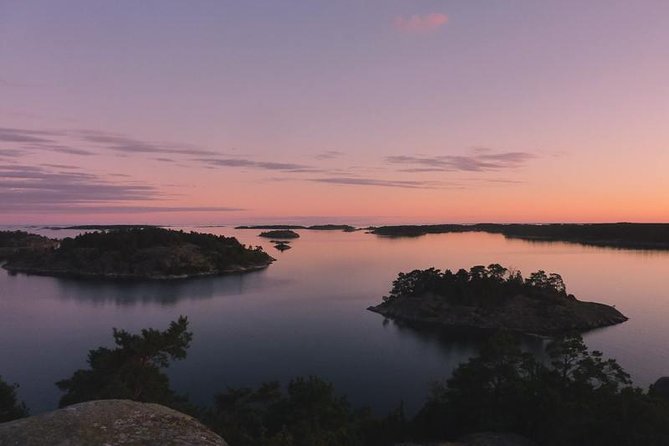
On your first day, you begin in the inner archipelago, surrounded by forested islands and old wooden houses tucked along the water. The vibe is time-worn in the best way: quiet bays, calm paddling at first, then the feeling that you’ve slipped into a maze of islands.
After a short paddle, you stop for lunch by a sea meadow, one of Saint Anna’s special habitats. This is where you learn the practical “why” behind foraging. Salt-resistant plants grow along the edge of the sea, and the cooking theme clicks because those plants translate into flavors you can actually identify and use.
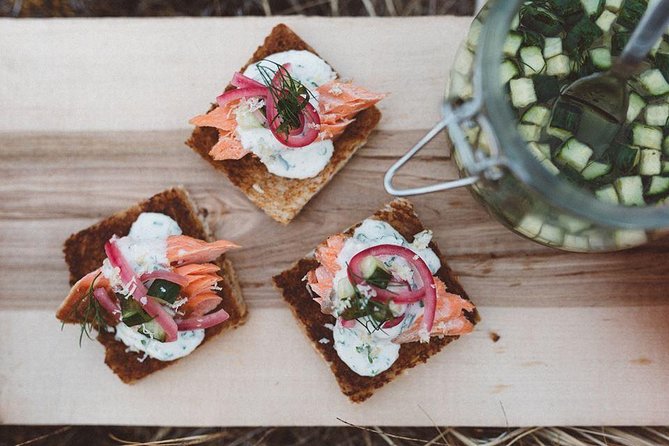
You forage edible greens and things like rose hips, hawthorne, and barberries. That’s a mix of tart, fragrant, and slightly wild, the kind of ingredients that make simple camp meals taste like Swedish nature cuisine instead of generic outdoor food.
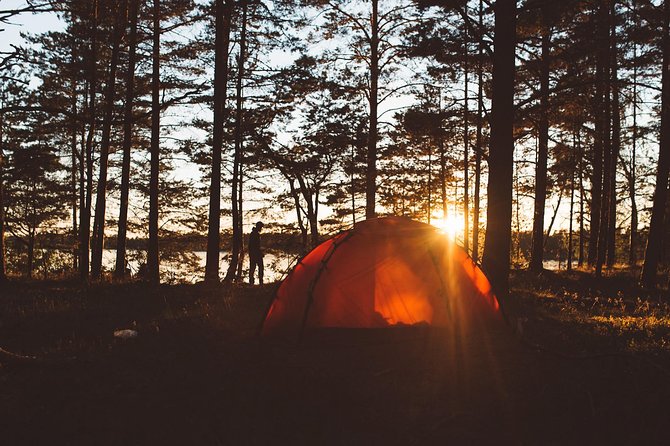
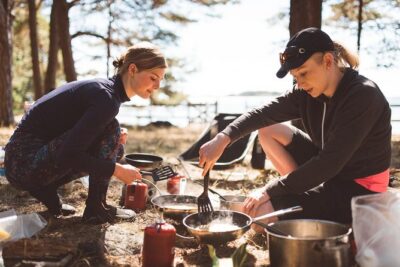
Then you keep paddling through the inner archipelago’s maze of islands until you reach your night camp. This is where the camp becomes more than a base. The culinary guide team is already busy, and you help with preparing for the evening and the next morning. You forage more ingredients such as sorrel, orpine, chives, and juniper berries, then cook dinner over an open setup.
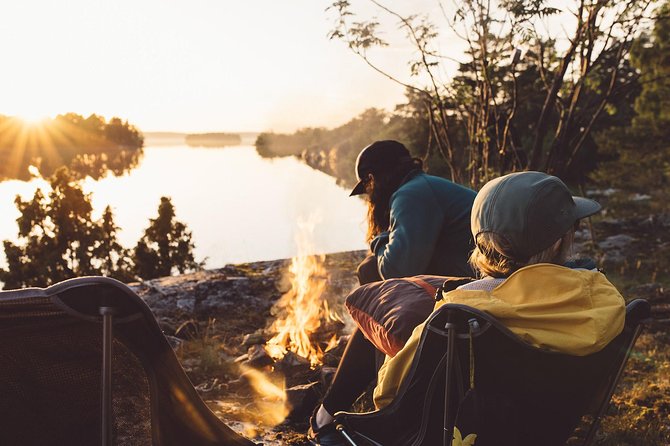
What I like here is the “team effort” nature of camp. People pitch in, and it does not feel forced. One review highlights that the camp table was made with birch boughs, and that kind of detail tells you they care about the whole experience, not just the food.
Day 2: Aspöja Gården, bird sanctuaries and deciduous-forest herb harvesting
If Day 1 is about settling into the archipelago, Day 2 is about variety. Your morning starts with breakfast and then a paddle through bird sanctuaries, where you might spot sea eagles gliding high. Seals are also possible if conditions cooperate.
After that, the paddling area changes character. You move into the middle part of the archipelago where islands are smaller and more plentiful. Then you head toward the next camp site, and the habitat shift is obvious once you arrive.
This camp is surrounded by deciduous forest with open glades where grazing animals are part of the scene. The cooking focus follows that shift. Instead of the pine-and-moss feel, you’re now looking for mushrooms and berries, and wild herbs from meadow spaces. You pick ingredients like oregano and ground-ivy for dinner.
One thing to know: this is not a passive “see and eat” day. You’ll get coaching and time to gather ingredients properly. For me, that’s a big part of the value, because you leave with transferable skills. Even if you never kayak in Sweden again, you’ll remember how to spot edible plants tied to habitat and season.
Day 3: Outer archipelago salt-plants, a stronger paddle, and a fisherman’s feast
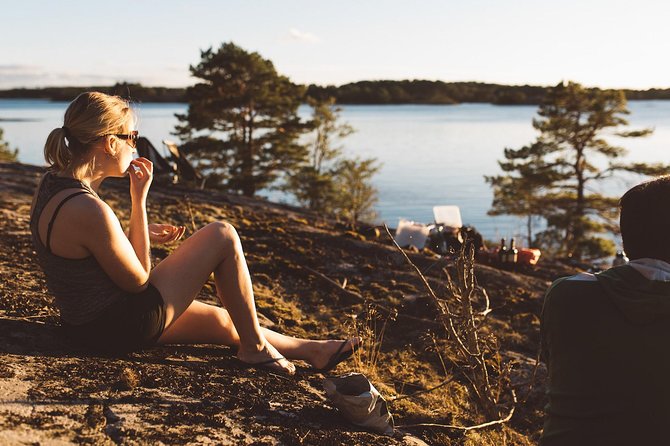
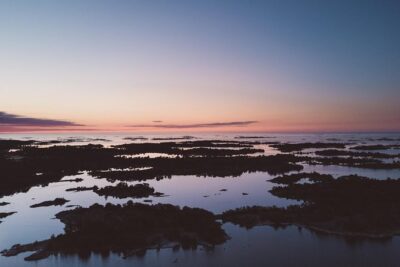
Day 3 is where the trip asks more of you physically. If the weather allows, you head to the outer archipelago. This is a different world: hundreds of tiny, barren islands with sparse wind-pined trees, and a different set of salt-resistant plants.
The scenery here is solitude. It’s fewer trees, more horizon, more sky. And it can feel tougher under the paddle because the exposed conditions are real. The day description even flags that the paddle can be strenuous, then you work your way back to camp by late afternoon.
Once you’re back, the cooking theme turns toward “proper feast.” A local fisherman arrives with his catch of the day, and you cook your last-night meal. You also invite the rest of the Do the North crew to join, which adds a friendly, communal energy to the final dinner.
In the reviews, chef Helena is praised for producing impressive camp meals even when it rained for 36 hours straight. That matters. Bad weather can make outdoors trips feel miserable fast, but this team seems built to keep the kitchen running and keep the mood steady.
Paddle-powered days we reviewed elsewhere in Sweden
Day 4: Tyrislöts Sommarlanthandel, a final paddle through bird sanctuaries to mainland life
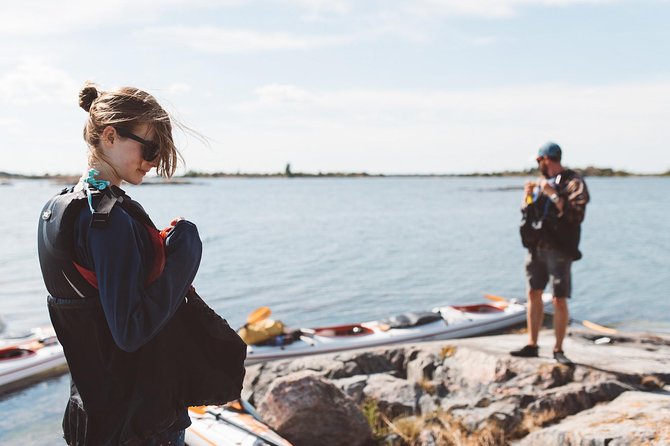
Your last morning is camp packing and a hardy breakfast, then you paddle toward a different mainland-adjacent site. As you head out, you pass through more bird sanctuaries, so even your final stretch keeps a connection to wildlife and the islands’ seasonal rhythm.
Near the end, you transition from wilderness maze to something more settled. A narrow canal leads you into a bay full of little cabins and old houses. That “suddenly there’s civilization” moment is one of those small emotional payoff scenes. You’ve been far from everything, and then you’re back where people live, shop, and build routines.
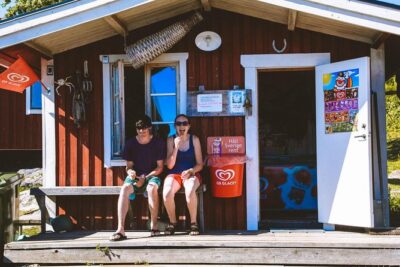
You also end at Tyrislöts Sommarlanthandel, which adds a nice sense of place. It gives you a final anchor point, not just a random dock and goodbye.
The main emotional takeaway here is inspiration. You’re not only learning to kayak, you’re seeing that wilderness cooking is practical. You can take that idea home and apply it to your own outdoor meals, even if you scale it down.
Price and what $1,954.27 buys you in real terms
Let’s talk value, because $1,954.27 per person is a serious number. This cost makes sense only if you’re comparing it to the real components you get, not to an ordinary day trip.
Here’s what’s included:
- Hotel pickup and drop-off
- Round-trip private transfer
- Driver/guide and local guide
- Coffee and/or tea
- Alcoholic beverages
- Breakfast, lunch, and dinner for 4 days total in the included counts (3 of each listed)
- Dinner (3), lunch (3), breakfast (3) are specified in the inclusions
Also important:
- The group is capped at 8 travelers, so you’re paying for guided time, gear support, and meal expertise.
- You’re getting an actual culinary instruction focus, not just a meal voucher.
What’s not included:
- Flights and airport transfers
So, where does the money go? It goes into guiding, gear, base-camp setup, feeding you all day, and teaching you foraging and cooking with a chef. If you love food enough that you’d pay for a high-end cooking class, this is like that, but you also get kayaking and island ecology built in. If you want a lot of free time with minimal effort, this one may feel too structured.
The guide team, and why their role changes the whole trip
Two names come up again and again in the positive feedback: Rob and Helena. Rob is described as a kayaking guide who is super helpful, especially with orientation and practical support. Helena is credited with culinary expertise and teaching outdoor cooking in a way that turns wild ingredients into genuinely impressive meals.
There’s also Thomas, who shows up as a kayaking and wilderness guide, and he’s praised for care and guidance. One review tells a story about a wrist injury, and the team adapted quickly. Thomas fashioned a birch splint, then arranged a water taxi so the injured person could be safely picked up while the rest kept kayaking. Even if you never need first-aid improvisation, it’s reassuring to know the team handles problems with calm action.
Another praised detail: some guides include extra craft skills, like whittling tutoring mentioned in feedback. That might not be the main reason you book, but it’s a nice signal of how much personality and teaching you get, not just a meal service.
What kayaking difficulty feels like, and who should book
The good news: kayaking beginners are welcome, as long as you have a genuine interest in cooking. The max weight is 120 kg, and the minimum age is 18.
That said, this is still a paddling trip in open water with multiple camp moves. One day is described as involving a strenuous paddle. So I’d frame it like this: if you can paddle for stretches and you’re okay being outdoors in changing weather, you’ll be fine. If you want gentle, flat-water cruising every day, you might find Day 3 pushes your limits.
Also, bring a realistic mindset for the outdoors. The reviews mention heavy rain and long wet stretches, and Helena still cooked. That means the team is prepared, but you should still prepare your body and clothes.
This trip suits:
- food-first travelers who want to learn ingredients, not just taste them
- people who enjoy helping with camp setup and meal prep
- couples or small groups who like a quiet pace and real nature time
It might not suit:
- travelers who hate being cold or wet for parts of the day
- anyone who wants a strictly luxury, no-work experience
Practical logistics that make arrival easier
The trip starts at 10:00 am in Norrköping. Pickup is offered at the train station or at a hotel or hostel of your choice in Norrköping.
Norrköping is the major hub, and the guidance recommends flying in the night before and staying one night. That’s practical, because a 10 am start means you do not want to gamble on same-day connections.
If you fly into Stockholm Skavsta (NYO), it’s about a 55-minute airport shuttle to Norrköping. If you arrive at Stockholm Arlanda, plan on a direct train of about 2 hours to Norrköping. And if you land at Linköping City Airport, it’s a short 25-minute train ride from Linköping to Norrköping.
You’ll also get a mobile ticket, and the tour is offered in English.
Should you book this culinary kayaking adventure?
Book it if you want a rare mix: kayaking with real foraging education and chef-led wild cooking in a small group. I think it’s especially strong for food lovers who like to learn by doing, not just watching.
Skip it if you want a light, low-effort outing. This has real paddling time, real camp work, and weather readiness matters. The price only feels worth it when you’re truly excited about wild ingredients, outdoor cooking, and spending days in the archipelago.
If you match that vibe, you’ll likely leave with two kinds of souvenirs: the images of sea eagles and calm bays, and the know-how to cook with plants you can actually identify.
FAQ
Where do I meet the group in Sweden?
You meet in Norrköping. Pickup is at 10:00 am, either at the train station or at your chosen hotel or hostel in Norrköping.
What time does the experience start?
The start time is 10:00 am in Norrköping.
Do I need kayaking experience?
Kayaking beginners are welcome. You should have a genuine interest in cooking.
How big is the group?
The tour has a maximum of 8 travelers.
What meals and drinks are included?
The price includes breakfast (3), lunch (3), and dinner (3), plus coffee and/or tea. Alcoholic beverages are also included.
What is not included in the price?
Flights and airport transfers are not included.
Can I cancel and get a full refund?
Yes, you can cancel for free up to 24 hours before the experience start time for a full refund. If you cancel less than 24 hours before, the amount paid is not refunded.
More Days Behind A Paddle
Reviewed Across Sweden


Fika, Plates And Pints
Other Swedish trips from the review pile
- Airport Transfer: Airport ARN to Stockholm by Business Car
★ 4.0 · 3 reviews - Arlanda Express Train Airport and Stockholm City Transfer
★ 5.0 · 3 reviews - Karlskrona Self Guided Sherlock Holmes Murder Mystery Game
★ 4.0 · 3 reviews - Airport Limousine Transfer: Arlanda Airport to Stockholm City 1-7 Passengers
★ 4.0 · 5 reviews - Stockholm Top attractions all-inclusive Gran Tour Winter Edition
★ 5.0 · 6 reviews - Explore the Icehotel, Day Trip from Abisko
★ 5.0 · 6 reviews
Swedish Food, Fika & Pub Crawls, compared.
 ★ 4.5The Nordic Food Walk StockholmFrom $122642 reviews
 ★ 4.5Stockholm Food TourFrom $126404 reviews
 ★ 5.0Skip the Line: Disgusting Food Museum Entrance TicketFrom $25359 reviews
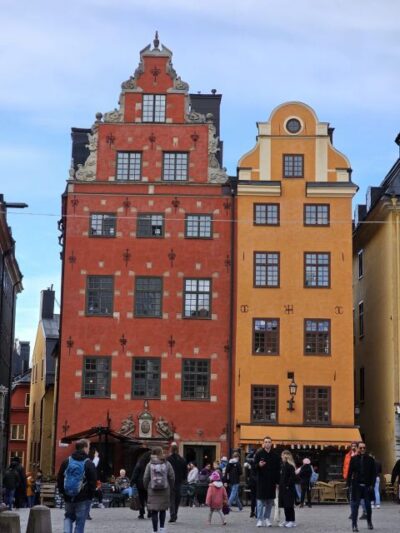 ★ 4.7Secrets of Gamla Stan Guided Tour w/ Fika OptionFrom $16282 reviews
 ★ 4.5Malmö: Disgusting Food Museum Entrance TicketFrom $24234 reviews
 ★ 4.7The Original Pub CrawlFrom $26204 reviews
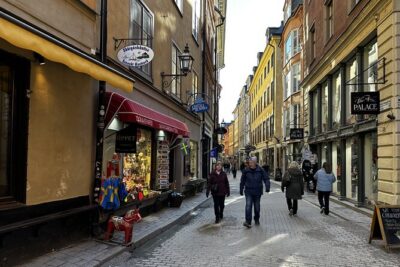 ★ 5.0Stockholm Small Group Food Tour with 7 Classic Food TastingsFrom $139168 reviews
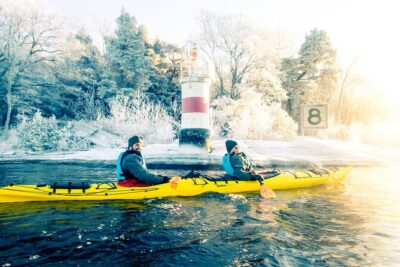 ★ 5.0Winter Kayaking, Swedish Fika and hot Sauna ExperienceFrom $160156 reviews
Browse the lists this tour appears in