
REVIEW · GOTHENBURG
Gothenburg : Private Walking Tour with A Guide (Private tour)
Gothenburg makes more sense on foot. This private walking tour strings together the city’s most memorable neighborhoods, from Haga’s wooden streets to Trädgårdsföreningen’s palm house, with hotel pickup when you’re staying in town. You also get a private guide who can customize what you care about, including extra stops and how long you linger at each place.
My favorite part is the balance: you see classic Gothenburg details, then you get a breather in a top 19th-century park. Trädgårdsföreningen gives you room to slow down, while the rest of the walk keeps you moving and oriented. The one catch is that this is a walking tour with a fairly active rhythm, so if you need tons of long café breaks, plan for it in advance since food and drinks are not included.
In This Review
- Key things that make this tour worth your time
- Why a private guide helps Gothenburg click
- Haga Nygata: the wood-house district that sets the mood
- Avenyn, Kungsportsbron to Götaplatsen: the city’s main spine
- Gothenburg Cathedral and Kungsportshuset: big landmarks with a useful route
- Trädgårdsföreningen Garden Society: roses, woodlands, and that 1878 palm house
- Pace, breaks, and how to avoid sore-feet regret
- Price value: $60.21 per person and what you’re really paying for
- Which stops to linger at, depending on your interests
- Should you book this private Gothenburg walking tour?
- FAQ
- FAQ
- Is this a private tour or shared?
- How long is the Gothenburg private walking tour?
- Where does the guide meet you?
- Can I request the tour start from a specific hotel?
- What language is the tour offered in?
- Are the main stops included free of charge?
- Is transportation included?
- Is food or drink included?
- Does the tour include help with tickets?
- Is there free cancellation?
- Are service animals allowed?
Key things that make this tour worth your time
- Private guide, true customization: you can steer the focus toward what you want to see and do
- Free-entry highlights: multiple major stops have free entry, so you’re paying mainly for guiding
- Easy to get your bearings: the route links neighborhoods that are simple to enjoy but hard to connect without local context
- Trädgårdsföreningen’s palm house: a specific, time-tested garden experience from 1878
- Guides who go beyond the script: some add sights like the fish church area and the harbor, depending on timing
- A pace that works best for active walkers: expect real walking, not a sit-and-stare museum tour
Over on the west coast, these are the ones we rated
- Gothenburg: Archipelago cruise with guide★ 4.3 · 1,002 reviews
- Gothenburg: City Canal Sightseeing Cruise★ 4.7 · 470 reviews
- Gothenburg: Go City All-Inclusive Pass with 20+ Attractions★ 3.8 · 222 reviews
- Gothenburg: City Sightseeing Hop-On Hop-Off Bus Tour★ 3.8 · 206 reviews
Why a private guide helps Gothenburg click
Gothenburg can feel friendly and low-key, but it’s still easy to miss the “why” behind a street, a building, or a view. A private guide helps you connect the dots fast. Instead of bouncing between landmarks on your own and guessing what matters, you get a route that makes sense geographically and historically, delivered in plain language.
This tour is also set up to be flexible. You’re not trapped in a fixed checklist. In real guide-style, the best moments tend to come from your questions and requests. A few guides in the mix have delivered very specific add-ons based on what people wanted, like craft beer stops and typical Swedish food (with a guide who tailored the afternoon to that). Another guide even brought in fika culture and small local quirks, then wrapped things up with a practical finish at a candy shop for the right day of the week.
That customization is exactly why this format works well for different travelers. If you love architecture, you’ll get street-level detail. If you’re more into everyday life, you’ll spend more time on the “how do people actually live here” side of the city.
Haga Nygata: the wood-house district that sets the mood
You start in Haga, with about half an hour to settle in. This is one of those places that instantly changes the tone of a walk in Gothenburg. The district is known for its picturesque wooden houses and that 19th-century atmosphere that feels like a movie set, but still very much alive with cafés and strolling.
What makes Haga worth your attention is contrast. It used to be a working-class suburb with a rough reputation, and then it transformed into a popular visiting area. A good guide helps you see that shift, so you don’t just admire cute facades. You understand why the vibe feels both nostalgic and current.
Practical advice: take a slow turn or two early. If you rush through Haga in search of the next stop, you miss the texture. Look at street width, how storefronts sit against the older buildings, and how foot traffic flows. That’s where you start feeling how Gothenburg moves.
Admission is free for the stop, which also keeps the walk feeling efficient. You can spend your time on what you’re seeing, not waiting around for tickets.
Avenyn, Kungsportsbron to Götaplatsen: the city’s main spine
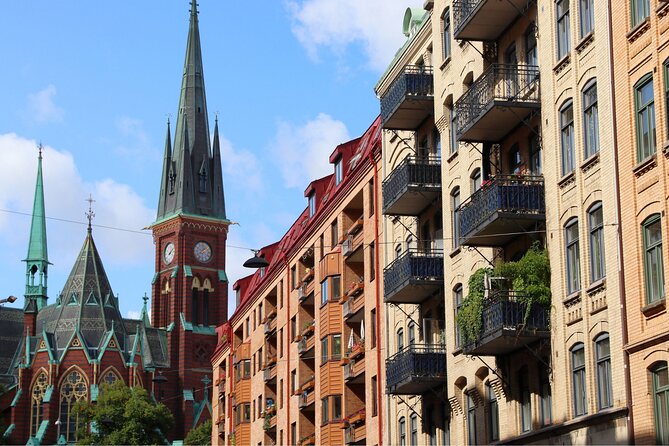
From Haga, you head toward Kungsportsavenyen, often called Avenyn. Think of this as Gothenburg’s long, central boulevard running from the bridge area (Kungsportsbron by the canal) toward Götaplatsen and the art and performance zone. You get around 30 minutes here, and it’s a great stretch because it’s easy to read the city layout while still enjoying the human-scale details.
The boulevard is busy most of the day, and that matters. You’ll feel the city’s rhythm. You’ll also pick up visual clues to where people gather for culture and events, since the boulevard connects toward major venues like the City Theatre and the Concert Hall area.
Why this stop works on a walking tour: you start understanding where “center” is, without it becoming stressful. On your own, it’s possible to wander and end up slightly out of sync with where you want to be next. With a guide, the path keeps you oriented and saves time.
Also, if your timing lines up with seasonal lighting, that can add a lot. One group shared that Christmas lights made the streets feel like a different city during their walk. Even if you don’t travel during the holidays, the boulevard is where you’ll notice how Gothenburg’s public spaces are used.
Gothenburg Cathedral and Kungsportshuset: big landmarks with a useful route
You move from Avenyn into the cathedral area. Gothenburg Cathedral sits in the city center, and it’s the third cathedral on this same site. The site story stretches back to earlier consecration in the 1600s, tied to Swedish royal history. Your guide’s job here is to translate all that into something you can picture, not just a date list.
You typically get about 30 minutes at the cathedral stop. That time window is ideal for a quick but meaningful “first encounter” visit. You can look, ask questions, and then move on while your energy is still good.
Then you continue to Kungsportshuset, another high-impact stop. This is a prominent meeting place on Kungsportsplatsen, where the architecture and location do a lot of the talking for you. The building also includes a bistro on the entrance level, which means the space feels designed for pauses and conversations, not just sightseeing.
If you like your walking tours to include both “wow” and “practical,” this pairing works. Cathedral gives you vertical scale and sense of civic identity. Kungsportshuset gives you a sense of how people actually meet, pass through, and linger in the center.
One more note: if you prefer a calmer feel, you might want to ask your guide to adjust the order slightly within the day so you’re not hitting the most crowded corner at the most crowded time.
When you would rather someone else did the talking



Trädgårdsföreningen Garden Society: roses, woodlands, and that 1878 palm house

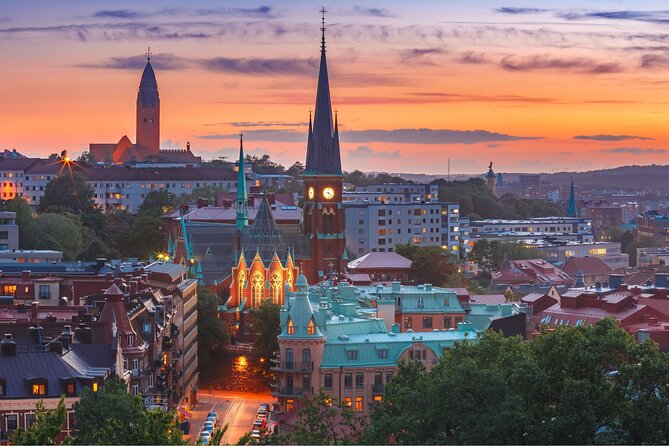
The walk’s tone shifts at Trädgårdsföreningen, the Garden Society. You get about 30 minutes, and it’s time well spent because it stops the city-momentum cycle. This park is described as one of the best preserved 19th-century parks in Europe, and you’ll feel that immediately in the layout.
There’s a lot going on here, but it’s not chaotic. You’ll see thousands of roses and carpet bedding, plus lush woodlands that feel like an intentional escape inside the city. Then there’s the palm house, built in 1878, which houses exotic plants in a Mediterranean-style climate. That specific detail is the kind of thing you remember later, because it’s so distinct from what you’d expect in Sweden.
This is also where you can earn your next step. If your feet are starting to protest, the garden gives you a legitimate reason to slow down. You can take photos without sprinting, and you can reset for the final push of your tour.
If you’re traveling in warmer months, ask your guide what to look for in the rose areas and how the plantings typically show off. If you’re in cooler weather, you’ll still get the structure and the feel of the grounds, even if the garden is less visually explosive than peak bloom.
Pace, breaks, and how to avoid sore-feet regret
A pattern shows up in multiple experiences: the tour can be fast-paced and active. One account described a quick walk where almost four miles were covered in about three hours, with no long stops. Another praised a pace that hit the sweet spot, not too slow and not too fast. The best way to handle this is to decide what you want most: maximum sights, or maximum time per spot.
Here’s the practical reality you should plan around. Food and drink are not included. So if you want a fika break or a proper meal, you’ll need to build it in yourself. Some guides have even tailored the day to include local fika culture, so you might be able to work it into the plan, but you shouldn’t assume the tour will schedule it automatically.
Also, if you’re sailing in on a cruise, timing matters. One guide extended the tour to help a group make it safely back to their ship, which is a solid example of how flexible the best guiding can be when schedules are tight.
If you’re sensitive to walking time, do two things:
- Wear comfortable shoes you already trust for long days.
- Tell your guide upfront what pace you can handle and how often you want a reset.
In a private tour, small adjustments like that can make the whole day feel easier.
Price value: $60.21 per person and what you’re really paying for
At $60.21 per person, this is not a bargain-bucket option, but it also isn’t priced like a luxury driver tour. You’re mainly paying for two things: the guide and the time you spend moving between multiple high-value stops.
A big value point is that many of the included stops have free entry. That means more of your money goes toward interpretation, route planning, and answering questions, rather than tickets stacking up. Another value point is hotel pickup within the city. Even a short pickup can save you a chunk of stress.
The other pricing factor is duration. It’s listed as 2 to 8 hours, which means you’re not stuck with a single rigid block. The longer you go, the more the private format can pay off, especially if you want shopping breaks, fika, or specific interests like craft beer and typical Swedish food.
So who gets the best value?
- You have a limited amount of time and want to see several major areas in one day.
- You like asking questions and want context for what you’re looking at.
- You want a route that reduces wandering and repetition.
Who might feel it less?
- You only want a slow scenic walk with no questions.
- You’re fine using maps and self-guiding with minimal interpretation.
Which stops to linger at, depending on your interests
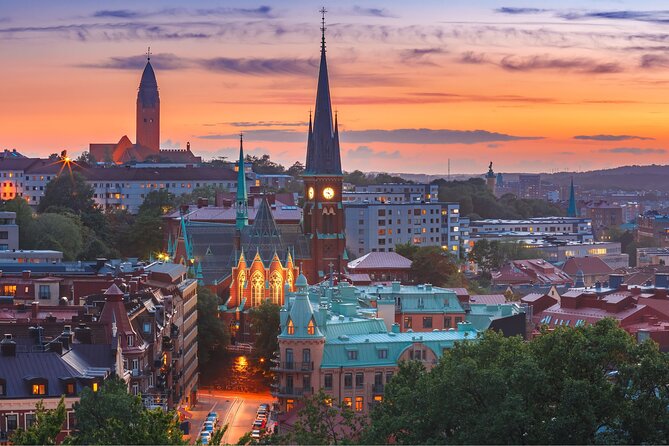
This tour is built around five main areas, each with a different “job” in the walk.
If you love neighborhood atmosphere, Haga Nygata is your first linger point. Give it extra minutes if you enjoy old streets, wood facades, and café culture.
If you want city structure, spend a little extra time on Kungsportsavenyen. This is the part that helps you understand where the center “pulls” you, including links toward cultural venues.
If you care about civic identity and architecture, Gothenburg Cathedral and Kungsportshuset are your anchor landmarks. Focus on what the buildings communicate and what surrounds them, rather than trying to absorb everything at once.
If you need the reset button mid-walk, Trädgårdsföreningen is where you should slow down. The palm house is the standout feature, and even a short visit can make the whole day feel more balanced.
And if you want “a little extra,” some guides add nearby sights such as the fish church area, the fort, and the harbor side during the broader city-center walk. That can turn a basic landmark tour into a more complete feel for Gothenburg.
Should you book this private Gothenburg walking tour?
I’d book this if you want a guided route that connects Gothenburg’s key areas without turning your day into a checklist. The combination of Haga’s atmosphere, the central boulevard orientation, and Trädgårdsföreningen’s palm house gives you variety in one afternoon. And since it’s private, you can push it toward what you actually care about, whether that’s local food habits, fika culture, or simply moving at a pace that doesn’t exhaust you.
I’d think twice if you hate walking-heavy tours or expect lots of long sitting breaks. This experience works best when you’re ready to move, ask questions, and make a couple of quick choices about where to linger.
FAQ
FAQ
Is this a private tour or shared?
This is a private walking tour. Only your group participates.
How long is the Gothenburg private walking tour?
The duration is listed as 2 to 8 hours, approximately.
Where does the guide meet you?
If you’re staying in Gothenburg, the guide can pick you up at your hotel. If your hotel is outside the city center, the provider will choose a convenient meeting point in the city.
Can I request the tour start from a specific hotel?
Yes. You can request the tour to start from any hotel in Gothenburg.
What language is the tour offered in?
The tour is offered in English.
Are the main stops included free of charge?
The specific listed stops have free admission tickets.
Is transportation included?
No. It’s a walking tour, and local transportation around the city is not included.
Is food or drink included?
No. Drink or food is not included, so you’ll need to plan any breaks separately.
Does the tour include help with tickets?
Yes. The included services mention help from the team to book tickets for the visits you want to include.
Is there free cancellation?
Yes, free cancellation is available. You can cancel up to 24 hours in advance for a full refund.
Are service animals allowed?
Service animals are allowed.
Other Swedish Outings We Reviewed





Reviewed Across Sweden



The West Coast, Reviewed
Other Swedish trips from the review pile
- Explore the Instaworthy Spots of Gothenburg with a Local
★ 5.0 · 3 reviews - Gothenburg: Private Walking Tour with a Guide
★ 3.6 · 3 reviews - Entry Ticket To Gothenburg Museum of art with pickup
★ 4.4 · 4 reviews - Guided Brewery Tour on Bicycle
★ 5.0 · 5 reviews - Gothenburg: Express Walk with a Local in 60 minutes
★ 4.8 · 6 reviews - Discover Gothenburg’s most Photogenic Spots with a Local
★ 4.5 · 7 reviews
Gothenburg & the West Coast, compared.
 ★ 4.3Gothenburg: Archipelago cruise with guideFrom $471,002 reviews
 ★ 4.7Gothenburg: City Canal Sightseeing CruiseFrom $30470 reviews
 ★ 3.8Gothenburg: Go City All-Inclusive Pass with 20+ AttractionsFrom $47222 reviews
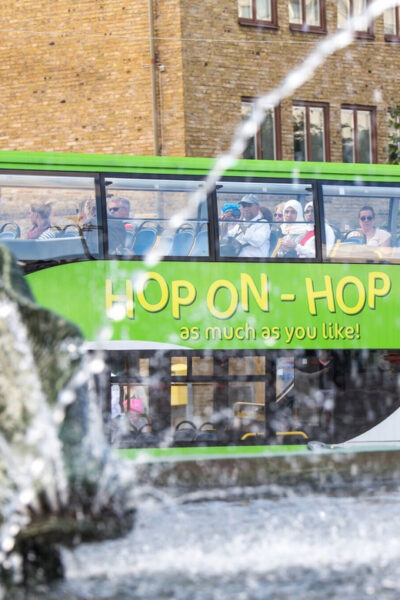 ★ 3.8Gothenburg: City Sightseeing Hop-On Hop-Off Bus TourFrom $38206 reviews
 ★ 4.5Gothenburg: Haga Old Town Walking TourFrom $55205 reviews
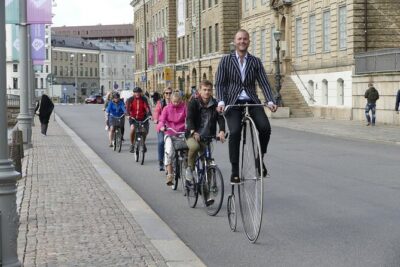 ★ 5.0Bike Tour Gothenburg, Guided Bicycle ToursFrom $6888 reviews
 ★ 4.0Archipelago Tour with guide GothenburgFrom $5173 reviews
 ★ 4.6Gothenburg: Paddan Sightseeing Cruise on the River SäveånFrom $3960 reviews
Browse the lists this tour appears in