
REVIEW · GAMLA STAN
Gamla Stan: Essential Tour of Stockholm
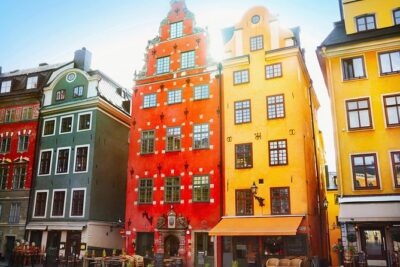
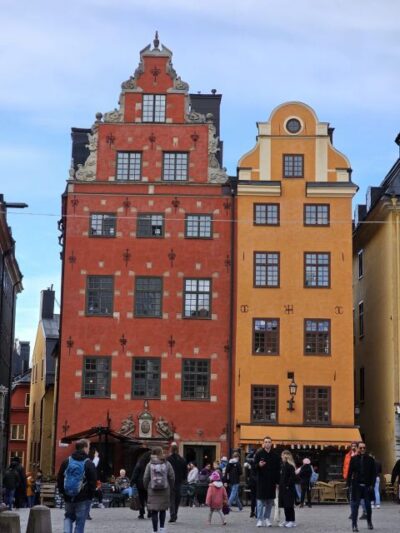
Gamla Stan feels like history you can walk through. I love the chronological storytelling that moves from the Viking era through the 1520 Stockholm bloodbath, and I love the high-energy guides who bring the streets to life, whether you are hearing from Sophie, Oscar, or Gaya. The tour also includes classic photo stops in Old Town, like the main square at Stortorget and the narrow lanes around Mårten Trotzigs gränd.
My only real drawback is practical: it is a 2.5-hour outdoor walk on cobbles and narrow streets, so you will want comfy shoes and weather-ready layers, even if the route is wheelchair accessible.
In This Review
- Key things I’d count on from this Gamla Stan tour
- Why Gamla Stan works better with a timeline
- Starting at Gustav Adolfs torg, and why the first minutes matter
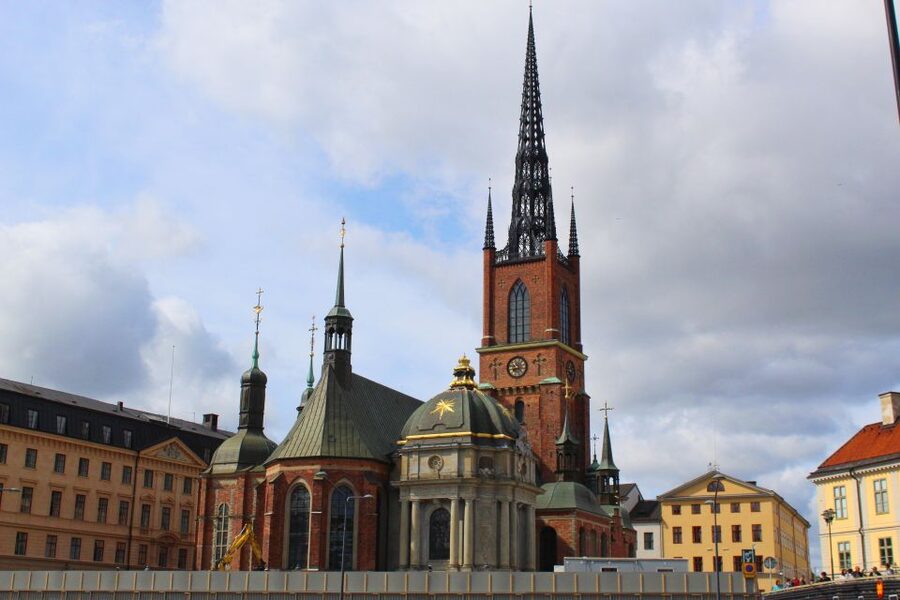
- Parliament House and Riddarholmen: learning to read the city’s “big moments”
- Mårten Trotzigs gränd, the narrowest street you can feel
- German Church: where cultural influence shows up in the details
- Royal Palace and Stockholm Cathedral: the medieval-to-royal handoff
- The Stockholm bloodbath chapter, and why Gustav Vasa comes next
- Stortorget and the St. George and Dragon symbols
- Guides that make the streets talk (Sophie, Oscar, Katherine, and more)
- What it feels like to walk a 2.5-hour Old Town circuit
- Price and value: $21 that actually buys context
- Practical tips for a comfortable Old Town walk
- Should you book this Gamla Stan essential tour?
- FAQ
- What is the price for the Gamla Stan essential tour?
- How long is the tour?
- Where do we meet the guide?
- Where does the tour end?
- Is the tour guided in English?
- Is the tour wheelchair accessible?
- What historical period does the tour cover?
- Which main stops are included during the walk?
- What should I do if bad weather changes plans?
- Can I cancel or pay later?
Key things I’d count on from this Gamla Stan tour
- Chronological route, starting with Viking-era roots and landing at key moments through Gustav Vasa
- Gamla Stan landmarks on one connected walk, including Royal Palace, Stockholm Cathedral, and Stortorget
- Mårten Trotzigs gränd, specifically called out as the narrowest street in Stockholm
- Old Town lane vibes, with narrow, colorful streets and plenty of chances to look up and around
- English live guiding, led by staff who are lively and open to questions from the group
- Small-group feel, with feedback pointing to groups around 15, so you can actually hear the story
Stockholm is a big menu. Here is what else we tried
- Stockholm: City Archipelago Sightseeing Cruise with Guide★ 4.3 · 10,798 reviews
- Stockholm: Skansen Open-Air Museum Admission Ticket★ 4.5 · 3,427 reviews
- Stockholm: Archipelago Boat Tour★ 4.4 · 3,110 reviews
- Stockholm: Highlights Boat Tour★ 4.3 · 2,542 reviews
Why Gamla Stan works better with a timeline
If you walk Gamla Stan without a guide, it can turn into a pretty blur of stone, churches, and squares. With this tour, the city has a spine. You start with early eras, then the story threads forward until Sweden’s power shifts get their moment.
I like that it is not random sightseeing. The guide keeps connecting what you see in front of you to the era you are hearing about, from early Scandinavian life to foreign influence and the Danish conflict.
And yes, you still get the postcard stuff. Narrow streets, iconic squares, and famous Old Town symbols make it easy to remember what you are looking at when the history clicks into place.
Starting at Gustav Adolfs torg, and why the first minutes matter
You meet at Gustav Adolfs torg, and the guide is easy to spot in the middle of the square with a rainbow colored umbrella. That little detail is surprisingly helpful in a city where you might otherwise wander one block too far and miss the start.
In the opening stretch, the guide sets the tone: this is an Old Town walking tour that follows history in order. That matters because it trains your eyes. Instead of treating buildings like isolated sights, you begin to see them as chapters.
You also get an immediate sense of how the walk will feel. You are moving through tight spaces and famous corners, but with enough stops for the guide to explain what you are seeing and why it matters.
Parliament House and Riddarholmen: learning to read the city’s “big moments”
Early on, you pause at Parliament House, Sweden for a short guided stop, then continue to Riddarholmen. These are “anchor” points where the guide can connect broad historical shifts to the actual place in front of you.
Even if you are not a history superfan, these stops help you get your bearings. The guide uses them to show how Stockholm’s story moved through power, conflict, and survival, not just kings and dates.
One thing I appreciate here is pace. The stops are brief, but they stay focused. You are not stuck in one spot waiting for a speech. The walk keeps you moving, while the guide builds context as you go.
Mårten Trotzigs gränd, the narrowest street you can feel
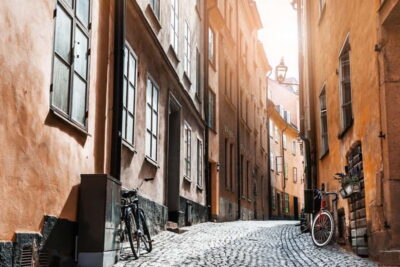
Then comes Mårten Trotzigs gränd, highlighted as the narrowest street in Stockholm. This is the kind of stop where the guide’s timing pays off, because you experience the space with your own body.
You will walk down those tight lanes and look into the kind of streets people still use today. That is the fun of Gamla Stan. Even when the history is medieval, the city is still a working neighborhood.
This is also where the walking tour earns its charm. It is easy to take a photo, but it is more interesting to notice how the guide describes the area and how the streets shape the experience of the city.
Other old-town lanes we walked and wrote up

German Church: where cultural influence shows up in the details
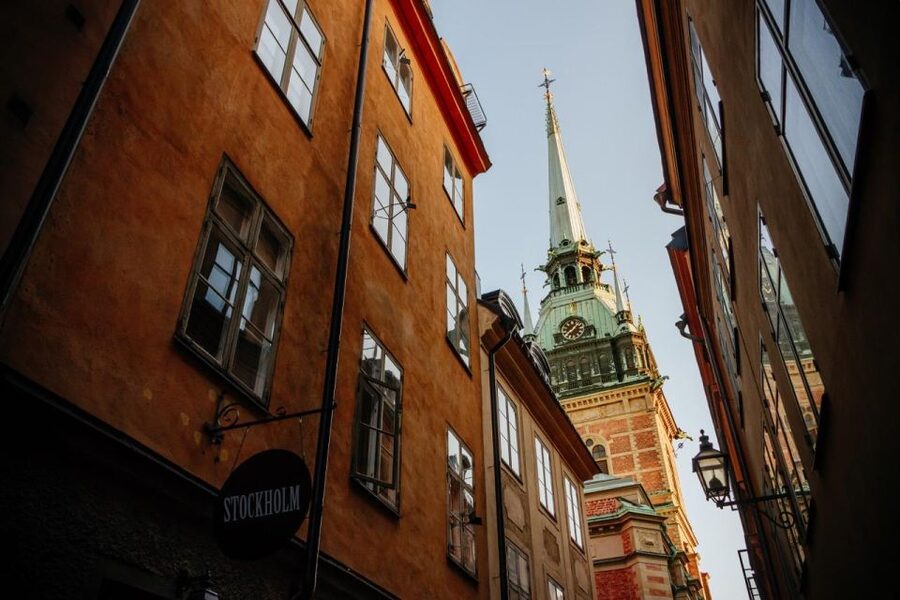
Next is German Church, Stockholm, another guided stop that keeps the historical thread moving. The tour specifically references German influence as part of the larger timeline, so it is not just a random church stop.
What I like about this part of the walk is that it treats religion and architecture as clues. You are learning how outside influences played a role in shaping Stockholm, and you get to connect that to a real physical site.
If you enjoy hearing how cultures collide and blend, this stop is a good mid-tour payoff. It is also a nice chance to slow down, listen, and reset before the Royal and cathedral section.
Royal Palace and Stockholm Cathedral: the medieval-to-royal handoff
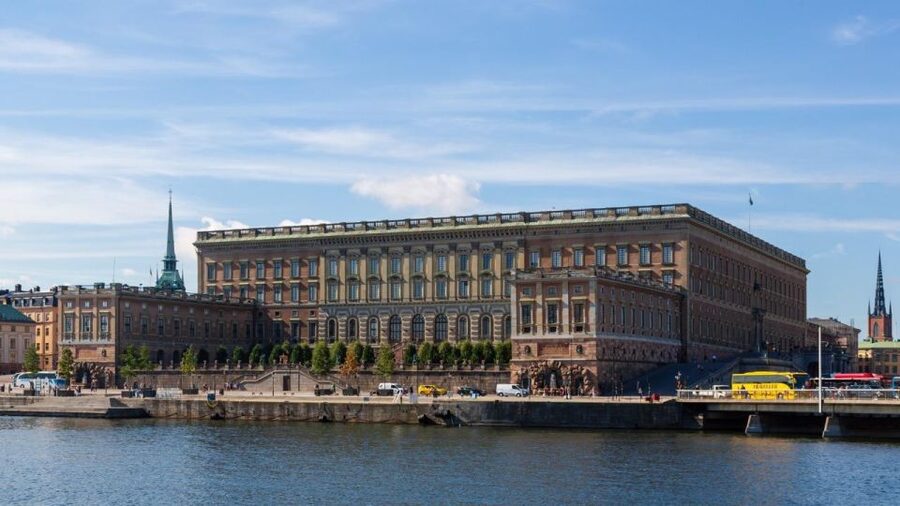
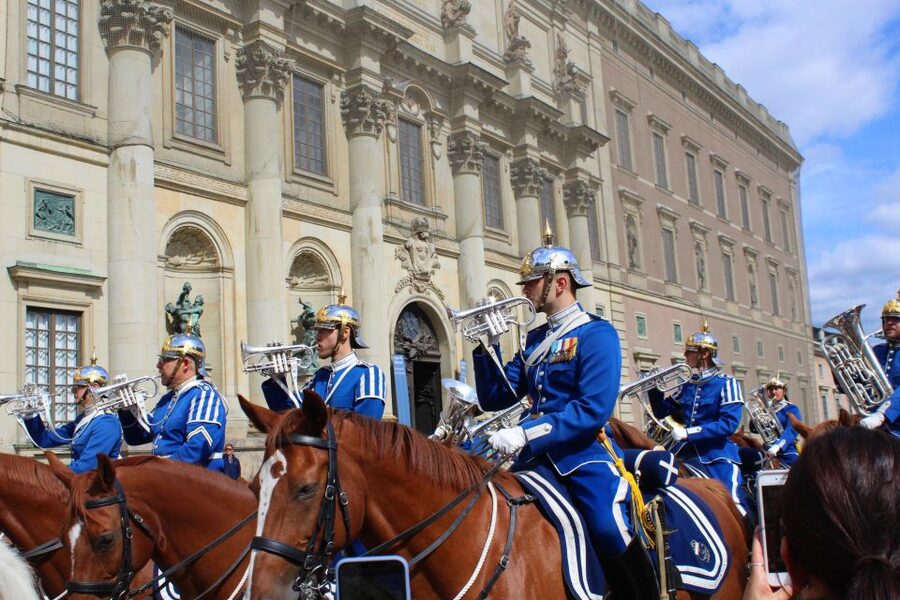
The tour continues to the Royal Palace, Stockholm and then to Stockholm Cathedral. The guide uses these stops to push you from the older, conflict-heavy chapters toward Sweden’s organized power.
The best part here is how the guide frames what you are seeing. You are not just told that something is old. You are placed in a sequence, so the landmarks start to feel like stepping stones in one long story.
There is also a practical benefit: by the time you reach the palace and cathedral areas, you understand where you are in the Old Town layout. That makes later sightseeing easier, because you can picture how the streets connect.
The Stockholm bloodbath chapter, and why Gustav Vasa comes next
The tour’s story is anchored by a turning point: the Stockholm bloodbath in 1520, followed by the succession of Gustav Vasa. That is not the kind of detail you always get on a casual Old Town walk, and it is exactly the moment where the timeline becomes memorable.
I like tours that do not soften the harder parts. The guide explains this in a way that connects to what you are walking past, so the history does not float in the abstract.
Once you hit this section, the tour helps you understand why later eras feel like a shift from medieval patterns. Even if you remember only a few dates, you will remember the story arc: conflict, then a new direction.
Stortorget and the St. George and Dragon symbols
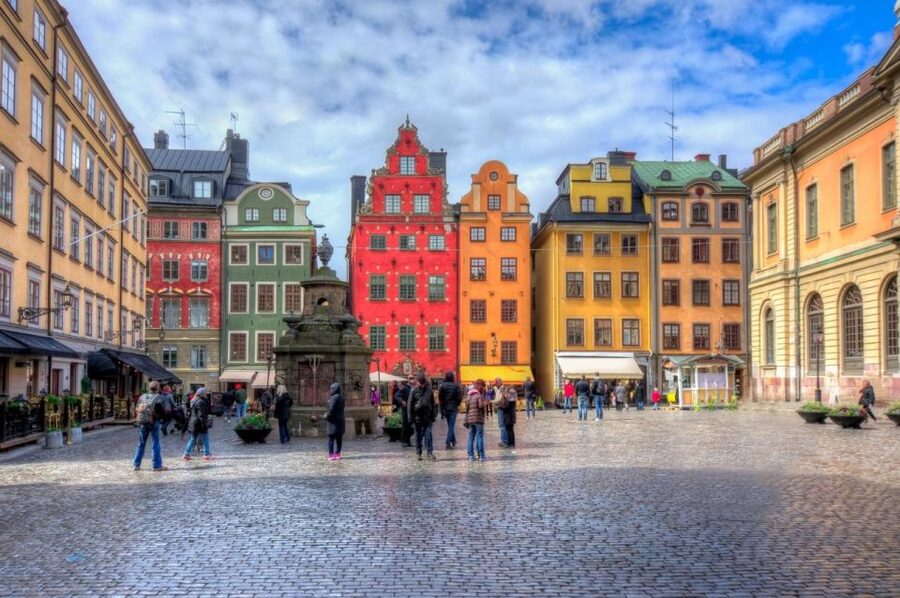
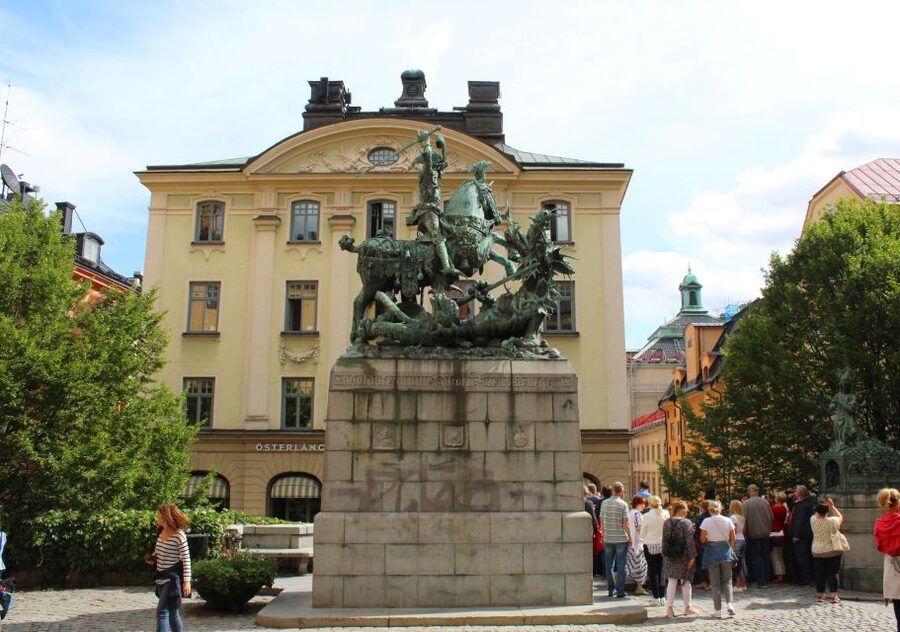
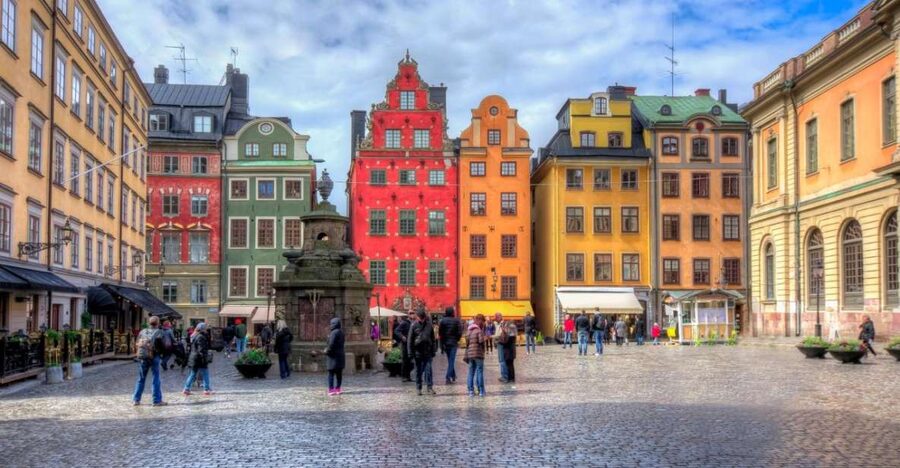
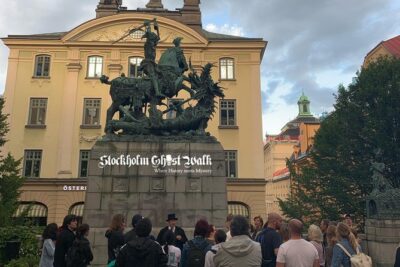
You finish at Stortorget, the famous main square, and along the way you see symbolic Old Town sights, including the statue of St. George and the Dragon.
This is a great way to end, because squares are made for lingering. When you reach Stortorget, you can look around and connect the space to what you just learned. It is one thing to see history in buildings. It is another to see it in the places where people gathered.
The St. George and Dragon stop is especially fun if you like symbolism. The guide’s explanations help you understand how these images fit into the city’s identity, not just that they exist.
Guides that make the streets talk (Sophie, Oscar, Katherine, and more)
The biggest differentiator on this tour is the guide. You get live English guiding, and the people leading the walk are described as eager to answer questions and bring in perspective beyond the dates.
From the names that come up most often, the vibe is clear. Guides like Sophie and Oscar are praised for high energy and strong storytelling. Katherine is remembered for an adventurous, well-paced approach with plenty of stop-and-explain moments.
There is also a recurring theme of humor and wordplay. One guide is noted for clever storytelling that mixes history with engaging delivery. Another approach is to ask Swedish friends questions that foreigners might ask, which turns into a useful cultural lens.
If you are the type of person who likes to interact, this tour gives you that room. Feel free to ask what you are curious about. It can turn a standard sightseeing walk into something personal and more memorable.
What it feels like to walk a 2.5-hour Old Town circuit
The duration is 2.5 hours, and that length is a sweet spot for Gamla Stan. You get time to cover multiple highlights without turning the day into a full marathon.
The route also has built-in variety. You are moving between larger landmarks and tight alleys, so you are not stuck with the same look and feel for the whole time. Short guided stops keep the story clear and prevent long gaps.
One more plus: group size appears to be kept friendly. In feedback, a group size around 15 is mentioned, and that makes a real difference. You can hear the guide without constantly craning your neck or getting blocked by taller folks in front.
Price and value: $21 that actually buys context
At $21 per person, you are paying for a live guide, a structured timeline, and practical orientation around the Old Town. For Gamla Stan, that value adds up fast because the guide is doing the hardest part for you: turning scattered landmarks into one understandable route.
You also get travel recommendations, which is the kind of extra that helps your free time after the tour. If you want to keep exploring on your own, the guide can point you toward what is worth your next hour, not just what is famous.
This is one of those tours where the cost feels reasonable because you are getting time on the ground plus guided explanations, not just a list of places to walk past.
Practical tips for a comfortable Old Town walk
Here’s what I’d plan for before you go:
- Dress for weather. It is outdoors, so check conditions and layer up.
- Wear good shoes. Old Town means cobbles and narrow lanes, even when the route is wheelchair accessible.
- Arrive on time. If you are going to be late, let the local operator know in advance so they can help you reach the tour.
Also, the guide will be in English and you can ask questions as the walk goes. If you like context, this is the moment to get it. If you do not, you can still enjoy the sights while the timeline does the heavy lifting in the background.
Should you book this Gamla Stan essential tour?
I’d book it if you want an efficient way to understand Gamla Stan instead of just collecting photos. The chronological format helps the main eras stick in your mind, and the key 1520 bloodbath plus Gustav Vasa storyline is a strong backbone.
I would skip it only if you are looking for a purely relaxed stroll with no historical structure. The tour is built to explain, and you will spend part of the time listening.
Best fit: first-timers, history-curious walkers, and anyone who appreciates a guide who mixes facts with humor. If you want to leave with better bearings and a clearer picture of how Stockholm’s story turned into today’s Old Town, this is a smart, good-value choice.
FAQ
What is the price for the Gamla Stan essential tour?
The price is $21 per person.
How long is the tour?
The tour lasts 2.5 hours.
Where do we meet the guide?
You meet at Gustav Adolfs torg, and the guide will be in the middle of the square with a rainbow colored umbrella.
Where does the tour end?
The tour finishes at Stortorget.
Is the tour guided in English?
Yes, it is a live tour guide in English.
Is the tour wheelchair accessible?
Yes, the activity is wheelchair accessible.
What historical period does the tour cover?
The tour runs chronologically, starting from the Viking era, then covering German influence, a Danish clash, and the Stockholm bloodbath in 1520, followed by the succession of Gustav Vasa.
Which main stops are included during the walk?
Stops include Parliament House, Riddarholmen, Mårten Trotzigs Gränd, German Church, Royal Palace, Stockholm Cathedral, and the ending at Stortorget.
What should I do if bad weather changes plans?
You should check the weather and dress accordingly.
Can I cancel or pay later?
You can cancel up to 24 hours in advance for a full refund, and you can reserve now and pay later.
Reviewed Across Sweden





More Old Town Lanes




Stockholm, A Few More Ways
Other Swedish trips from the review pile
- ROYAL Castle Skokloster and Viking Sigtuna (private tour)
★ 4.5 · 3 reviews - Stockholm Port to Stockholm Arlanda Airport (ARN) – Departure Private Transfer
★ 3.5 · 3 reviews - Stockholm Ghost Hunt: Self-Guided Tour and Puzzle Adventure
★ 4.5 · 3 reviews - Private Photography workshop in Stockholm
★ 5.0 · 3 reviews - Private blood, ghosts and folklore Old Town 2h Stockholm tour
★ 4.0 · 3 reviews - Ghosts of Stockholm: A Guided Tour of Horror and Dark Folklore
★ 4.5 · 3 reviews
Gamla Stan & Old Town Walks, compared.
 ★ 5.0Walking Tour of Stockholm Old TownFrom $241,175 reviews
 ★ 4.5The Original Stockholm Ghost Walk and Historical Tour – Gamla StanFrom $381,165 reviews
 ★ 5.0Walking Tour of Stockholm’s Old Town, Gamla StanFrom $13451 reviews
 ★ 4.9Old Town Historical Walking TourFrom $52344 reviews
 ★ 4.0Old Town Tour of StockholmFrom $51289 reviews
 ★ 4.7Old Town Guided Walking Tour (English / Deutsch)From $29284 reviews
 ★ 4.7Secrets of Gamla Stan Guided Tour w/ Fika OptionFrom $16282 reviews
 ★ 4.8Old Town Walking Tour, stories and secretsFrom $16275 reviews
Browse the lists this tour appears in