
REVIEW · GAMLA STAN
Stockholm: Old Town Walking Tour, stories and secrets
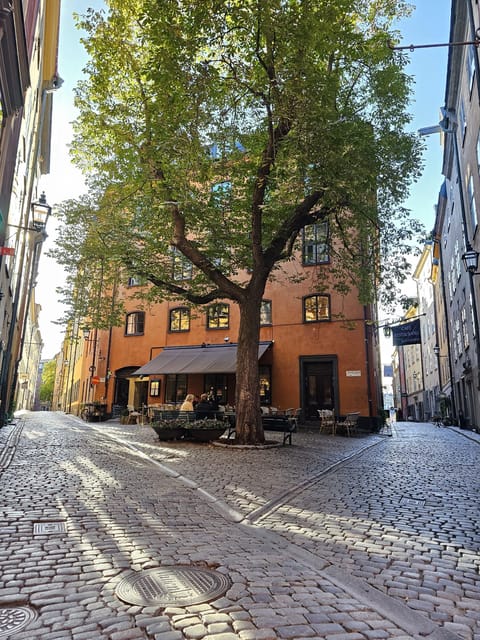
Old Town Stockholm feels like a time machine, and this walking tour is the tour to match. You start at Postmuseum and spend two hours weaving together medieval streets, royal power, and everyday life through clear, story-led stops.
I especially love the way the route builds your bearings fast, because you see the big landmarks and the small details in one go. I also like that the tone is human, with guides who can answer questions and keep things moving, with names like Sarah showing up often in real-world feedback. The only real drawback is simple: it is a walking tour, and it is not suitable for wheelchair users or people with mobility impairments.
In This Review
- Key things to know before you go
- Meeting at Postmuseum: where Gamla Stan starts talking
- Runestone and Stortorget: the first clues you will carry all day
- Royal Palace pass-by and Stockholm Cathedral: power meets faith
- Iron Boy, St George, and statues that teach you how people think
- Österlånggatan to Järntorget: watching the city change as you walk
- Mårten Trotzigs Gränd and Västerlånggatan: the narrow way to big impressions
- German Church pass-by, Riddarholmen views, and the quieter side of Old Town
- Finish at Mynttorget: the square that links past to present
- Price and value: two hours for about $16, with story-first payoff
- Who should book this walk, and who might not love it
- Should you book this Stockholm Old Town Walking Tour with stories and secrets?
- FAQ
- Where does the tour start?
- Where is the tour ending?
- How long is the walking tour?
- What language is the tour guide?
- What should I bring?
- Is the tour suitable for wheelchair users?
- How much does it cost?
- Is tipping expected?
- Can I cancel?
Key things to know before you go
- Start at Postmuseum in Gamla Stan, right where the Old Town story naturally begins
- Stortorget and the surrounding squares give you an easy mental map of the city’s center
- Stockholm Cathedral appears more than once, so you get both quick photo moments and a deeper look
- Mynttorget is the finish, tied to the idea of freedom of speech and assembly
- English-speaking guides keep the pacing lively and Q&A friendly
- Two hours for about $16 is strong value if you want context without a full day commitment
Stockholm is a big menu. Here is what else we tried
- Stockholm: City Archipelago Sightseeing Cruise with Guide★ 4.3 · 10,798 reviews
- Stockholm: Skansen Open-Air Museum Admission Ticket★ 4.5 · 3,427 reviews
- Stockholm: Archipelago Boat Tour★ 4.4 · 3,110 reviews
- Stockholm: Highlights Boat Tour★ 4.3 · 2,542 reviews
Meeting at Postmuseum: where Gamla Stan starts talking
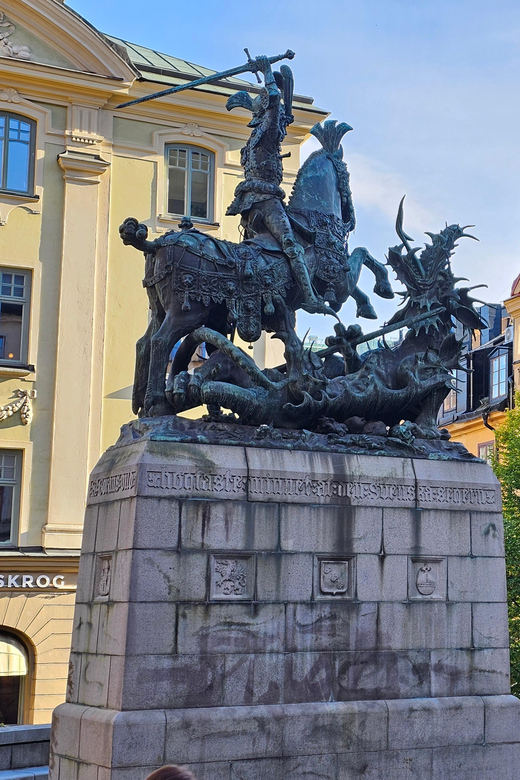
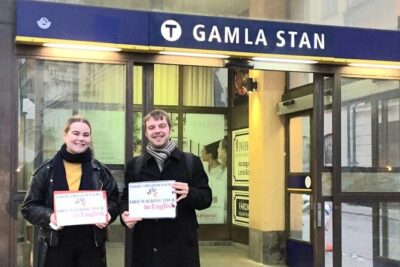
Most Old Town tours feel like a highlight reel. This one starts with something more grounded: the Postal Museum (Postmuseum) at Lilla Nygatan 6 in Gamla Stan, with the Gamla Stan subway station as the easiest reference point. If you like beginning a day with orientation, this is a smart choice, because you are already in the neighborhood where everything connects.
You meet your guide at the entrance and then head out on foot. Expect prompt departures, so plan for arriving a few minutes early, especially if you are catching a connection or navigating cobblestones with bags. Comfortable shoes matter here. Gamla Stan is charming because it is old, not because it is flat.
What I find useful about this start point is that it sets the tone for the rest of the walk. You are not just ticking off buildings, you are learning how Stockholm’s geography and politics shaped daily life, block by block.
Runestone and Stortorget: the first clues you will carry all day
Your first real stops connect you to Stockholm’s earliest signals. You begin with a Runestone stop, which is quick but important, because it reminds you that people were marking place and memory long before the grand stone churches and palaces. It is a useful warm-up. You start noticing symbolism instead of just scenery.
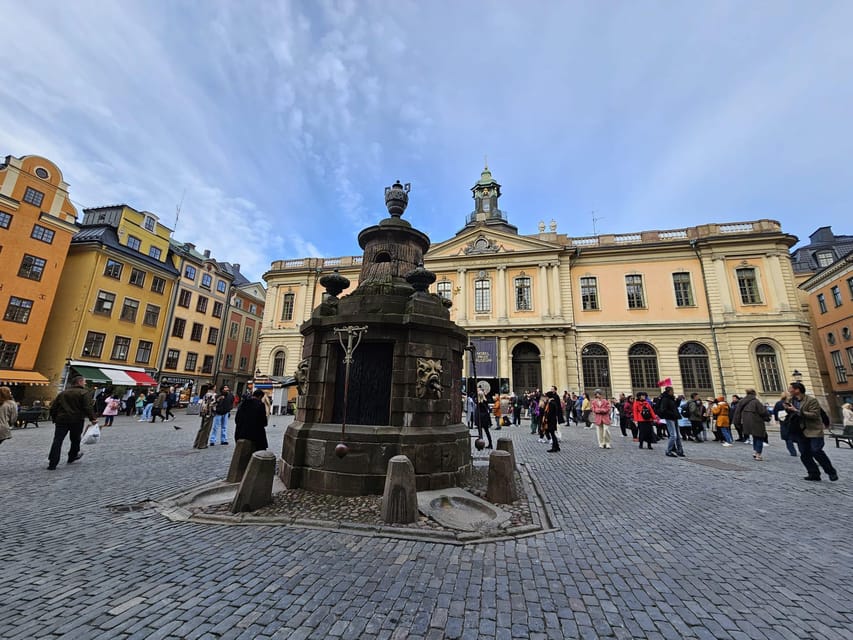
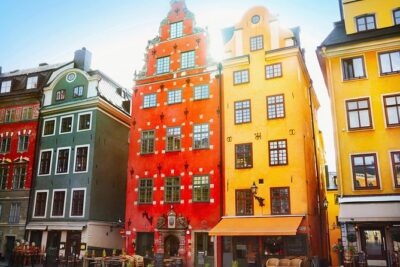
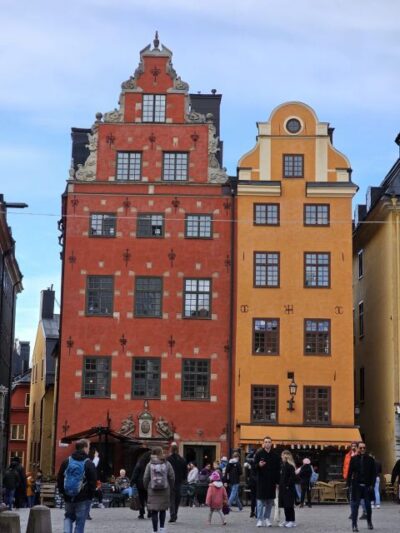
Then you hit Stortorget, Stockholm’s historic main square. This is the moment when the tour shifts from “cool old stones” to “why this matters.” A square like Stortorget is where decisions happen and where regular life keeps going. Even if you are not a monarch-history person, this kind of location helps the stories feel practical.
Stortorget also works as a mental anchor. After you pass it, the rest of Gamla Stan stops start to line up in your mind. That matters if you want to explore on your own afterward.
If you have only a day or two in Stockholm, I like booking a tour like this early. It helps you understand where you are going later, instead of guessing between neighborhoods.
Royal Palace pass-by and Stockholm Cathedral: power meets faith
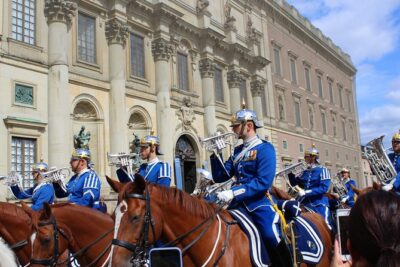
Next comes the Royal Palace, Stockholm, mostly a pass-by with a photo stop. This is not a full palace tour, but it still serves a purpose: it places you in the orbit of Swedish royal history. You get the sense of scale and location, then the walk continues so you do not get stuck in one spot too long.
After that, you reach Stockholm Cathedral. The tour builds in a nice rhythm with photo and guided segments. You also get Stockholm Cathedral again later, which is unusual in a short walking tour and makes sense. A cathedral is not just one moment. It changes depending on where the light hits, what angle you catch, and how the guide frames it.
What you should focus on during this stretch is the contrast. Cathedrals speak to belief and public life, while royal sites speak to governance and control. When you experience them back-to-back on foot, you start to see how power and faith shared the same streets, not separate worlds.
If you care about photography, this is one of the best segments. The tour gives you brief photo moments, then time for context, then another chance to look again.
Iron Boy, St George, and statues that teach you how people think
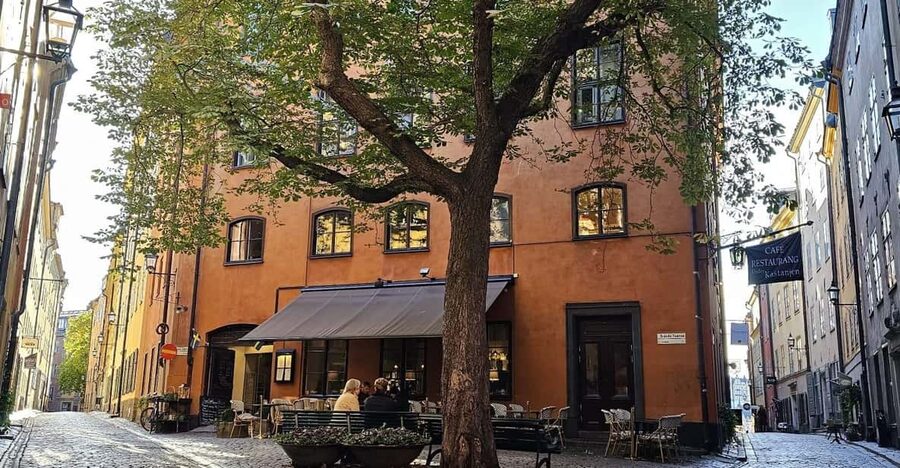
After the grand architecture comes something more playful and symbolic: Iron Boy, the boy who watches the moon. This is a quick stop, but it is exactly the kind of moment that makes a walking tour feel alive. Statues like this are a shortcut to local culture, because they show what a city chooses to memorialize with affection and humor.
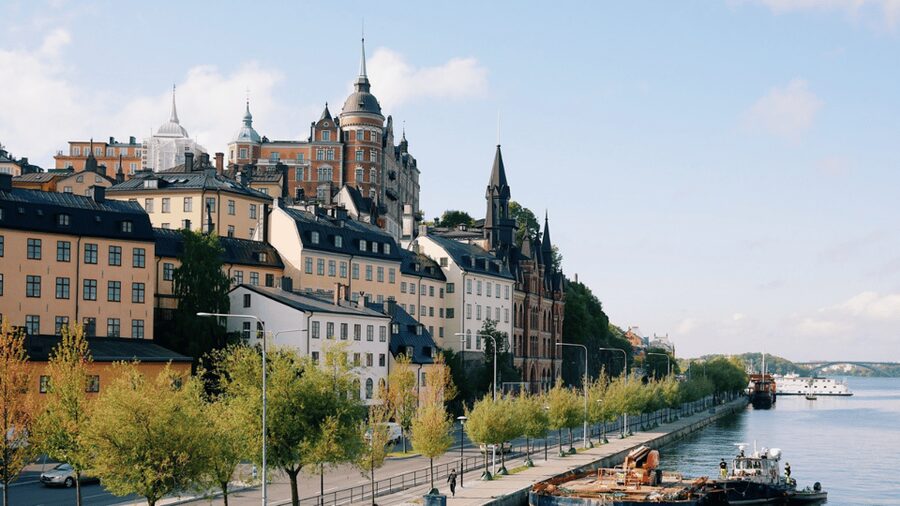
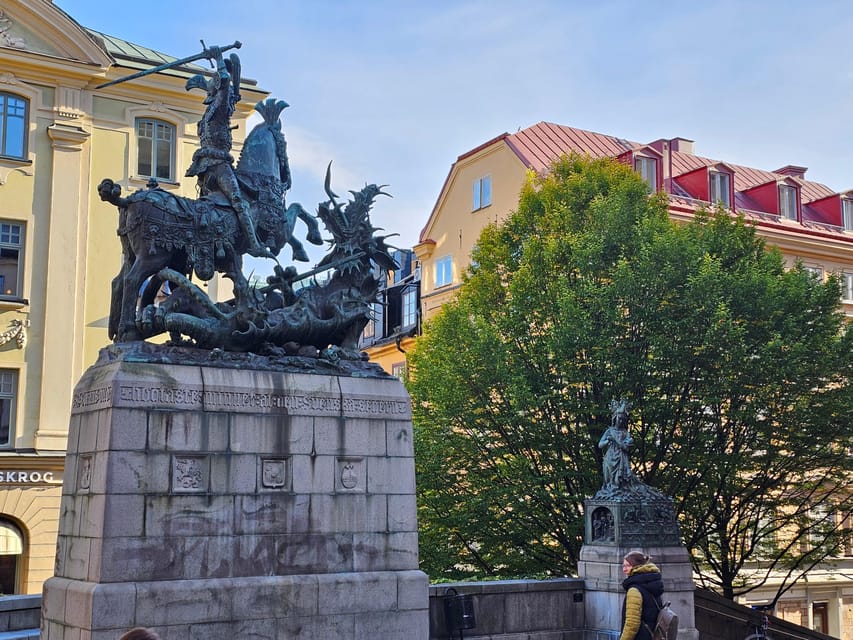
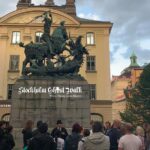
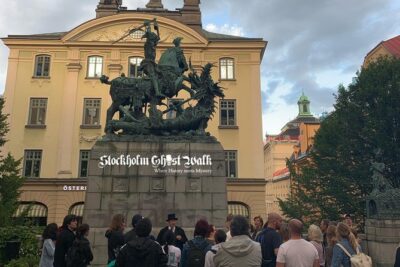
Then you head to St George and the Dragon Statue. Again, short walk, quick viewing, but this is where you learn how symbols travel through time. People do not just build monuments, they decide what lessons to keep visible. You can also use this stop to plan your own photo strategy. Stand back for the full view, then step in closer when you find a clean angle.
If you are the kind of person who likes meaning behind the artwork, you will enjoy these stops. If you mostly want scenery, they still work because they add variety after the heavier history around the palace and cathedral.
Other old-town lanes we walked and wrote up
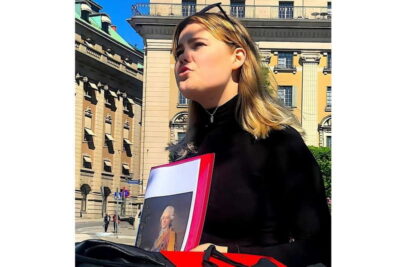
Österlånggatan to Järntorget: watching the city change as you walk
From the statue stops, the route shifts into street-level life. You pass along Österlånggatan, then come to Järntorget. These aren’t “big-ticket” sights, and that is the point. Gamla Stan is not only palaces and churches. It is narrow streets where trade, neighbors, and routines have shaped what the city feels like.
A street like Österlånggatan matters because it is a pathway through time. As you walk it, you get the sense of continuity. You are moving through the same kind of urban logic that shaped markets and movement for centuries.
Then Järntorget brings the square back into focus. Squares help you understand how people used public space. They are where city life compresses into something visible, from daily conversations to larger events. Even in a short tour, you start recognizing the patterns: square, monument, church, street, viewpoint.
I also like that the pacing keeps you from getting tired too early. This middle segment is where many people begin to relax into the tour, because the guide has already given you a storyline to follow.
Mårten Trotzigs Gränd and Västerlånggatan: the narrow way to big impressions
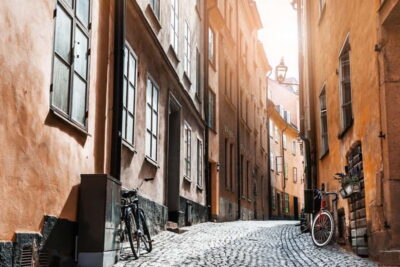
Two of the best-known small streets in Gamla Stan show up next, and you get the quick photo moment you want at the right time. Mårten Trotzigs Gränd is famous for its tight, twisty feel, and it is exactly the kind of lane you would miss if you were wandering without a plan. The tour uses it well as a break between larger architectural areas.
Then you move to Västerlånggatan. This street gives you the opposite vibe from the narrow lane. It is about perspective. Wide views, bigger building lines, and the way the street can funnel your attention. If you want to understand how the Old Town balances tight passages with open sightlines, this pairing does a great job.
Practical note: cobblestones can be slippery if it has rained. Slow down in the narrow lanes and keep your stride steady. The tour is only about two hours, so the goal is comfort, not speed.
German Church pass-by, Riddarholmen views, and the quieter side of Old Town
Next, you pass the German Church, Stockholm. You get a sightseeing and pass-by moment rather than a long stop, which is practical. It keeps the flow and still marks the cultural layers in the neighborhood. Even when you do not spend time inside, the location helps explain who influenced trade and community life over the years.
Then you reach Riddarholmen, where the tour focuses on scenic views on the way. This is one of those segments where I think you will feel the payoff of walking. Old Town Stockholm has water and islands threading through it, and you see how the city’s layout makes certain views possible.
You then stop at Riddarholmen Church for a photo moment. This is a quieter, more reflective counterpoint to the cathedral segment earlier. If you are photographing, this is where you should slow down. Let your eyes adjust to the angle, then take a couple of steady shots rather than rushing.
Finally, you pass by the House of Nobility, Stockholm. It is a brief stop, but it adds the “who had power” piece. This is how the tour ties monarch history and everyday life together, by showing that political influence was not abstract. It was housed, funded, and practiced in specific buildings and neighborhoods.
Finish at Mynttorget: the square that links past to present

Your tour ends at Mynttorget, described as a symbol of freedom of speech and assembly. That is a strong choice for a finishing point, because it shifts the focus from kings and churches to civic life and public gathering.
Even if you only stay a few minutes, you will likely feel the difference. The walk has been building toward context, and Mynttorget gives you a clean final idea to hold onto. It is not just about what Stockholm once was. It is also about how public space and speech matter now.
One small confusion to be aware of: the activity details also note that it ends back at the meeting point. Either way, you will finish in the Old Town area, and you should be able to continue walking or connect to the subway easily.
Price and value: two hours for about $16, with story-first payoff
At around $16 per person for a 2-hour guided walk, this tour is priced like a smart add-on, not a big budget splurge. The value is not just that you get a guide. It is that you get a structure: major landmarks, plus the smaller streets and symbols that make Gamla Stan feel like a living place.
This is also a good format if you are traveling with mixed interests. Someone can care about architecture and photos, someone else can care about monarch history and city rules, and the guide’s stories help connect both. The itinerary includes photo stops at big draws like Stockholm Cathedral and the royal area, but it also builds in street time on Österlånggatan and lanes like Mårten Trotzigs Gränd.
One thing to keep in mind, because it affects how you experience the tour: guides rely on tips for income. You do not need to overthink it, just plan to tip at the end if you enjoyed the storytelling and the pace.
If you are trying to decide between a longer tour and this short one, think about your main goal. If you want orientation plus context, two hours is the sweet spot.
Who should book this walk, and who might not love it
This tour is a good match for you if:
- You want English storytelling and a guided walk through the core of Gamla Stan
- You like learning the meaning behind landmarks, not just seeing them
- You want to get your bearings quickly before exploring on your own
- You enjoy photo stops timed around key sights like Stockholm Cathedral and Riddarholmen
It may be a poor match if:
- You need wheelchair access or mobility-friendly routing, because it is not suitable for wheelchair users
- You dislike walking on cobblestones, even though shoes can fix a lot of that discomfort
Also, if you plan to visit several churches and squares on your own afterward, this tour works as a “map plus memory” builder.
Should you book this Stockholm Old Town Walking Tour with stories and secrets?
I think it is a solid book if your priorities are clear and time is limited. For a low price and a two-hour commitment, you get the backbone of Gamla Stan: squares like Stortorget and Järntorget, big architecture around Stockholm Cathedral, classic monuments like Iron Boy and St George and the Dragon, and finishing symbolism at Mynttorget.
Book it if you want a guide to connect the dots between royal power, everyday life, and the way public space shapes a city. Skip it if you cannot manage a walking route or if you prefer long, sit-down museum time instead of street-level storytelling.
FAQ
Where does the tour start?
The guide waits in front of the Postal Museum (Postmuseum) entrance, Lilla Nygatan 6, Stockholm, Gamla Stan. The nearest subway station is Gamla Stan.
Where is the tour ending?
The tour ends at Mynttorget. The activity details also mention that it ends back at the meeting point, so you should expect to stay within the Old Town area.
How long is the walking tour?
The duration is 2 hours.
What language is the tour guide?
The tour is offered with an English-speaking live guide.
What should I bring?
Bring comfortable walking shoes and a camera. Dress for the weather too.
Is the tour suitable for wheelchair users?
No. It is not suitable for people with mobility impairments or wheelchair users.
How much does it cost?
The price is listed as $16 per person.
Is tipping expected?
The information provided says the fee covers operational costs, and guides primarily rely on tips, so you are kindly requested to consider tipping at the end of the tour.
Can I cancel?
Free cancellation is available up to 24 hours in advance for a full refund.
Reviewed Across Sweden





More Old Town Lanes




Stockholm, A Few More Ways
Other Swedish trips from the review pile
- ROYAL Castle Skokloster and Viking Sigtuna (private tour)
★ 4.5 · 3 reviews - Stockholm Port to Stockholm Arlanda Airport (ARN) – Departure Private Transfer
★ 3.5 · 3 reviews - Stockholm Ghost Hunt: Self-Guided Tour and Puzzle Adventure
★ 4.5 · 3 reviews - Private Photography workshop in Stockholm
★ 5.0 · 3 reviews - Private blood, ghosts and folklore Old Town 2h Stockholm tour
★ 4.0 · 3 reviews - Ghosts of Stockholm: A Guided Tour of Horror and Dark Folklore
★ 4.5 · 3 reviews
Gamla Stan & Old Town Walks, compared.
 ★ 5.0Walking Tour of Stockholm Old TownFrom $241,175 reviews
 ★ 4.5The Original Stockholm Ghost Walk and Historical Tour – Gamla StanFrom $381,165 reviews
 ★ 5.0Walking Tour of Stockholm’s Old Town, Gamla StanFrom $13451 reviews
 ★ 4.9Old Town Historical Walking TourFrom $52344 reviews
 ★ 4.0Old Town Tour of StockholmFrom $51289 reviews
 ★ 4.7Old Town Guided Walking Tour (English / Deutsch)From $29284 reviews
 ★ 4.7Secrets of Gamla Stan Guided Tour w/ Fika OptionFrom $16282 reviews
 ★ 4.5Gothenburg: Haga Old Town Walking TourFrom $55205 reviews
Browse the lists this tour appears in