
REVIEW · GAMLA STAN
Stockholm: Old Town Historical Walking Tour
Old Town feels real fast when you walk it. With a native English guide, you get medieval Stockholm mapped onto cobblestones, alleyways, and the big royal and church landmarks. I especially liked the small group size (up to 10), because it stays relaxed and you can ask questions instead of just watching. I also liked how the guide, Kiki, tells the story in a way that makes places click, not just facts read off a plaque.
You’ll cover a smart mix of icons and quieter corners, from the main square and old streets to a rune stone and a historic German church. I’m also a fan of the practical add-ons, like the end-of-tour tip sheet for what to eat and where to wander next, plus shopping pointers along the way. One consideration: the tour history is communicated mainly through storytelling in English, so you’ll get the most if your English is strong to good.
In This Review
- Key highlights worth planning around
- Entering Old Town at Mynttorget, not at random
- Gamla Stan’s cobbles: squares, the oldest streets, and a rune stone
- German church, the narrowest street, and the feeling of medieval tight quarters
- Old marketplace and financial square, plus a famous restaurant with a past
- St. George and the Dragon, a medieval painting, and the smallest statue
- Royal Palace days, kings and queens, then church history at Stockholm Cathedral
- What makes Kiki’s guiding style click (and keep you engaged)
- Price and value: is $52 for two hours worth it?
- Timing, weather, and what to pack for cobblestones
- Who should book this Old Town walk, and who should reconsider
- Should you book Stockholm: Old Town Historical Walking Tour with Kiki?
- FAQ
- How long is the Old Town walking tour?
- What does the tour cost?
- What group size should I expect?
- What language is the tour in?
- Where do I meet the guide?
- Where does the tour end?
- Is the tour wheelchair accessible?
- What should I bring?
- Will the tour run in bad weather?
- Are children welcome and is there an age discount?
- Is there a cancellation option?
- Can I choose different starting times?
Key highlights worth planning around
- Small group format (max 10) keeps the pace easy and questions welcome
- Kiki’s story style turns architecture and street history into something you can picture
- Old Town route with variety from main square to narrowest street, plus royal and religious stops
- Photo-friendly stops at famous sculpture points like St. George and the Dragon
- Practical local recommendations at the end, including ideas for food and sightseeing
Stockholm is a big menu. Here is what else we tried
- Stockholm: City Archipelago Sightseeing Cruise with Guide★ 4.3 · 10,798 reviews
- Stockholm: Skansen Open-Air Museum Admission Ticket★ 4.5 · 3,427 reviews
- Stockholm: Archipelago Boat Tour★ 4.4 · 3,110 reviews
- Stockholm: Highlights Boat Tour★ 4.3 · 2,542 reviews
Entering Old Town at Mynttorget, not at random
I like tours that start in a place that’s already a clue. You meet at Mynttorget 1, Mint Square, right near Västerlånggatan, and close to the Houses of Parliament area. That location matters because it’s a real gateway into Gamla Stan, not some far-off spot that forces you to waste time getting oriented.
You’ll see the guide clearly, holding a small sign that reads OLD TOWN WALKING TOUR WITH KIKI and wearing an official Stockholm Guide badge. It’s a small detail, but it saves your brain on day one in a new city, especially if you arrive a few minutes early and don’t want to play guessing games.
The best part of starting here is how it sets the tempo for the walk. The route is built to move from “how the city formed” toward “how power and faith show up in stone,” so you’re not just collecting photos. You’re learning the logic of the place while you walk it.
Gamla Stan’s cobbles: squares, the oldest streets, and a rune stone
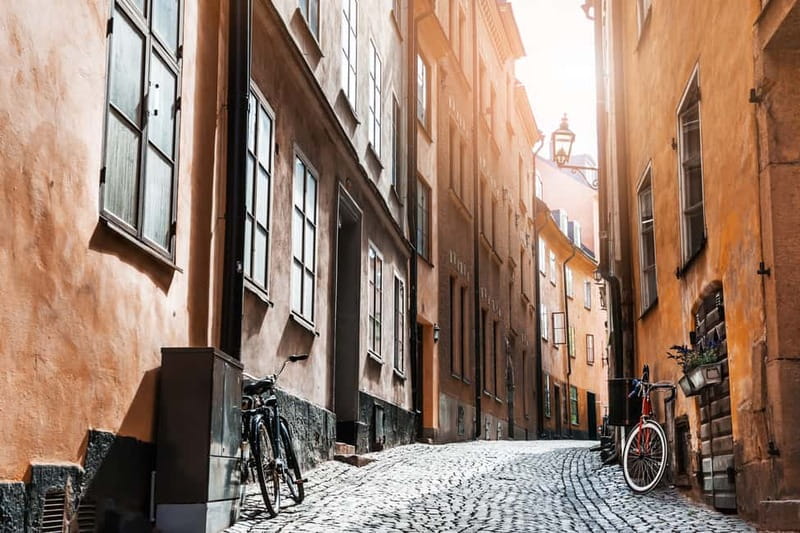
Once you head into Old Town, the walk quickly becomes a history lesson you can physically follow. You’ll move through cobblestone streets and narrow alleyways where medieval architecture is right there, close enough to notice details. The pace is described as easy and casual, with no emphasis on stairs or steep climbs, but you still need comfortable shoes because cobblestones are cobblestones.
Early on, you touch on the modern-day Sweden angle briefly, then the guide shifts fully into Old Town’s origins. Expect stops that help you “read” the city:
- the main square and what it meant as the city grew
- one of the oldest streets in Old Town, where the street shape tells a story
- a rune stone, which adds a surprising layer when you’re used to thinking only medieval churches and palaces
This section is where the tour is most valuable if you’re short on time. Stockholm’s Old Town can feel like a postcard. With the guide’s storytelling, it becomes a sequence: how people lived, where communities formed, and how power and commerce shaped street life.
German church, the narrowest street, and the feeling of medieval tight quarters
A big win of this tour is how it includes the “in-between” places that most self-guided walks skip. Yes, you’ll see famous sights, but you also get the street-level textures that make Old Town feel human.
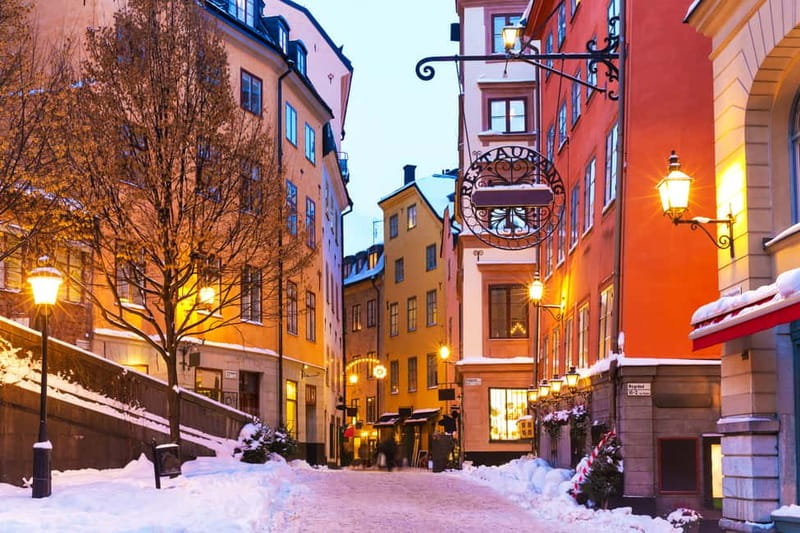
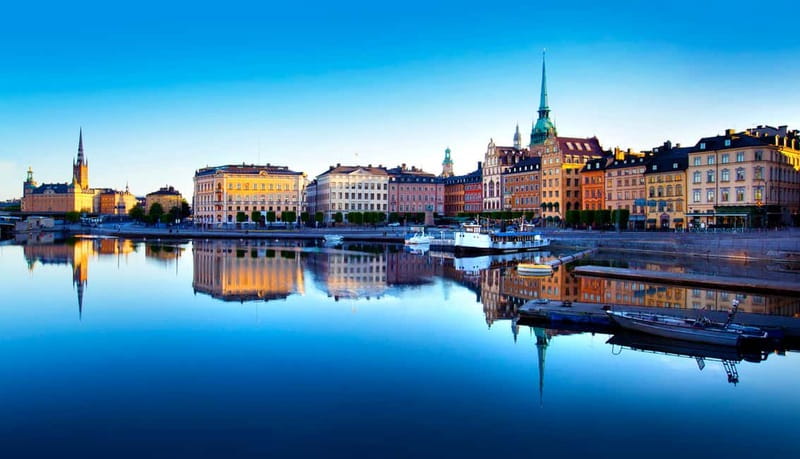
You’ll pause at a historic German church, then later spend time on the small lanes that make Stockholm’s center feel compact and old-world. One stop is by the narrowest street in the city, and that moment is more than a photo stop. Narrow streets change how you experience a city, even how sound carries, and it helps you understand why daily life in the past could feel very different from today.
There’s also a brief stop on a crowded tourist street, which I see as practical rather than annoying. It gives you a chance to compare what you’re learning about Old Town’s history with what the area looks like under modern tourism. Then you move back toward quieter corners, so the emotional effect stays balanced instead of turning into “everything is busy all the time.”
Old marketplace and financial square, plus a famous restaurant with a past
Old Town wasn’t just about crowns and churches. Commerce mattered, and the tour makes that clear by walking you toward the places tied to trade and money.
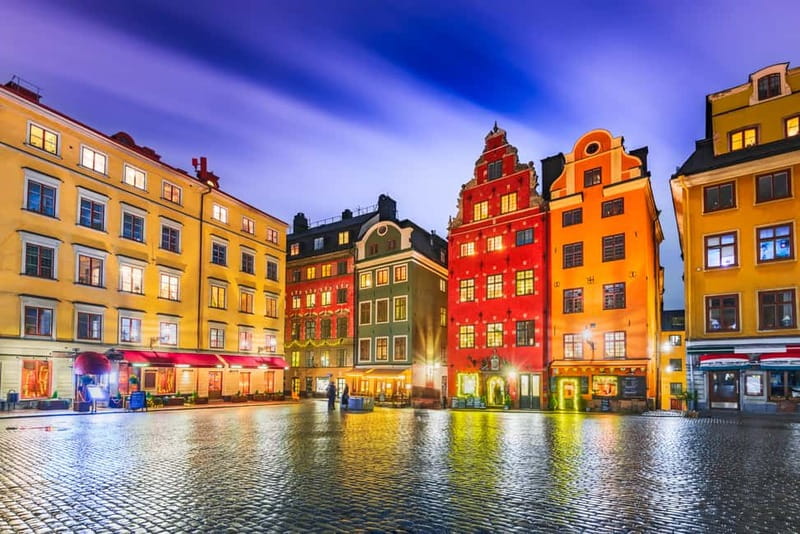
You’ll visit the former marketplace and a financial square, which helps connect the physical city to the economic life that fed it. This is one of the most useful parts of the route if you like history that explains how cities actually ran, not just who ruled.
Then you’ll hit a well-known old-town restaurant with a rich backstory. The detail that makes this stop work is that it’s used as context, not as a random “go eat here” moment. You’ll understand why that kind of establishment shows up where it does, and why it became famous in the first place.
The tour also includes a shopping street that feels unique compared with the main shopping strips you might expect. If you care about finding Swedish design or simple souvenirs without getting stuck in the most obvious tourist traps, this portion is especially helpful.
Other old-town lanes we walked and wrote up

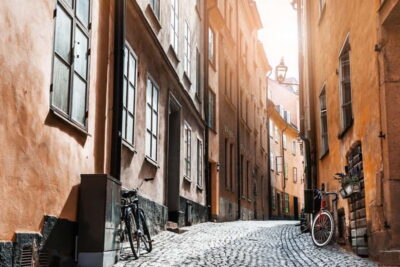
St. George and the Dragon, a medieval painting, and the smallest statue
I’m always happy when a walking tour uses art and symbolism to explain a place. This one does. You’ll reach the area around the St. George and the Dragon statue, and the guide uses that stop to tie together themes you’ve already heard about, like how stories, power, and religious ideas show up in public spaces.
Along the way, you’ll also see:
- a famous painting used to illustrate the city’s medieval birth
- and a stop for the smallest statue in town
That pair of stops works because it changes the “scale” of what you’re looking at. A painting gives you a wider view of how the city used to imagine itself. The tiny statue brings you back down to human scale, which is a nice reset after big monuments and palace-level landmarks.
By the time you reach these moments, the Old Town feels less like a blur of pretty buildings. It feels organized, like you’re walking through a story that’s been told in stone, paint, and symbolism.
Royal Palace days, kings and queens, then church history at Stockholm Cathedral

The tour shifts from civic life and street culture into the kind of history that Sweden is famous for: royalty and religion. You head toward the Royal Palace to cover the royal storyline, with an emphasis on the long arc of kings and queens and what that meant for Stockholm.
From there, you move into the religious side of the city’s history, ending with a stop at Stockholm’s Cathedral, described as one of the oldest structures in Stockholm. This is a strong closing route because it gives you contrast. You start with street origins and daily life. You end where the city’s spiritual identity became visible in architecture.
Even if you’re not a hardcore church-history person, I think this section lands because it’s tied to physical landmarks you can see. You walk from palace power down into cathedral history, and the guide helps you connect the dots so it feels like one story, not separate sightseeing.
What makes Kiki’s guiding style click (and keep you engaged)
The strongest praise here is consistency: the tour stays fun while being structured. Kiki’s style sounds like the exact opposite of a lecture. You get storytelling that includes humor and context, and you’re not left to guess why a street matters.
A few things that stand out as practical for your experience:
- The guide’s tone feels welcoming, so it’s easier to ask questions without feeling rushed.
- The pace is easygoing, so two hours feels like a good orientation, not an endurance test.
- The route is planned so you’re constantly changing scenery: squares, churches, tight streets, statues, and palace area landmarks.
Also, the guide provides an end-of-tour card or tip sheet with names of places visited and tips. I really like this format because it turns your walk into a shortcut for the rest of your trip. You finish with a checklist in plain language, not just memories.
One small timing tip you might consider: if you have flexibility, a later start can mean you encounter fewer crowds on the street sections. Old Town can get busy, and a gentler rhythm makes it easier to enjoy the guide’s details.
Price and value: is $52 for two hours worth it?

At $52 per person for about two hours, you’re paying for a few things that self-guided walks can’t replicate well:
- an official-style route that connects sights into a coherent story
- a small-group setup, which makes questions and conversation realistic
- a guide who helps you interpret what you’re seeing, from rune symbols to royal and church landmarks
If you like history and you want your first walk to do real work, the value is strong. You’re not just paying for movement across Old Town. You’re paying for the map inside your head, the one that helps you return later and understand why buildings look the way they do.
If you’re the kind of traveler who prefers total freedom, you might skip a guided walk and rely on signage. But if you’re time-limited, the guide’s efficiency is the point. This tour is a focused introduction to the parts of Gamla Stan that give you the best payoff for your effort.
Timing, weather, and what to pack for cobblestones

Plan for real outdoor time. The tour runs in all weather conditions, so dress for the season. An umbrella or raincoat is a smart move, because the route uses cobbled streets and narrow lanes where getting soaked can ruin the mood fast.
Bring:
- comfortable shoes (cobblestones underfoot)
- water (especially on warmer days)
- sunscreen and sunglasses
- a camera
You don’t need hiking gear, and the tour avoids steep hills and stairs, but you do need footwear you trust. Old Town walking should feel steady, not careful.
Who should book this Old Town walk, and who should reconsider
This tour fits best if you want a first-pass orientation with an easy pace. I’d especially recommend it if:
- it’s your first visit to Stockholm and you want to understand Old Town fast
- you enjoy history delivered as stories rather than dry facts
- you like small groups, where you can actually talk and ask questions
It’s also a good family option in at least one obvious way: children 13 and under are free of charge. If your group includes teens, check how they usually handle guided walks, but the pricing structure is friendly for families.
On the other hand, it’s not suitable for wheelchair users, so mobility constraints should steer you to a different format.
And if your English is limited, consider how you learn best. The tour relies heavily on English storytelling, so you may lose pieces of the story if you have to mentally translate everything.
Should you book Stockholm: Old Town Historical Walking Tour with Kiki?
Yes, if you want your Old Town time to feel organized and human. I’d book it when you care about context, want a small group, and like guides who answer questions without sounding rehearsed. Kiki’s style, the relaxed two-hour pacing, and the practical end-of-walk recommendations make this tour a solid start for a short Stockholm stay.
I’d skip or rethink it if you strongly prefer independent wandering with minimal guided input, or if your mobility needs require step-free access. And if English storytelling is a challenge for you, consider whether you’ll be satisfied with partial understanding.
If you fall in the first group, this walk gives you more than a route. It gives you a way to see Old Town that stays with you long after the walk ends.
FAQ
How long is the Old Town walking tour?
It lasts about 2 hours.
What does the tour cost?
The price is $52 per person.
What group size should I expect?
The group is limited to a small group, with a maximum of 10 participants.
What language is the tour in?
The tour is in English, led by a native English speaker.
Where do I meet the guide?
You meet at Mynttorget 1, Mint Square. The guide will be at the square in front of the building Mynttorget 1, near one of the benches, holding a small sign that says OLD TOWN WALKING TOUR WITH KIKI.
Where does the tour end?
The tour ends back at the meeting point.
Is the tour wheelchair accessible?
No. It is not suitable for wheelchair users.
What should I bring?
Bring comfortable shoes, sunglasses, a camera, sunscreen, water, and comfortable clothes.
Will the tour run in bad weather?
Yes, the tour takes place in all weather conditions, so dress for the season. An umbrella or raincoat is always helpful.
Are children welcome and is there an age discount?
Children 13 and under are free of charge.
Is there a cancellation option?
Yes. You can cancel up to 24 hours in advance for a full refund.
Can I choose different starting times?
Starting times vary, so check availability to see what times are offered.
Reviewed Across Sweden





More Old Town Lanes





Stockholm, A Few More Ways
Other Swedish trips from the review pile
- ROYAL Castle Skokloster and Viking Sigtuna (private tour)
★ 4.5 · 3 reviews - Stockholm Port to Stockholm Arlanda Airport (ARN) – Departure Private Transfer
★ 3.5 · 3 reviews - Stockholm Ghost Hunt: Self-Guided Tour and Puzzle Adventure
★ 4.5 · 3 reviews - Private Photography workshop in Stockholm
★ 5.0 · 3 reviews - Private blood, ghosts and folklore Old Town 2h Stockholm tour
★ 4.0 · 3 reviews - Ghosts of Stockholm: A Guided Tour of Horror and Dark Folklore
★ 4.5 · 3 reviews
Gamla Stan & Old Town Walks, compared.
 ★ 5.0Walking Tour of Stockholm Old TownFrom $241,175 reviews
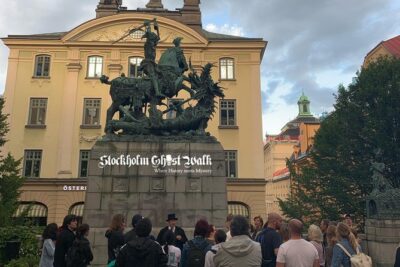 ★ 4.5The Original Stockholm Ghost Walk and Historical Tour – Gamla StanFrom $381,165 reviews
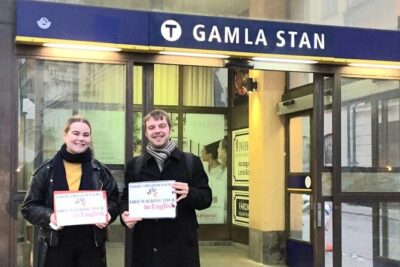 ★ 5.0Walking Tour of Stockholm’s Old Town, Gamla StanFrom $13451 reviews
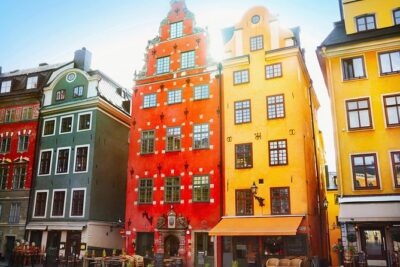 ★ 4.0Old Town Tour of StockholmFrom $51289 reviews
 ★ 4.7Old Town Guided Walking Tour (English / Deutsch)From $29284 reviews
 ★ 4.7Secrets of Gamla Stan Guided Tour w/ Fika OptionFrom $16282 reviews
 ★ 4.8Old Town Walking Tour, stories and secretsFrom $16275 reviews
 ★ 4.5Gothenburg: Haga Old Town Walking TourFrom $55205 reviews
Browse the lists this tour appears in