
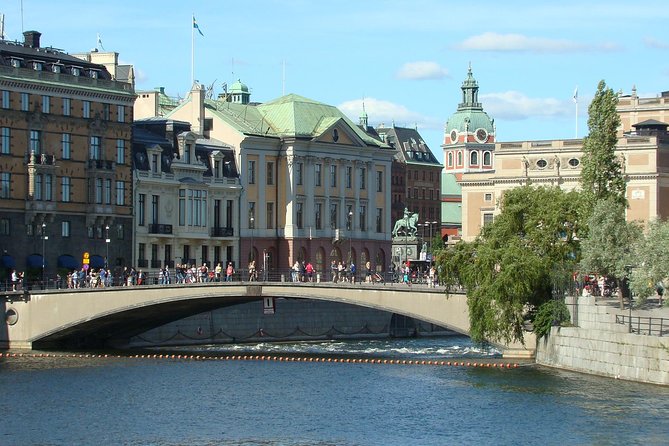
REVIEW · GAMLA STAN
Stockholm Old Town and the Vasa Museum, a Small Group Walking Tour.
One walk, then the Vasa ship story. This small-group Stockholm Old Town and Vasa Museum tour strings together major sights with the kind of guide time you actually want, and it finishes with Vasa Museum entry included so you do not burn energy waiting in line. You also get a ferry ride to Djurgården, which gives you a fresh view of the water and a natural break from cobblestones.
I especially like the pace and structure: you get a clear history thread through Gamla Stan, then a guided orientation at the museum so you know what you are seeing when you step inside the ship hall. One consideration is that the day is still mostly walking on uneven Old Town streets, about 1.5 miles total, so if your legs tire fast, plan for a slower rhythm and bring comfortable shoes.
In This Review
- Key highlights I’d mark on your mental map
- Why this Old Town plus Vasa format works in about 3 hours
- Where you meet and how the walking plan really feels
- Gamla Stan’s opening hits: Riddarholmen, Mälaren views, and early Stockholm lore
- Nobility, religion shifts, and the Gustav Vasa story at Riddarhuset
- Royal Palace courtyard time, plus guard watching with a harbor view
- The quick statue break: Jarnpojken
- Stortorget and the Nobel Prize connection
- Carl XIV Johan and the modern Swedish peace story in Old Town
- The Djurgårdsfärjan ferry break to Djurgården
- Vasa Museum orientation: what to look for when you see the ship
- Guides make this one feel personal, not like a checklist
- Price and value: what you are really paying for
- Who should book this tour, and who might want a different option
- Should you book Stockholm Old Town and the Vasa Museum small-group tour?
- FAQ
- What time does the tour start, and where do I meet?
- How long is the tour?
- How much walking is involved?
- Is the Vasa Museum ticket included?
- Do I take a ferry during the tour?
- What language is the tour offered in?
- What group size should I expect?
- Can I get a refund if plans change?
Key highlights I’d mark on your mental map
- Vasa Museum entry included so the ending is smooth, not a line-juggling act
- Small groups up to 10 people, which makes questions and photo moments feel easy
- A ferry to Djurgården that adds variety and better sightlines than another street walk
- Big Swedish history stops in one route, from the early founding legends to Gustav Vasa and the Royal Palace
- A guided first look at the Vasa ship, then you can stay and explore longer on your own
Stockholm is a big menu. Here is what else we tried
- Stockholm: City Archipelago Sightseeing Cruise with Guide★ 4.3 · 10,798 reviews
- Stockholm: Skansen Open-Air Museum Admission Ticket★ 4.5 · 3,427 reviews
- Stockholm: Archipelago Boat Tour★ 4.4 · 3,110 reviews
- Stockholm: Highlights Boat Tour★ 4.3 · 2,542 reviews
Why this Old Town plus Vasa format works in about 3 hours

Stockholm can feel big in your head, even when you are only moving a few miles. This tour fixes that problem by doing two things back-to-back: it gives you a tight orientation to Gamla Stan’s main landmarks, and then it lands you at one of Sweden’s most dramatic museum stories, the Vasa ship.
At a cost of $125.77 per person for around three hours, the value is not just the walking route. The price includes Vasa Museum admission, and it also includes the ferry segment to Djurgården. That matters because both of those can eat time when you do them on your own, especially in busy seasons.
This is also a tour that people tend to book ahead. If you like having your first day in Stockholm locked in, aim to reserve early, since it is commonly booked about two months out.
Where you meet and how the walking plan really feels
You start at Munkbrogatan 8 around 10:00am, but the key detail is how you find the guide once you are there. The meeting point is inside the Gamla Stan metro station, underground, in front of the Pressbyrån kiosk. It is a small detail, but it is the difference between a smooth start and wandering for 10 minutes.
In terms of effort, the route is straightforward on paper and more honest in real life. You will walk about 1 mile in Old Town, then after the ferry you walk about 0.5 miles to the Vasa Museum, for a total of roughly 1.5 miles (about 2.4 km). The pace is slow, and the guide stops often for photos, questions, and context.
Still, Old Town means cobblestones. Even if you are an average walker, you will feel it more if you wear shoes with no grip. Good walking shoes are not a suggestion here, they are part of the comfort plan.
Gamla Stan’s opening hits: Riddarholmen, Mälaren views, and early Stockholm lore
The tour begins on the edge of the story, with the early history of Stockholm and Sweden stretching back before the city we know today. Your guide sets the scene from the Ice Age up through the first settlements on the islands around the water.
Then you reach Riddarholmen, a great first “wow, I get the geography now” stop. One moment you are learning the timeline, the next you are looking out over Lake Mälaren and framing the City Hall in the same view. It’s the kind of sight that makes the history feel anchored, not abstract.
A few steps later outside Riddarholmen Church, the tour continues with the founder legend. You meet a statue connected to Birger Jarl, and you get the big date that starts showing up in writing: 1252, when the name Stockholm is first mentioned in a surviving document. The point is not to memorize every date. It is to understand that Gamla Stan formed in a world where water routes and defense mattered as much as trade.
Nobility, religion shifts, and the Gustav Vasa story at Riddarhuset
Next comes Riddarhuset, the House of Nobility. Even though you are mostly stopping outside, this is where the tour starts turning from myth and founding into hard political change.
You look at the statue of Gustav Vasa, presented as the father of Sweden in the tour narrative. The guide ties him to the key turning point: he marched into Stockholm in 1523, and Sweden is described as becoming a sovereign state. You also hear about how conflict and power were brutal, including the uprising that followed the bloodbath of Stockholm and the major shift from Catholicism to Lutheran Protestantism.
This is one of the more useful stops for first-time visitors because it explains why Sweden’s national story looks the way it does today. You are not just seeing buildings. You are learning the pressure points that shaped institutions, religion, and governance.
Other old-town lanes we walked and wrote up

Royal Palace courtyard time, plus guard watching with a harbor view
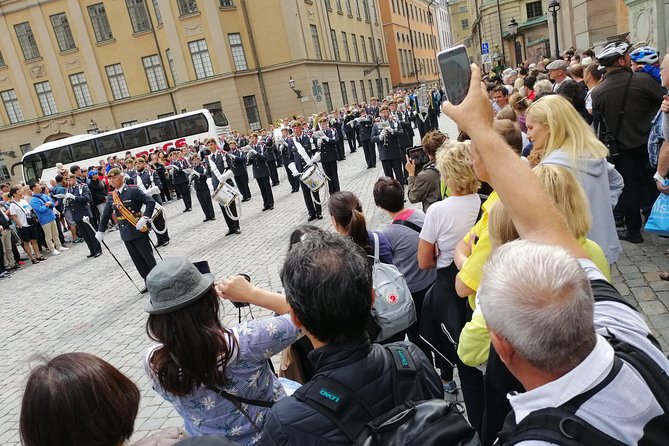
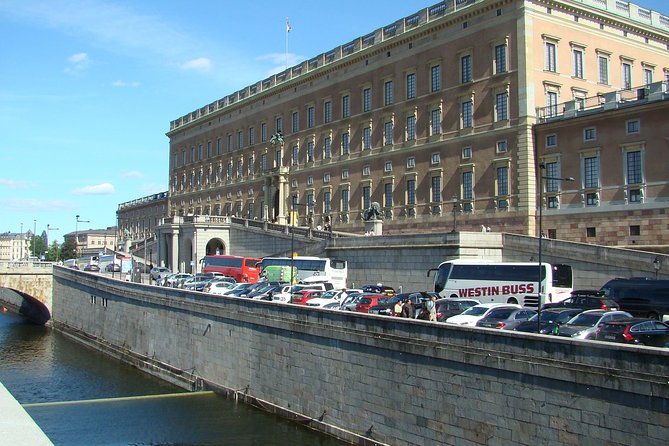
At the Royal Palace, you get into the outer courtyard, where the visual details carry weight. Guard duty often means uniforms with a historical look, and it is a nice change from statues and street markers.
Then you move to Slottsbacken for a viewpoint over the inner harbor of Stockholm. This stop is practical even if you are not a “view person.” Once you understand where the harbor sits relative to the Old Town core, you navigate faster later.
The quick statue break: Jarnpojken
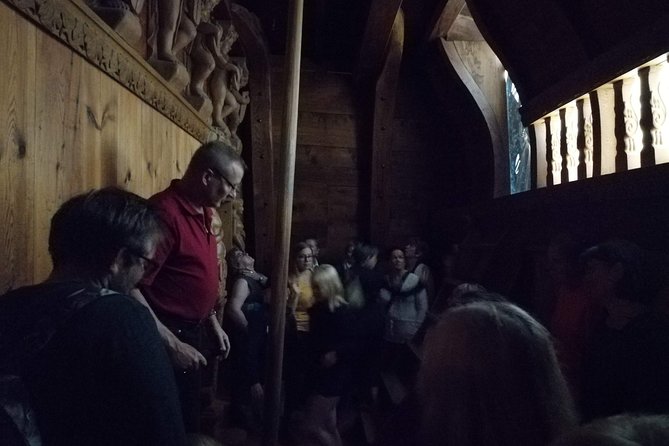
Not every stop needs a lecture, and Jarnpojken is a good example. It is described as the smallest and nicest statue in Sweden, and the tour gives it a brief moment before moving on.
I like this kind of stop because it keeps the walking day from feeling like a nonstop school day. You get a pause, a photo chance, and a small reset before the next historical square.
Stortorget and the Nobel Prize connection
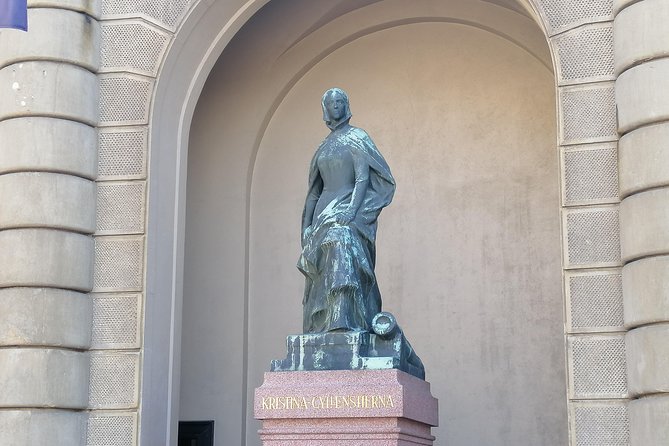
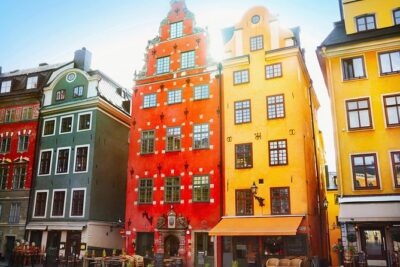
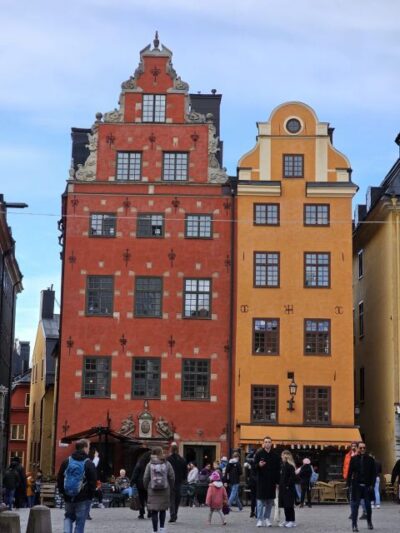
Next up is Stortorget. This is one of those squares where the city’s identity shows through the layers: markets, civic life, and institutions that became global names.
Here you also learn about the Nobel Prize Museum, which is tied to the Swedish Royal Academies that designate winners across major fields in science and arts. The value of stopping at Stortorget is that it links everyday Old Town public space to institutions you might only associate with news headlines.
If you like when a tour gives you context for modern Sweden while you are still standing in the medieval street grid, this is the right moment.
Carl XIV Johan and the modern Swedish peace story in Old Town
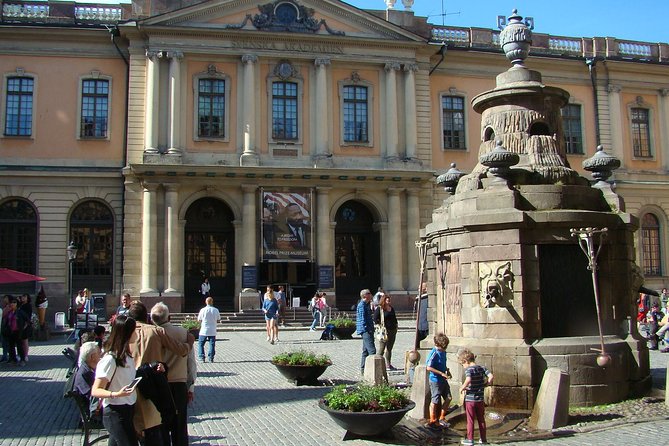
As the tour continues, you get another anchor figure: Carl XIV Johan. The story shifts to the early 19th century, with him described as part of the Bernadotte line and connected to diplomacy and rebuilding after conflict.
You also hear about the celebration of 200 years of peace in Sweden in 2014, plus the longer arc that ties industrial change, natural resources, Swedish inventions, and entrepreneurship to the foundations of a welfare state. The tour does not ask you to agree with every interpretation. It gives you a framework for understanding why certain Swedish priorities show up in public life.
This section is why I like doing a guided overview early. It stops you from wandering Gamla Stan as a set of pretty streets. You start seeing it as a story you can follow.
The Djurgårdsfärjan ferry break to Djurgården
After the Old Town walking segment, you move to Skeppsbron and take the ferry Djurgårdsfärjan to Djurgården. The ferry is included, and it functions as a built-in reset.
You get water views, a chance to catch your breath, and a better sense of how Stockholm spreads across islands. It also helps that this break is not just “wait time.” You are moving to the next highlight area, and Djurgården is the kind of island where it makes sense to slow down after your history walking.
Vasa Museum orientation: what to look for when you see the ship
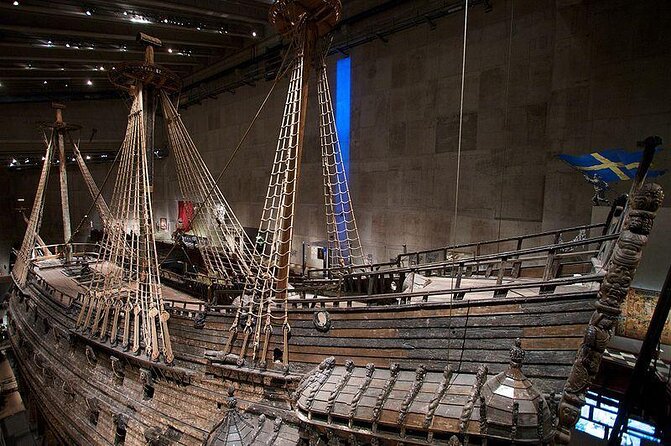
The tour ends at the Vasa Museum, with Vasa entry included. Your guide shows you the ship and explains the dramatic core of the story: the Vasa capsized after her maiden voyage, and she was later salvaged more than 300 years later.
This guided orientation is a big deal. A ship museum can be overwhelming if you do not know what questions to ask. With the guidance, you can look for details you might otherwise miss, and you understand why the story still grabs people centuries later.
After the guided portion finishes, you are welcome to stay. This is not a rushed drop-off. If you want the full experience, you can spend additional time at your own pace. Some visitors typically spend around 1.5 to 2 hours in the museum area, so if you love ship details, plan a longer stop.
Guides make this one feel personal, not like a checklist
The tour works well because it is small, and the guides do the rest. I saw repeated praise for two names in particular: Natalie and Bengt. That lines up with the style of the tour as a whole: structured history, but with room to ask questions and get practical help.
What stands out in the best moments:
- Photos and group shots were handled carefully, with guides making sure people had pictures at the stops.
- Visual aids were mentioned, including laminated images that help you picture what buildings looked like earlier.
- A sense of humor shows up, including a dry, friendly delivery that keeps the history from getting stiff.
- Guides also share restaurant suggestions and tips for how to keep exploring after the tour ends.
This matters because Gamla Stan is easy to overestimate. Without a guide, you can spend hours moving through it and still not understand the why behind what you see. With this format, you leave with a map in your head.
Price and value: what you are really paying for
Let’s talk value in plain terms. You pay $125.77 for a roughly three-hour small-group tour that includes:
- Guided history walking in Old Town
- A ferry ride to Djurgården
- Vasa Museum admission included
You are also paying for time compression. If you are arriving for the first time, the combined route helps you cover the “big picture” stops efficiently, and the Vasa Museum entry included helps you avoid line friction.
Could you do it on your own? Sure. But you would need to piece together the route, figure out timing, and find context on your own. This tour saves you that planning energy and replaces it with clear explanations and a guided first look.
Who should book this tour, and who might want a different option
This tour is a strong fit if you:
- Want a first-day overview of Gamla Stan and Sweden’s story without doing a dozen museum stops
- Like having a guide for questions, not just a silent audio app
- Prefer small groups and easy photo moments
- Want the Vasa Museum visit to start with orientation, not guessing
It may be less ideal if you:
- Have limited tolerance for walking on cobblestones and want a mostly seated experience
- Think you will want to spend the entire Vasa Museum time during the guided portion
- Prefer very slow pacing with lots of time to linger at each stop
In other words, it is not a long, lazy day. It is a well-structured “see, learn, then explore more” plan.
Should you book Stockholm Old Town and the Vasa Museum small-group tour?
Yes, if you want a smart way to get oriented fast. This is one of those tours where the design makes the value work: small-group walking, meaningful stops that connect to bigger national stories, then a guided landing at the Vasa Museum that helps you enjoy what you came to see.
If you book, do two things to make it feel great: wear shoes made for cobblestones, and arrive ready to walk at a slow pace for about three hours. If that sounds like your style, you will come away with Stockholm’s layout and the Vasa story in your head, which is exactly what you want from an early overview day.
FAQ
What time does the tour start, and where do I meet?
It starts at 10:00am. Meet at Munkbrogatan 8, 111 27 Stockholm, and the guide waits inside the Gamla Stan metro station underground, in front of the Pressbyrån kiosk.
How long is the tour?
The duration is about 3 hours.
How much walking is involved?
You will walk about 1.5 miles (2.4 km) total, roughly 1 mile through Old Town and then about 0.5 miles after the ferry to reach the Vasa Museum.
Is the Vasa Museum ticket included?
Yes. Vasa Museum admission is included, and your guide will provide an introduction to the ship.
Do I take a ferry during the tour?
Yes. From Skeppsbron you take the ferry Djurgårdsfärjan to Djurgården.
What language is the tour offered in?
The tour is offered in English.
What group size should I expect?
It is a small-group tour with a maximum of 10 travelers.
Can I get a refund if plans change?
You can cancel for a full refund if you cancel at least 24 hours before the experience start time. If you cancel less than 24 hours before, the amount you paid is not refunded.
The Museum Island, Room By Room





More Old Town Lanes





Stockholm, A Few More Ways



Other Swedish trips from the review pile
- ROYAL Castle Skokloster and Viking Sigtuna (private tour)
★ 4.5 · 3 reviews - Stockholm Port to Stockholm Arlanda Airport (ARN) – Departure Private Transfer
★ 3.5 · 3 reviews - Stockholm Ghost Hunt: Self-Guided Tour and Puzzle Adventure
★ 4.5 · 3 reviews - Private Photography workshop in Stockholm
★ 5.0 · 3 reviews - Private blood, ghosts and folklore Old Town 2h Stockholm tour
★ 4.0 · 3 reviews - Ghosts of Stockholm: A Guided Tour of Horror and Dark Folklore
★ 4.5 · 3 reviews
Gamla Stan & Old Town Walks, compared.
 ★ 5.0Walking Tour of Stockholm Old TownFrom $241,175 reviews
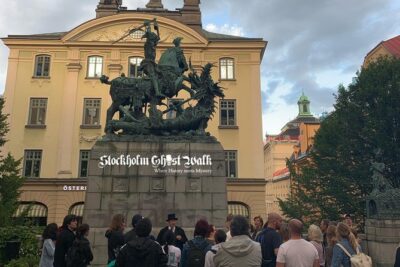 ★ 4.5The Original Stockholm Ghost Walk and Historical Tour – Gamla StanFrom $381,165 reviews
 ★ 5.0Walking Tour of Stockholm’s Old Town, Gamla StanFrom $13451 reviews
 ★ 4.9Old Town Historical Walking TourFrom $52344 reviews
 ★ 4.0Old Town Tour of StockholmFrom $51289 reviews
 ★ 4.7Old Town Guided Walking Tour (English / Deutsch)From $29284 reviews
 ★ 4.7Secrets of Gamla Stan Guided Tour w/ Fika OptionFrom $16282 reviews
 ★ 4.8Old Town Walking Tour, stories and secretsFrom $16275 reviews
Browse the lists this tour appears in