
REVIEW · GAMLA STAN
Stockholm Old Town Private Walking Tour
Gamla Stan has a way of feeling old and personal at once. This Stockholm Old Town Private Walking Tour puts you right in the medieval street plan, with a guide who explains what you are seeing and why it mattered. I like that it is private, so the pace stays comfortable and the route feels made for your group, not a rush.
Two standout features for me are the stop-by-stop history and the way the walk layers in sights you might miss on your own. You start at Stortorget, then work outward through places tied to the monarchy, church life, and even street legends, before finishing with classic waterfront views.
The main drawback to plan around is physical, not historical. Most of the route runs over cobblestones, and this is a walking tour in all weather, so good shoes and a practical attitude help a lot.
In This Review
- Key highlights you will actually feel on this tour
- Entering Gamla Stan with a private guide instead of a crowd
- Meeting at Stortorget, then turning history into directions
- Stop at Stortorget, where the bloodbath stories and Nobel ties live
- Prästgatan 13 and Hell’s Alley, a name that preserved fear
- Royal Palace on the route, what makes this one different
- Storkyrkan, Stockholm Cathedral, and the St George statue
- Järnpojken and St George, tiny symbols with big city meaning
- Brända Tomten and the reality of fires in Old Town
- Mårten Trotzigs grand, why a 90 cm alley becomes a lesson
- Iglesia Alemana, Birger Jarl’s 1252 decision, and a church built later
- Riddarholmen Church and the view finish at Evert Taubes Terrass
- Price check: what you get for $328.75 per person
- What kind of guide experience to expect, from stories to laughs
- Comfort and logistics that affect your day in Old Town
- Who should book this Gamla Stan private walk
- Should you book this Stockholm Old Town Private Walking Tour?
- FAQ
- How long is the Stockholm Old Town Private Walking Tour?
- Where do I meet the guide, and where does the tour end?
- Is this tour private?
- What is included in the tour price?
- Do I need tickets for the Royal Palace or Storkyrkan?
- Is the tour difficult to walk?
Key highlights you will actually feel on this tour
- Private guiding across Gamla Stan, with a plan designed for your group only
- Multiple departure times during the day, so you can match weather and your schedule
- A focused route that hits Stortorget, Royal Palace area, major churches, and Riddarholmen
- Small visual stops like Järnpojken and narrow lanes, where the guide gives the meaning
- Big-picture context on medieval Stockholm, including fires, street names, and cultural influence
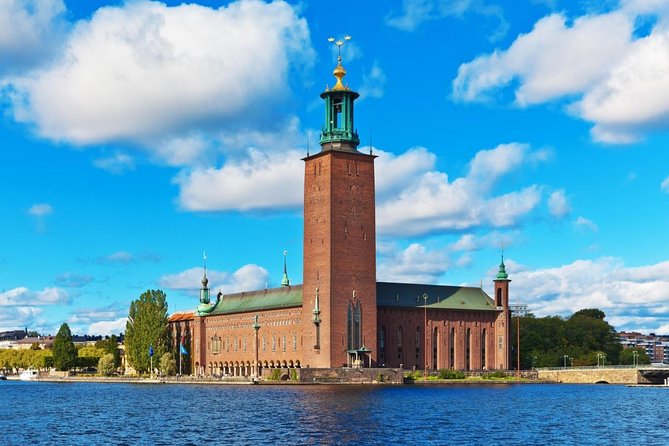
- A finish on Riddarholmen with a lake-and-city view that makes the ending feel rewarding
Stockholm is a big menu. Here is what else we tried
- Stockholm: City Archipelago Sightseeing Cruise with Guide★ 4.3 · 10,798 reviews
- Stockholm: Skansen Open-Air Museum Admission Ticket★ 4.5 · 3,427 reviews
- Stockholm: Archipelago Boat Tour★ 4.4 · 3,110 reviews
- Stockholm: Highlights Boat Tour★ 4.3 · 2,542 reviews
Entering Gamla Stan with a private guide instead of a crowd
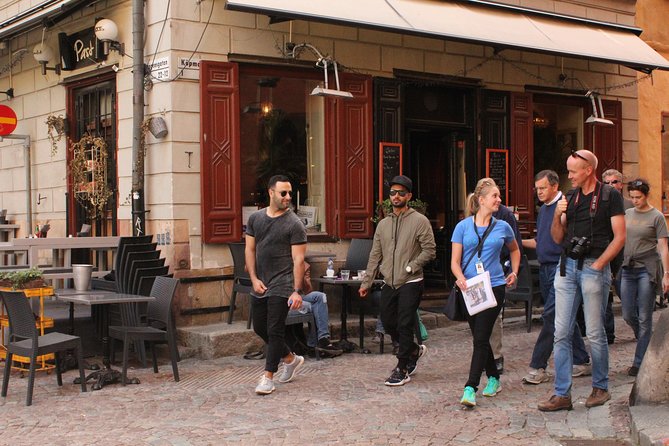
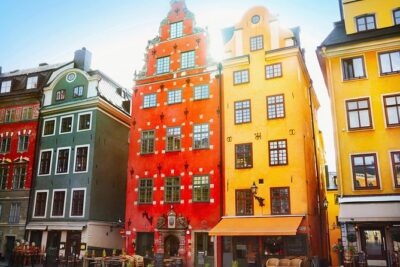
Gamla Stan is Stockholm’s oldest quarter, and it is built for slow wandering: cobbled lanes, square corners that open into wider views, and color on the facades. This tour keeps you moving through the core of that maze, but with one big advantage. You have a guide to translate the place as you go.
Because it is private, your group can ask questions, pause for photos, and spend a little longer where you care most. That matters in Old Town, where the temptation is to keep walking just to cover more ground. Here, the route is structured so you learn what you are looking at, instead of collecting random landmarks.
You are also choosing your departure time. That sounds small, but timing affects everything in Stockholm. You can pick a slot that fits your energy level and the weather you are dealing with that day.
Meeting at Stortorget, then turning history into directions
The tour starts at Stortorget 2, 114 44 Stockholm, in the main square of Gamla Stan. This is a smart meeting point because Stortorget is not just scenic, it is central to the Old Town layout. If you arrive a bit early, you can get your bearings quickly.
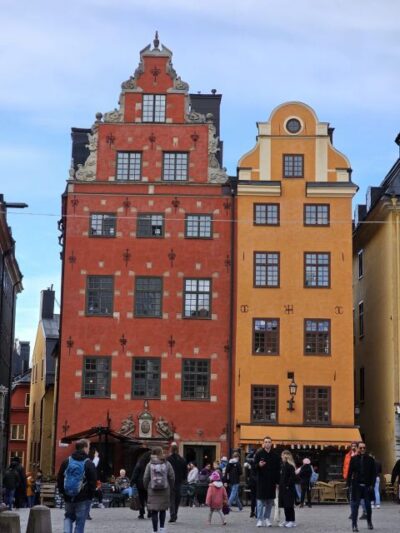
From the start, the focus is medieval Stockholm. Gamla Stan dates back to the 13th century, and the area around Stortorget is lined with colorful 17th and 18th century buildings. Even though the street you walk today may look later, the guide’s job is to connect the look to the earlier city life underneath it.
If you want a tour that works both for first-timers and history lovers, the start at Stortorget helps. It is the kind of place where a guide can give context fast, then let you walk it off at human speed.
Stop at Stortorget, where the bloodbath stories and Nobel ties live
Your first stop is Stortorget, the Old Town’s heart and the square you will keep hearing about as you explore. You will spend around 10 minutes here, with no admission ticket needed.
This is where the tour’s storytelling theme kicks in. You will hear about major events tied to Stockholm’s reputation, including the Stockholm Bloodbath, plus how the city connects to modern international recognition like the Nobel Prize.
Why this stop matters: squares are where power shows up. If you only see the square without the story, you miss the meaning of why this place feels like a stage. A guide turns the geometry of the square into a timeline you can remember.
Practical note: because it is a public square, it can be crowded at peak times. The private setup helps, but you should still expect to share the space with other people outside of your group.
Prästgatan 13 and Hell’s Alley, a name that preserved fear
Next you move to Prästgatan 13, again about 10 minutes, and the ticket cost is free. This part of Prästgatan was once known as Helvetsgränd, which translates as Hell’s Alley.
The story is dark and specific. In the Middle Ages, people believed the area northwest of the church was tied to desecrated resting places for the dead. Because the nearby cathedral mattered to daily life, the street name held on as a warning of what people thought they were walking near.
This is the kind of stop I like because it is not a headline monument. It is a small corner of the city where a name becomes evidence of how people thought, feared, and explained the world.
Other old-town lanes we walked and wrote up
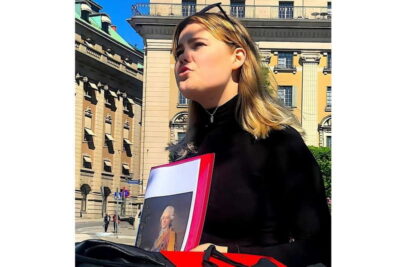
Royal Palace on the route, what makes this one different
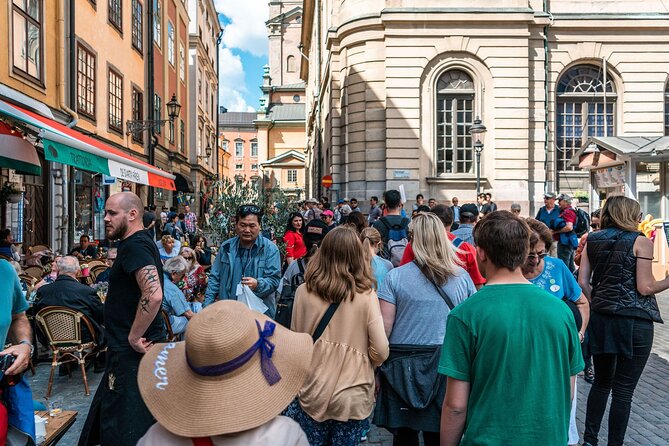
You then head to the Royal Palace area for about 10 minutes. Expect no included admission ticket here, so if you want to go inside, you will need to plan that separately.
The guide’s angle is useful: the Royal Palace is described as one of Europe’s largest and most significant royal residences, and it has a key twist compared with many palaces. It is not only a symbol. Important royal representation happens here, and it also functions as everyday workplace for the king and queen.
Why this matters for your visit: if you understand how the palace operates in daily terms, it reads differently on the outside. Instead of a perfect postcard facade, you can interpret what you see as part of an active system of governance and public ceremony.
Even without admission, the Royal Palace stop gives you a high-impact landmark that breaks up the smaller lanes.
Storkyrkan, Stockholm Cathedral, and the St George statue
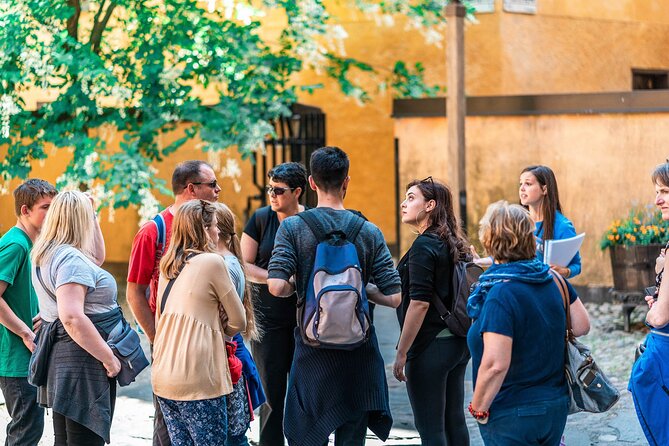
After that, your route includes Storkyrkan, the Stockholm Cathedral, for about 10 minutes. Admission is not included, so you can view the exterior and listen to the story, and you can decide later whether to pay to go inside.
Storkyrkan is one of Stockholm’s oldest buildings, and the standout detail here is the wooden statue of St George and the Dragon dating to the 1400s. You will also hear about how the cathedral is used for royal events, including the royal wedding of Crown Princess Victoria and Prince Daniel in 2010.
Why I think this stop earns its time: cathedrals are not only spiritual sites. They are where important life moments get recorded. With a guide explaining the specific statue origin and the royal function, you get a clearer picture of why this building matters beyond architecture.
Järnpojken and St George, tiny symbols with big city meaning
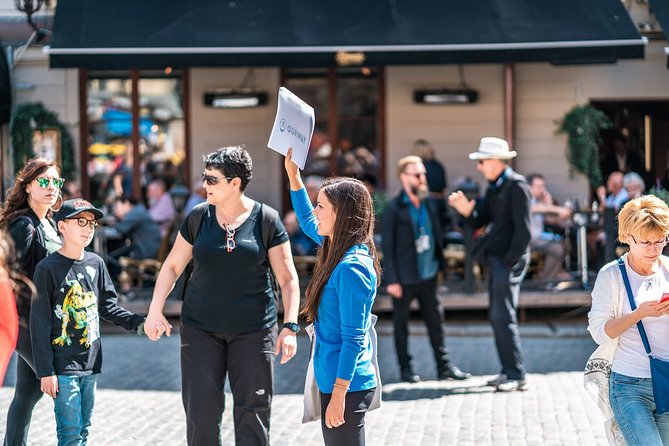
The tour then shifts from major buildings to smaller, memorable points.
First comes Järnpojken, also called the Iron Boy and nicknamed the Boy looking at the Moon. It is the smallest statue in Sweden, and you spend about 5 minutes there, with free admission.
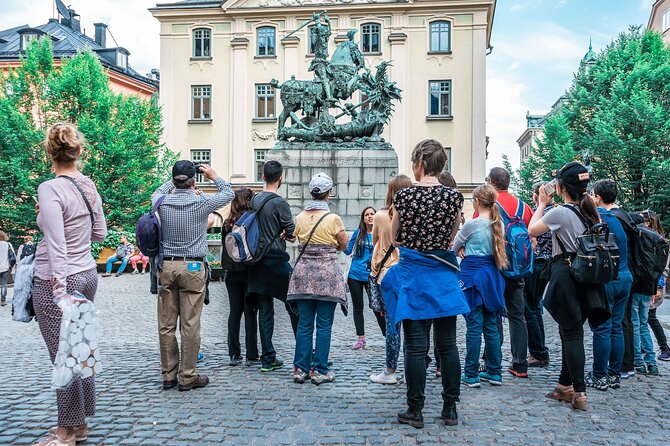
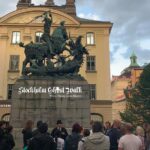
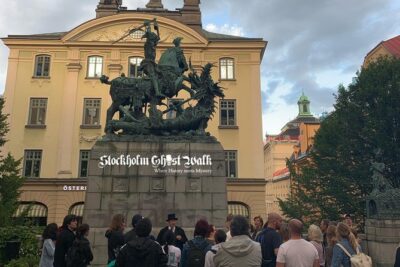
Right after, you see the St George and the Dragon statue. This takes about 10 minutes, and admission is free. The story explains the symbol as a battle between Sweden (St George) and Denmark (the Dragon) in the late 1400s. You will also learn that what you see outside is a bronze copy, while the original wooden statue sits inside Storkyrkan.
This pairing is clever. You get the bigger meaning of the symbol, then you also learn the “where the original lives” detail. It makes your time feel connected instead of scattered.
The possible downside here is simple: if you love only large-scale sights, these stops may feel brief. But if you enjoy how history is embedded in small details, they are the stops that stick.
Brända Tomten and the reality of fires in Old Town
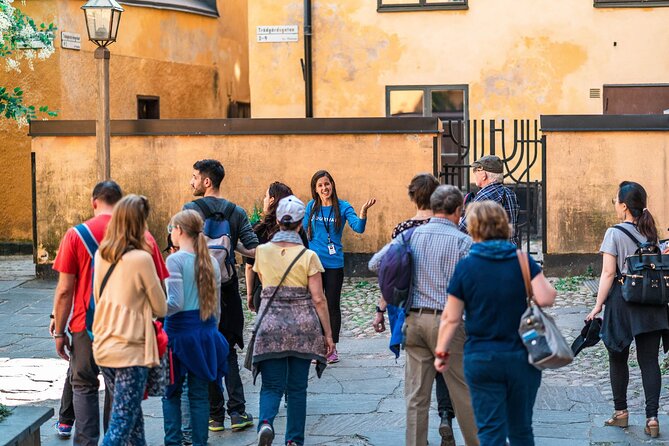
Next up is Brända Tomten, a square you spend around 5 minutes at. Admission is free.
The key thing you learn is what the name means, brunt property, and why it fits. You will hear about the fires that ravaged Old Town and the insurance needed to receive help from the fire department back in the day.
That may sound grim, but it is valuable context. When you are walking a place like Gamla Stan, it is easy to romanticize. This kind of story reminds you the city also had risk, bureaucracy, and practical survival issues.
Mårten Trotzigs grand, why a 90 cm alley becomes a lesson
Then you reach Mårten Trotzigs grand, home to the narrowest alley in Stockholm, at about 90 cm at its tightest point. You get roughly 10 minutes, and admission is free.
Some guidebooks claim it is the narrowest alley in Europe, but the tour includes a factual correction. There is an alley in Prague that is narrower, at about 60 cm. The point is not to win a trivia contest. The point is to teach you how to evaluate claims and why local legends persist.
Why this works: it gives you a funny, quick visual moment inside a serious walking day. It also makes photos easier, because the guide can help you identify the tightest point and stand in a safe spot.
Iglesia Alemana, Birger Jarl’s 1252 decision, and a church built later
You then pass Iglesia Alemana, about 10 minutes, with free admission.
Here the story links city founding to later building work. When Stockholm was founded in 1252, Birger Jarl invited Germans to help build the city. The German Church you see here was built during the 1600s.
This stop gives you a clean example of how cities grow in layers. The city begins with one plan, but it physically develops over centuries as different communities get room to build.
If you care about cultural influence and migration, this is one of the stops that adds depth without requiring extra walking.
Riddarholmen Church and the view finish at Evert Taubes Terrass
The walk ends at the Riddarholmen area, including Riddarholmen Church as a stop around 10 minutes, with free admission. Riddarholmen is called the Island of Nobility, and you are given Stockholm’s oldest preserved building in the mix.
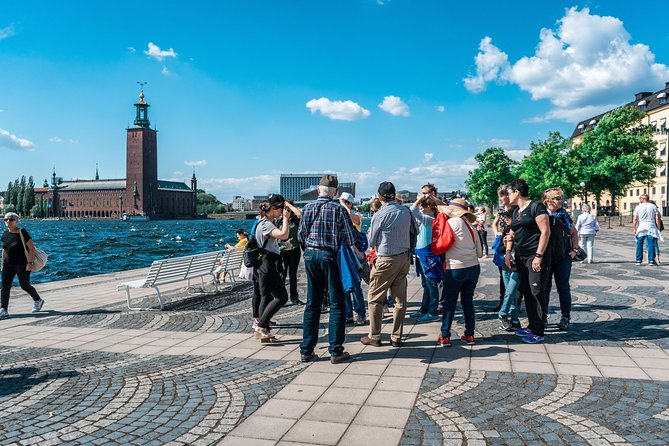
The big payoff is the view. Riddarholmen is a favored outlook across Lake Mälaren and toward the west side of Stockholm. Your tour concludes at Evert Taubes Terrass, 111 28 Stockholm, and you will have free time after to continue exploring on your own.
This finishing structure matters. It is easy to do Old Town as a straight line and then feel tired. Here, the end shifts from dense streets to open water views, which makes your final photos feel worth the walk.
Price check: what you get for $328.75 per person
At $328.75 per person for a private 2-hour walk, you should treat this as a premium experience. You are not buying extra attractions or add-on museum tickets. You are buying time with a professional guide and a route that stays focused on the stories behind specific stops.
So where does the value come from?
You get:
- A private format that keeps the pacing comfortable and questions on-topic
- A tight route through the most meaningful sights in Gamla Stan, without turning your day into a checklist
- A guide who adds interpretation, not only dates, including practical details like the logic behind street names and the meaning behind symbols like St George and the Dragon
- A finishing moment with views that helps you wrap up the day with something visual and calm
The strongest reason to pay up is when your group benefits from attention. History lovers, families, and visitors trying to orient themselves quickly tend to get more out of private guiding. If you have limited time in Stockholm, this tour’s structure can save you from spending it on aimless wanderings.
What kind of guide experience to expect, from stories to laughs
From the guide styles associated with this tour, the big theme is that you should expect high-energy storytelling that stays understandable. In past experiences, guides such as Sean J, Kevin, Katrina, and George have been noted for making the history fun, lively, and family-friendly, with strong English.
That is a real factor when you pay for a private tour. You want more than facts. You want the kind of guidance that makes you look at a church door, a statue copy, or a narrow lane and instantly know why it matters.
You may also get helpful extras. One prior experience included a recommendation help for traditional Swedish food near the area, which can be a handy add-on when you do not want to guess where to eat after you finish your walk.
Comfort and logistics that affect your day in Old Town
Plan for walking. The tour is about 2 hours, and most of it is on cobblestones. That is the main thing that can slow you down if you wear the wrong shoes.
It runs in all weather conditions, so dress for rain or cold if needed. The tour is described as suitable for most travelers, and service animals are allowed.
You will also use a mobile ticket, and the meeting point and finish are in well-known parts of Old Town. The tour is near public transportation, which is useful if you are timing transfers between sights.
One more timing note: it ends with free time in the Old Town. If you want to keep the momentum, bring an appetite for one or two extra stops after you finish, then switch to a slower pace.
Who should book this Gamla Stan private walk
Book it if:
- You want a first-rate introduction to Gamla Stan without feeling rushed
- Your group likes history, symbols, and small details, not only big monuments
- You value a private guide who can tailor pacing and answer questions
- You are visiting with kids or family members and want the stories explained in an engaging way
Skip it or consider something else if:
- You dislike walking on cobblestones
- You prefer self-guided touring with no structured route
- You want guaranteed paid entry into attractions, since Royal Palace and Storkyrkan admissions are not included
Should you book this Stockholm Old Town Private Walking Tour?
I would book this tour if you want Gamla Stan to make sense, fast. Starting at Stortorget and moving through landmarks like the Royal Palace exterior, Storkyrkan, and the Riddarholmen view finish is a smart way to cover the heart of Old Town in a short window.
At $328.75 per person, it is not the budget choice. But if you care about story quality and want a private format, the value is in the guide-led interpretation and the way the route links symbols, street names, and historic events into a coherent walk.
If you want Stockholm to feel like more than scenery, this is a strong option.
FAQ
How long is the Stockholm Old Town Private Walking Tour?
The tour is about 2 hours.
Where do I meet the guide, and where does the tour end?
You meet at Stortorget 2, 114 44 Stockholm. The tour ends at Evert Taubes Terrass, 111 28 Stockholm, on the island of Riddarholmen.
Is this tour private?
Yes. It is a private walking tour, so only your group participates.
What is included in the tour price?
The tour includes a professional guide. A mobile ticket is used, but admission is not included for every stop.
Do I need tickets for the Royal Palace or Storkyrkan?
Royal Palace and Storkyrkan do not include admission in the tour, so you would need tickets if you plan to go inside.
Is the tour difficult to walk?
Most of the tour takes place on cobblestones, and it runs in all weather. Comfortable, appropriate footwear and clothing will help. Service animals are allowed.
Reviewed Across Sweden




More Old Town Lanes



Stockholm, A Few More Ways
Other Swedish trips from the review pile
- ROYAL Castle Skokloster and Viking Sigtuna (private tour)
★ 4.5 · 3 reviews - Stockholm Port to Stockholm Arlanda Airport (ARN) – Departure Private Transfer
★ 3.5 · 3 reviews - Stockholm Ghost Hunt: Self-Guided Tour and Puzzle Adventure
★ 4.5 · 3 reviews - Private Photography workshop in Stockholm
★ 5.0 · 3 reviews - Private blood, ghosts and folklore Old Town 2h Stockholm tour
★ 4.0 · 3 reviews - Ghosts of Stockholm: A Guided Tour of Horror and Dark Folklore
★ 4.5 · 3 reviews
Gamla Stan & Old Town Walks, compared.
 ★ 5.0Walking Tour of Stockholm Old TownFrom $241,175 reviews
 ★ 4.5The Original Stockholm Ghost Walk and Historical Tour – Gamla StanFrom $381,165 reviews
 ★ 5.0Walking Tour of Stockholm’s Old Town, Gamla StanFrom $13451 reviews
 ★ 4.9Old Town Historical Walking TourFrom $52344 reviews
 ★ 4.0Old Town Tour of StockholmFrom $51289 reviews
 ★ 4.7Old Town Guided Walking Tour (English / Deutsch)From $29284 reviews
 ★ 4.7Secrets of Gamla Stan Guided Tour w/ Fika OptionFrom $16282 reviews
 ★ 4.8Old Town Walking Tour, stories and secretsFrom $16275 reviews
Browse the lists this tour appears in