
REVIEW · SWEDISH DESIGN, ART & ARCHITECTURE
Millesgården Museum: sculpture park and art galllery
Stockholm has a funny way of mixing city energy with calm. Millesgården Museum gives you that change of pace fast, with a sculpture park view over the city and Carl and Olga Milles’ artist home all in one ticket. You’ll wander outdoor terraces with fountains and about one hundred sculptures, then step into studios, galleries, and a design showpiece in Anne’s House. The main thing to consider is that the experience is spread across several areas, so if you prefer a tightly guided script, you may want to plan your order before you go.
What I love most is how art and garden feel connected, not like separate stops. I also like that you get both creativity, from Carl Milles’ work, and Swedish design in Anne’s House by Estrid Ericson and Josef Frank. One possible drawback: the audio guide is part of the visit, and if you’re hoping it starts perfectly everywhere, there can be small hiccups, like finding the audio link later than you expect, plus the art gallery can be in the middle of exhibition changes.
In This Review
- Quick hits: what makes Millesgården Museum worth your day
- Getting to Millesgården from central Stockholm (without stress)
- The sculpture park terraces and fountains, plus Stockholm views
- Visiting the Artist’s Home: Carl and Olga Milles’ creative world
- Large Studio and the Pompeii-inspired Gallery: what to watch for
- Breakfast Room blue Dutch tiles and the classical collection
- Anne’s House by Estrid Ericson and Josef Frank from Svenskt Tenn
- Art Gallery exhibitions and how to plan your last hour
- Museum shop and the value of slowing down in one place
- Practical timing and an easy order that works
- Who should book Millesgården, and who might want to think twice
- Should you book Millesgården Museum?
- FAQ
- How long is the Millesgården Museum visit?
- Where is Millesgården Museum located?
- What is included with the ticket?
- What languages are available for the audio guide?
- What are the opening hours?
- How do I get there by public transportation?
- Is there free parking available?
- Is the museum cash-free?
Quick hits: what makes Millesgården Museum worth your day

- A sculpture park with real fountains and about 100 sculptures, including larger fountain groups
- Carl Milles’ Large Studio plus rooms like the breakfast space with blue Dutch tiles
- Pompeii-inspired Gallery and a collection of classical sculptures and objects
- Anne’s House decorated by Estrid Ericson & Josef Frank from Svenskt Tenn
- Art Gallery exhibitions to finish your visit, plus a museum shop
- A calm, conscience-like place to slow down, with Stockholm views from the grounds
More Swedish design, art and clean lines
- Stockholm: Underground Metro Art Ride with a Local Guide★ 4.6 · 39 reviews
- Millesgården Museum: sculpture park and art galllery★ 4.8 · 20 reviews
- Stockholm: Underground Metro Art Ride with a Local★ 4.5 · 18 reviews
- Scandinavian Art, Architecture and Design Tour in Stockholm★ 4.5 · 11 reviews
Getting to Millesgården from central Stockholm (without stress)
Millesgården Museum sits in Lidingö, about 20 minutes from central Stockholm. That short ride matters because you can actually treat this like a day trip, not a major production. From Ropsten you’ll either take a bus or the local tram, then do a short walk with clear signs to reach the museum entrance.
By bus, take the subway to Ropsten, then board a bus to Torsviks Torg. From Torsviks Torg it’s about a 7-minute walk. By tram, you can take Lidingöbanan from Ropsten to Torsvik or Baggeby, and Millesgården is between those stations, again with about a 7-minute walk.
If you’re driving, there’s free parking at Herserudsvägen 32 just outside the main entrance. If you like biking, you can cycle over the Lidingö bridge on the cycle path. I find this location makes sense for your schedule, because you avoid the all-day travel feeling that some Stockholm attractions can create.
The sculpture park terraces and fountains, plus Stockholm views
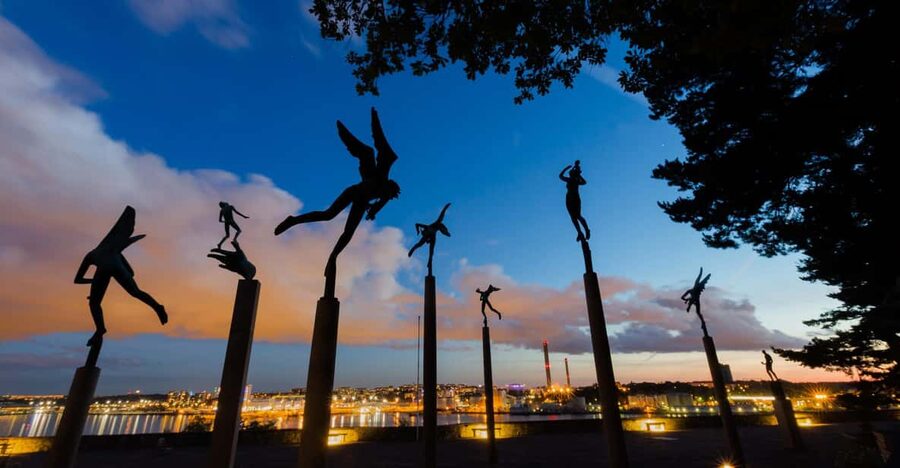
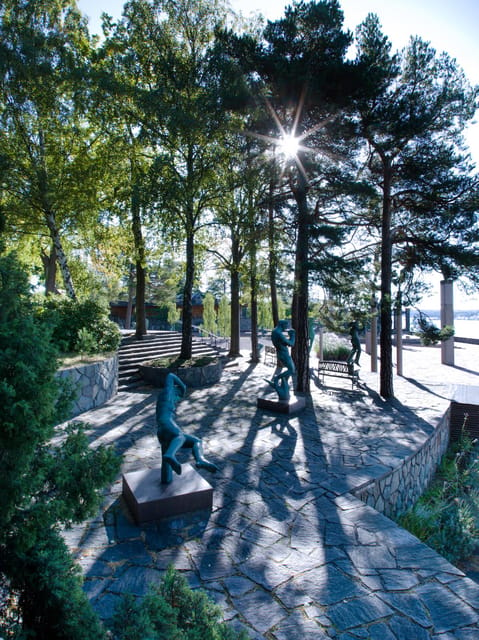
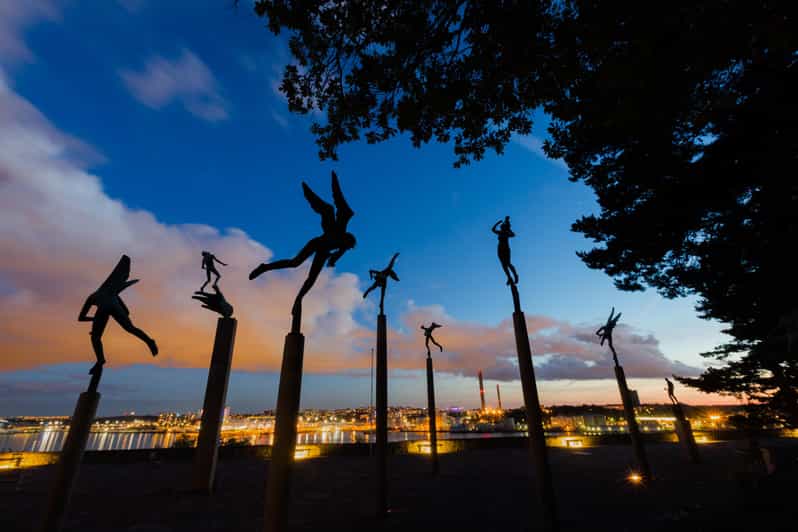
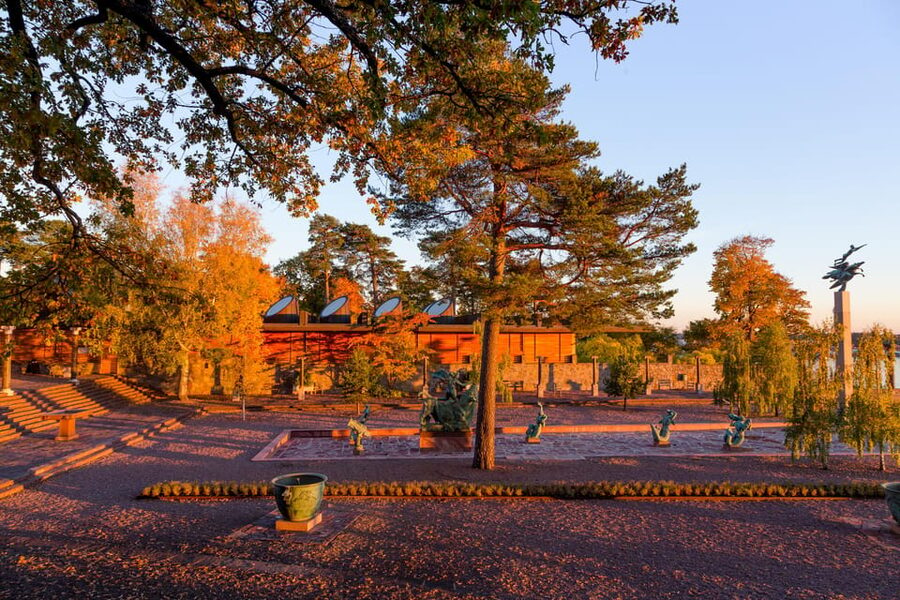
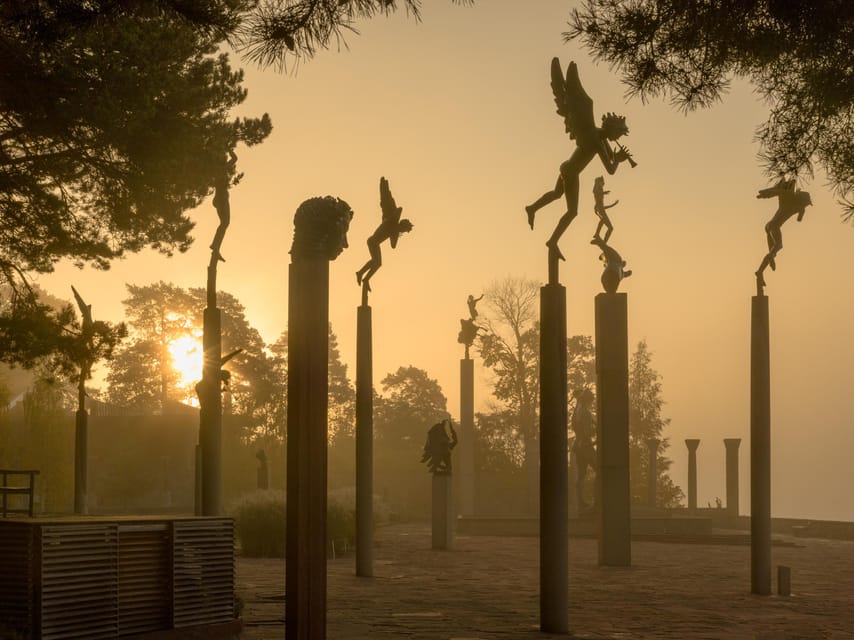
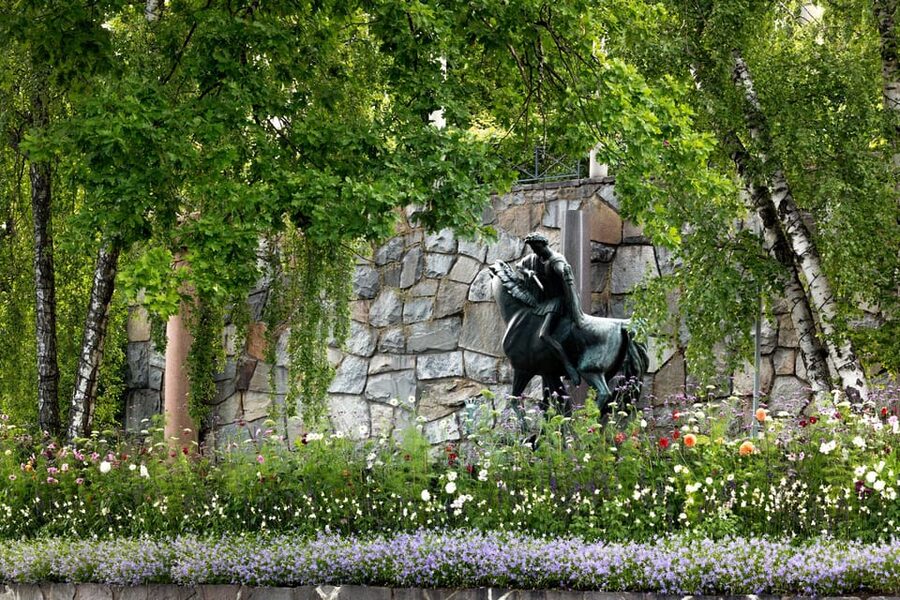
Start outside. At Millesgården, the park is not just scenery, it’s the main stage for Carl Milles’ imagination. You’ll stroll the grounds and see around one hundred sculptures, with about ten larger fountain groups spread through the design. That number is a big deal because you’re not looking at a single feature, you’re moving through a whole system of art, water, and angles.
The park is arranged so that walking feels natural. As you move from terrace to terrace, the fountains and sculpture placement encourage you to slow down and change your viewpoint. One minute you’re looking up at forms against sky, the next you’re looking down a path toward water and flower-filled spaces.
And yes, there’s a view element here. You’ll get chances to look out over Stockholm from the park, which is a nice bonus if you’re spending a full day in indoor rooms later. If you want the quietest vibe, go earlier in the day when the outdoor spaces feel less crowded and you can take your time near the fountain groups.
Visiting the Artist’s Home: Carl and Olga Milles’ creative world

After the gardens, the visit turns inward at the Artist’s Home. This is where Millesgården becomes more than beautiful outdoor art, it turns into an environment where you can see how Carl Milles worked and how the couple lived with art. The flow from the park to the home is smooth, since the walking routes naturally guide you toward the indoor rooms.
In Carl and Olga Milles’ home, you can explore the Large Studio, where Carl created his large sculptures. This is the kind of room that helps you understand the scale of the work. Even if you’re not a sculpture expert, the studio setting makes the creative process feel more tangible.
You’ll also see the breakfast room clad in blue Dutch tiles. That specific detail matters because it shows how design and daily life were linked for them. After that, you’ll move through spaces like the Pompeii-inspired Gallery, plus Carl’s grand collection of classical sculptures and objects. I like that the house isn’t arranged like a random museum, it’s organized like an artist’s working life.
A practical thought: with so many rooms and angles, you’ll enjoy it more if you take it in chunks. Park first, then studios and galleries, then finish with the more design-forward house section. That order keeps the emotional arc moving, from outdoors energy to studio focus.
Large Studio and the Pompeii-inspired Gallery: what to watch for
Two indoor areas are especially worth your full attention, the Large Studio and the Pompeii-inspired Gallery. In the Large Studio, your eyes naturally go to the space where big work could happen. You’ll likely find yourself looking at walls, light, and proportions, because studios tell you how artists think with their bodies and tools, not just with sketches.
Then the Pompeii-inspired Gallery shifts the tone. If you like classical motifs and gallery-like presentation, you’ll probably appreciate the way this room frames objects. It’s also a good break from the sculpture-heavy feel outside, because the gallery encourages slower, closer looking.
One useful tip from real-world experience: the audio guide is included, but it’s worth knowing that you may have to find the audio link in the rooms themselves rather than having everything obvious at the start. Don’t panic if you’re hunting for the right track. If you’re unsure, stop and check at the information points or ask at reception so you can get back on the right path quickly.
Indoor days for when the weather turns. Others we reviewed





Breakfast Room blue Dutch tiles and the classical collection
You might not expect breakfast decor to be a highlight, but at Millesgården it is. The breakfast room clad in blue Dutch tiles adds a calm, crafted feeling. It also gives you a sense of scale, because tiles show both color and repetition, a quiet rhythm that complements the boldness of sculpture outside.
From there, you continue into Carl’s larger world of collected objects. You’ll see a grand collection of classical sculptures and objects. This part is valuable because it adds context. You begin to understand what kind of references and forms the artist valued, which can change how you look at his more dramatic garden work.
If you’re traveling with someone who’s not sure they like sculpture, this section often helps. Classical pieces and clearly arranged objects can feel easier to connect with than abstract outdoor forms. Even if you don’t know every reference, the room lets you appreciate collecting as a creative act.
Anne’s House by Estrid Ericson and Josef Frank from Svenskt Tenn
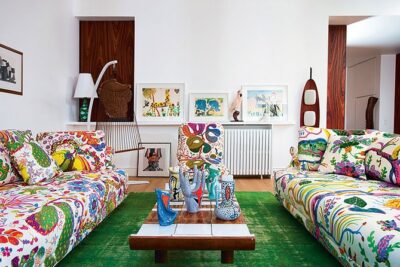
One of Millesgården’s smartest moves is including Anne’s House, which brings Swedish design into the story. This is decorated by Estrid Ericson and Josef Frank from Svenskt Tenn, and it changes your rhythm. After studios and sculpture, this feels more like a carefully composed living space, where furniture, patterns, and taste do the storytelling.
If you love design, textiles, and the way interiors can create mood, this is a must-see. If you don’t, you’ll still likely enjoy it because the contrast works. You can feel the difference between sculpture as a public, outdoor statement and design as an intimate, daily expression.
I also like that Anne’s House gives you something to think about when you step back outside. When you return to the park, you’re more aware of how artistic choices shape the entire environment, not just what hangs on walls.
Art Gallery exhibitions and how to plan your last hour
Finish with the Art Gallery. This is where the museum adds a rotating layer, with exciting exhibitions during your visit. Since exhibition timing can vary, don’t expect the gallery to be identical every day. If you notice you’re arriving during a changeover period, your experience might feel slightly less complete than a day when everything is fully staged.
Even so, I think the gallery is still worth your time because it makes the museum feel alive, not frozen. After the house interiors, an art gallery can help you reconnect with the broader art world in Sweden and beyond.
If you get hungry between outdoor walking and indoor rooms, there’s Millesgården Lanthandel on site for a tasty lunch or an afternoon coffee. This matters because you don’t want to lose the calm you’ve earned by scrambling for food. Build in a break, even a short one, so you can keep your attention for the studios and Anne’s House.
Museum shop and the value of slowing down in one place

When you’re done, you can round things out in the museum shop. It’s a small detail, but it helps the day feel complete. If you like taking home a reminder that isn’t a random souvenir, this is where you’re more likely to find art-related goods tied to the museum.
The big picture value here is the mix. You get one ticket experience that spans sculpture outdoors, artistic working spaces indoors, a design-forward house, and an exhibition space. For $19 per person, that combination feels fair, especially if you compare it to paying separately for city museums that each cover only one angle of art.
Also, because it’s a full day option, you don’t have to rush. Millesgården works best when you let it. It’s the kind of place where your senses do the tour, you’re not just collecting checkmarks.
Practical timing and an easy order that works

Millesgården is open Tuesdays to Sundays from 11:00 to 17:00, all year round. That’s a helpful schedule because you can plan around it without guessing seasonal changes. Aim to arrive early enough that you can enjoy outdoor light in the park before you shift indoors.
Here’s an order I’d recommend for most people:
1) Start with the sculpture park, so the outdoor setting shapes your expectations.
2) Move into the Artist’s Home for studios and rooms.
3) Take your break at Lanthandel if you need it.
4) Visit Anne’s House.
5) End in the Art Gallery and shop.
This order keeps contrast working for you. You also reduce backtracking because the walk from the park to the house flows naturally. If you’re the type who likes reading audio guide material, start it as soon as you’re ready, and keep an eye out for the audio link instructions in the rooms.
Also remember a couple of rules that make the visit smoother. Oversize luggage isn’t allowed, and the museum doesn’t take large bags. So pack light. It will save you time and stress at entry.
Who should book Millesgården, and who might want to think twice
This is a great fit if you enjoy garden art, sculpture in a thoughtfully designed setting, or Scandinavian design interiors. It’s also ideal if you want a calmer Stockholm day that still feels culturally serious. You’ll likely appreciate the artist’s home parts most if you enjoy seeing how workrooms and collections connect to the art.
You might want to think twice if you strongly prefer fully guided tours with a tight timeline and you don’t want any audio guide troubleshooting. The experience includes an audio guide in Swedish and English, but it relies on you having the right track as you move through the rooms. If you need everything to be perfectly linear from minute one, build in flexibility.
If you’re coming with kids, the sculpture garden can be the easier entry point because there are many outdoor stops and the environment encourages walking and noticing. For adults who love art, design, or classical references, the mix here is one of the strongest selling points.
Should you book Millesgården Museum?
If your goal is a one-day art visit that feels both creative and calm, I’d book it. Millesgården combines sculptures, Carl Milles’ working spaces, and Anne’s House by Estrid Ericson and Josef Frank in a way that’s hard to replicate elsewhere in Stockholm. For the price, the value comes from how much you see in one go, with outdoor garden art plus indoor collections and exhibitions.
Book it if you like to walk, look closely, and spend time without rushing. Skip or reconsider if you hate audio guides, or if you need a schedule that cannot flex at all because rooms and exhibitions can vary day to day. Otherwise, this is one of those rare places where a museum visit also feels like a quiet break from city life.
FAQ
How long is the Millesgården Museum visit?
The experience is listed as a 1 day activity.
Where is Millesgården Museum located?
It’s located in Lidingö, in Stockholm County, about 20 minutes from central Stockholm.
What is included with the ticket?
Included are the Art Gallery, the Artist’s home, the antiques collection, the sculpture park, and Anne’s House.
What languages are available for the audio guide?
The audio guide is included in Swedish and English.
What are the opening hours?
The museum is open Tuesdays to Sundays from 11:00 to 17:00, all year round.
How do I get there by public transportation?
You can take the subway to Ropsten, then a bus to Torsviks Torg followed by a 7 minute walk. Or take the Lidingöbanan tram from Ropsten to Torsvik or Baggeby, then walk about 7 minutes.
Is there free parking available?
Yes. Free parking is available at Herserudsvägen 32, just outside the main entrance.
Is the museum cash-free?
Yes. It is a cash-free museum, and you can pay by credit or debit card in the museum shop and the restaurant.
Collections Worth The Ticket





Reviewed Across Sweden



Design, Art And Clean Lines





Other Swedish trips from the review pile
- ROYAL Castle Skokloster and Viking Sigtuna (private tour)
★ 4.5 · 3 reviews - Stockholm Port to Stockholm Arlanda Airport (ARN) – Departure Private Transfer
★ 3.5 · 3 reviews - Stockholm Ghost Hunt: Self-Guided Tour and Puzzle Adventure
★ 4.5 · 3 reviews - Private Photography workshop in Stockholm
★ 5.0 · 3 reviews - Private blood, ghosts and folklore Old Town 2h Stockholm tour
★ 4.0 · 3 reviews - Ghosts of Stockholm: A Guided Tour of Horror and Dark Folklore
★ 4.5 · 3 reviews
Swedish Design, Art & Architecture, compared.
 ★ 4.5Cube of Art Uppsala Museum of Interactive ArtFrom $2169 reviews
 ★ 4.6Underground Metro Art Ride with a Local GuideFrom $12839 reviews
 ★ 4.5Underground Metro Art Ride with a LocalFrom $13118 reviews
 ★ 4.4Scandinavian Architecture & Design Ostermalm TourFrom $6611 reviews
 ★ 4.5Scandinavian Art, Architecture and Design Tour in StockholmFrom $6111 reviews
 ★ 4.5Swedish Design TourFrom $5610 reviews
 ★ 4.0Stockholm Art Tour with a Local Expert: 100% Personalized & PrivateFrom $1537 reviews
 ★ 4.4Entry Ticket To Gothenburg Museum of art with pickupFrom $774 reviews
Browse the lists this tour appears in