
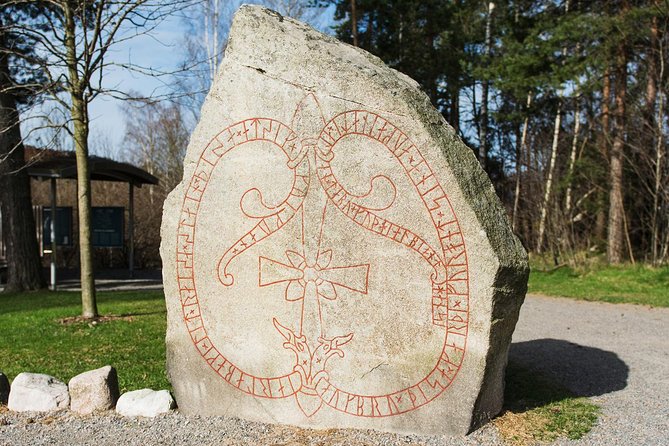
REVIEW · UPPSALA
Viking History and Swedish Countryside Tour to Sigtuna & Uppsala
Runes start the day before you hit lunch. This full-day tour links Viking-era law sites, bridge runes, and burial mounds with a walk through Sigtuna and time at Uppsala Cathedral. I like that it’s structured, so you’re not just bouncing between famous landmarks, you’re learning what they meant. One drawback to plan for is the long day and the amount of standing and walking outside.
You’re picked up from central Stockholm and carried in an air-conditioned minibus with a professional English-speaking guide. I also like the small-group setup, capped at 17 travelers, which makes it easier to hear instructions and ask questions. Dress for real weather swings, since one cloudy day can still feel chilly in the car.
In This Review
- Key Highlights To Notice
- A Viking-Laced Day Trip From Stockholm
- What You Really See: Runestones, Law Sites, and Royal Burial Power
- Täby Church and Jarlabanke’s Bridge: Where Power Gets Written
- Arkils Tingstad and Lake Vallentuna: A Viking Parliament Feel
- Granbyhällen and the Longhouse Foundations: Reading a Family Message
- Hökeriet, Fika Possibility, and Lunch on Your Terms
- Sigtuna on Lake Mälaren: Cobblestones, Church Stops, and Shopping Break Time
- Uppsala Cathedral and Gamla Uppsala Mounds: Christian Power Meets Pre-Christian Kingship
- Getting There, Getting Around, and Hearing Every Story
- Price and Value for a 9-Hour Viking and Medieval Route
- Who Should Book This Tour, and Who Might Want a Different Plan
- Should You Book This Viking History and Swedish Countryside Tour?
- FAQ
- How long is the Viking History and Swedish Countryside Tour to Sigtuna and Uppsala?
- What is included in the tour price?
- Is food included?
- Are the tours stops admission tickets included?
- What towns and sites are visited?
- Is the tour language English?
- Is pickup guaranteed at every hotel in Stockholm?
- What group size should I expect?
- Is this tour suitable for children?
Key Highlights To Notice
- Täby’s Jarlabanke’s Bridge runes: One of Sweden’s oldest known bridges tied to a named Viking chieftain.
- Arkils tingstad, a Viking parliament site: Stone settings used for community decisions, not just sightseeing.
- Granbyhällen’s long runic text: A standout runestone meant to preserve family story and property.
- Granby farm longhouse foundations: You step into the footprint of daily Viking life, not only monuments.
- Sigtuna, Sweden’s oldest town feel: Cobblestone stroll time on Lake Mälaren with medieval church context.
- Uppsala’s mix of Christian and pre-Christian power: Uppsala Cathedral plus the Royal Mounds of Gamla Uppsala.
Uppsala rewards a slow walk. More of it here
- Viking History, Runes & Countryside 9h Tour to Sigtuna & Uppsala★ 4.5 · 283 reviews
- Viking History and Swedish Countryside Tour to Sigtuna & Uppsala★ 4.5 · 162 reviews
- From Stockholm: Uppsala and Sigtuna Viking Sites Tour★ 4.7 · 157 reviews
- Private Full Day Viking History Tour from Stockholm Including Sigtuna and Uppsala★ 5.0 · 51 reviews
A Viking-Laced Day Trip From Stockholm
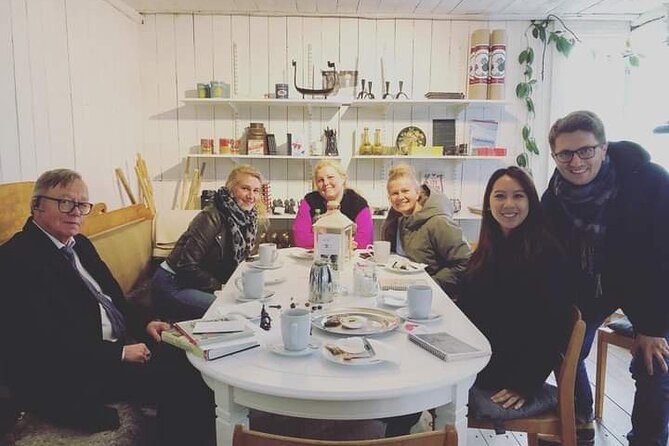
This is the kind of outing that works if you want a lot of “core Sweden” in one go, without renting a car or playing map Tetris all day. You leave Stockholm, travel through the countryside around Stockholm and Lake Mälaren, then finish in Uppsala territory with both Viking-age and medieval touchpoints.
The tour is designed around storytelling. You don’t just look at stones. You get the why behind them. That matters because Sweden’s Viking sites are often quiet and compact. A runestone or burial mound doesn’t scream at you from far away. With the guide’s context, you start seeing patterns, names, and clues instead of random rock art.
The practical tradeoff is time. It’s about 9 hours, so it’s full schedule energy. If you like slow travel and long café hangs, you may wish you had more hours in just one town. If you like variety and momentum, you’ll probably feel like the day flies by.
What You Really See: Runestones, Law Sites, and Royal Burial Power
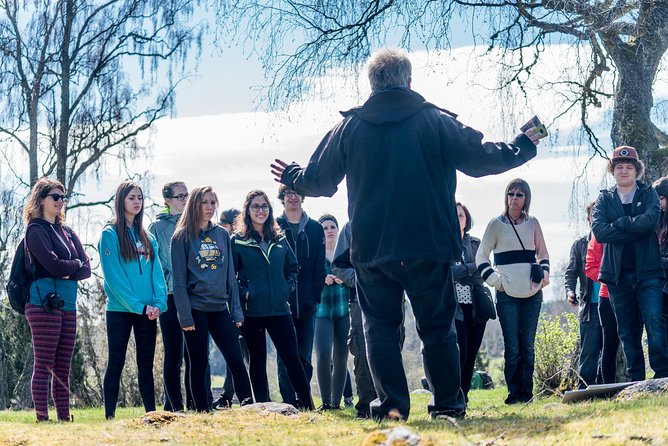
A big reason this tour gets strong marks is that it goes past the “check a box” version of Viking tourism. You visit multiple kinds of Viking-age remains:
- Bridges and memorial power (Jarlabanke’s Bridge)
- Local governance and dispute resolution (Arkils tingstad)
- Runic family messaging (Granbyhällen)
- Everyday Viking life traces (Granby longhouse foundations)
- Kingship and status burial symbolism (Gamla Uppsala mounds)
That mix gives you a fuller Viking picture than a single museum visit. You also get medieval Sweden threaded through the day with church visits, including Uppsala Cathedral.
Here’s how I’d frame it for your decision. If you want to learn how Vikings organized communities and left records for later generations, this itinerary gives you more than “warrior vibes.” If you want big Viking reenactment moments, you’ll get something quieter. The tour leans archaeological and historical, with stops meant for reading, looking, and listening.
Täby Church and Jarlabanke’s Bridge: Where Power Gets Written
The day starts with a quick look around the Täby area, including a drive-by at Täby Church. It’s a 13th-century church with Romanesque and Gothic mix, and even as a drive-by it sets the mood: the region layers Christianity onto older Scandinavian roots.
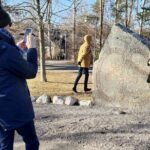
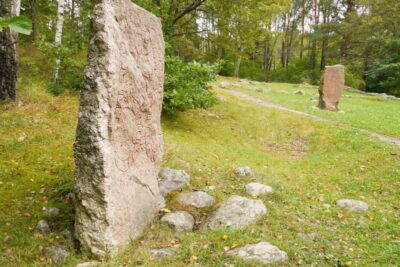
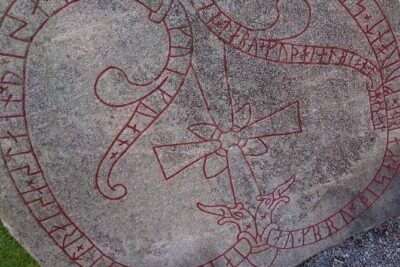
Then comes one of the most satisfying early stops: Jarlabanke’s Bridge. This bridge is tied to a specific Viking Age figure, Jarlabanke, and the bridge itself is dated to the 11th century. What you’re really hunting for is the nearby runestone material linked to him and his family, because those inscriptions turn a simple bridge crossing into a statement of identity and status.
If you’re the type who likes details, you’ll appreciate that the guide points out what the inscriptions are telling you, not just that the stones exist. If you hate standing around waiting for “one more explanation,” give yourself permission to enjoy it for a few minutes and then let the story sink in.
Arkils Tingstad and Lake Vallentuna: A Viking Parliament Feel
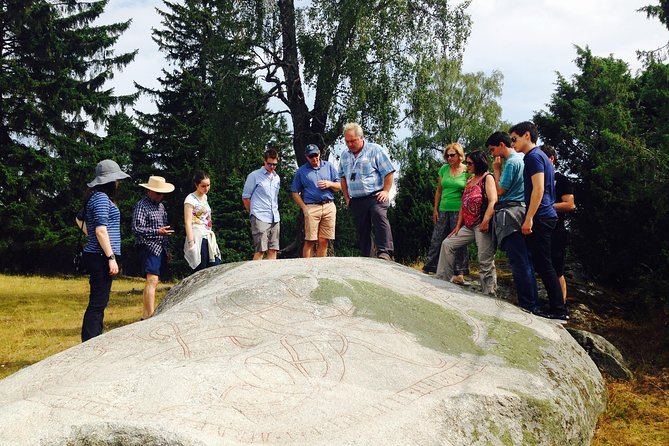
Next you head to Arkils tingstad, also known as an assembly site. This is one of the most conceptually interesting stops on the whole day. Viking-age “ting” locations were where communities gathered to handle disagreements, make decisions, and enact rules.
The site layout is simple but meaningful, with stones arranged in a square pattern. Even if you don’t fully visualize the crowd, the guide makes it clearer. You start to understand why a legal decision needs a physical place, and why stone arrangement matters.
Then there’s a short break toward Lake Vallentuna. This is one of those “reset your brain” moments in the schedule. You go down near the lakeside at the stop, with forest and water views doing their job. It’s short, but it helps the day feel less like a nonstop lecture.
Practical note: this stop is mostly outside. Wear shoes you can trust on uneven ground, even if you’re just stepping off the path for a better angle.
More rune stones, burial mounds and old kingdom stops

Granbyhällen and the Longhouse Foundations: Reading a Family Message
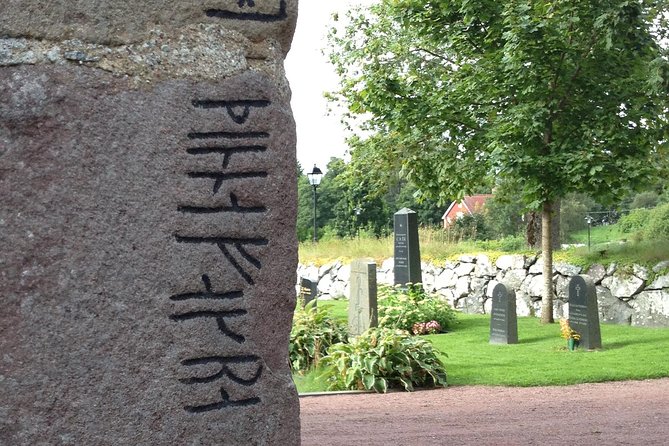
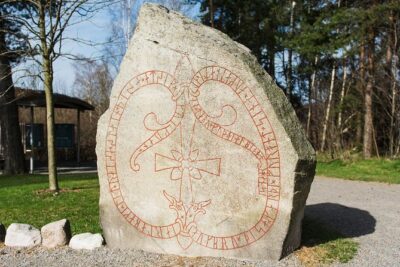
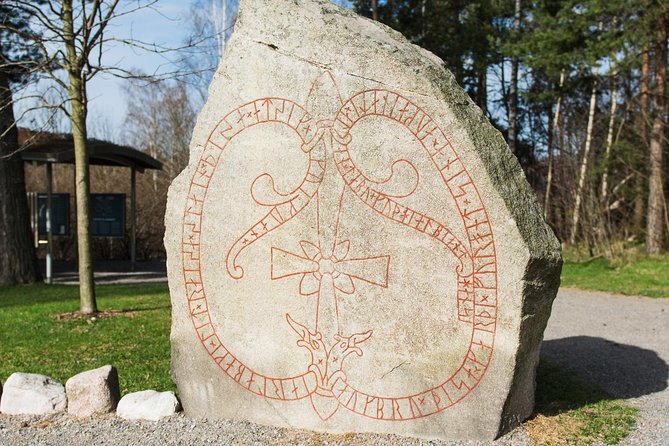
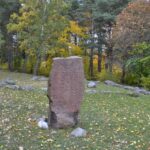
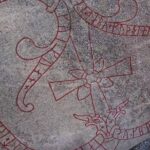
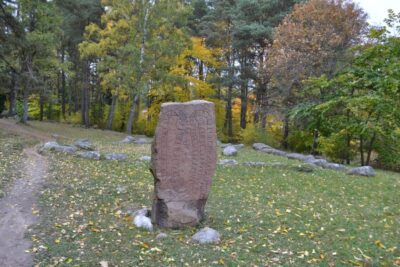
After Arkils tingstad, you get into the heart of “Viking words on stone.” At Granby and Granbyhällen in Orkesta, you’ll see one of the longest and most informative runic texts from the Viking Age. The text focuses on the Granby family members and may have been meant as an inheritance message. That’s a powerful detail, because it shifts runestones from decorative to functional.
Then the tour moves from text to place. At Granby, you visit some of the best-preserved Viking house foundations. This is where the tour earns its keep if you like imagining daily life. Instead of guessing how Vikings lived based on vague cultural stereotypes, you step into the outline of a longhouse footprint and learn how the family likely used the space.
This stop is also where you’ll feel the difference between a tour that rushes and a tour that teaches. The schedule gives enough time to look and absorb, and the guide’s job is to help you connect the inscriptions to the lived setting.
If you’re sensitive to “too much standing,” take a small break when the group pauses for photos. It’s not a marathon, but it’s not a sit-down museum stop either.
Hökeriet, Fika Possibility, and Lunch on Your Terms
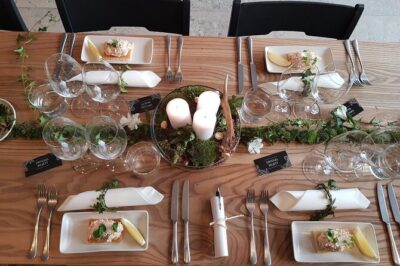
Between the Viking sites, the tour adds a human-scale stop at Hökeriet, a provision shop at the Granby farm area. Hökeriet literally translates as grocery or provision shop, and that helps you understand what this is. It’s not a grand exhibit. It’s closer to the idea of a small trading and supplies place.
One of the best things here is the chance for Swedish fika, though it’s described as available on most but not all tours. Even when you’re not fika-ing, you can usually browse local handcrafts and Viking-related souvenirs.
Lunch is also flexible. The tour includes a lunch stop at a local eatery where lunch is an own-expense break. You’ll likely want to use that time well. If you’re hungry, order early and settle in. If you’re not, pick something easy and keep your energy for Sigtuna and Uppsala.
A small strategy that helps: plan to carry water with you after the early stops. You’re outdoors part of the day, and you’ll be glad you did.
Sigtuna on Lake Mälaren: Cobblestones, Church Stops, and Shopping Break Time
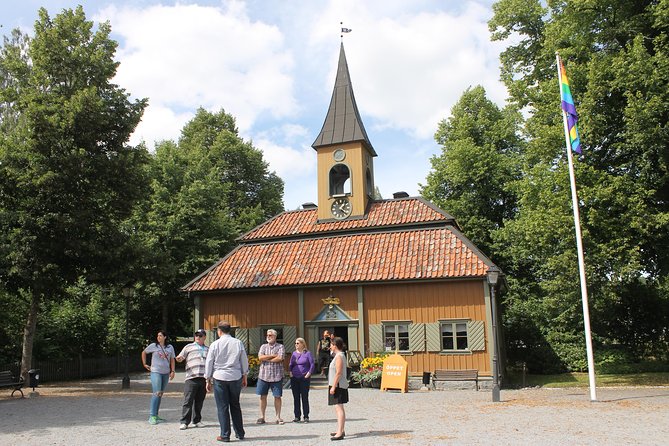
Sigtuna is next, and it’s one of the day’s mood changers. Founded around AD 980 and set along Lake Mälaren, it’s often described as Sweden’s oldest town. The tour gives you about 1 hour here, plus time to stroll atmospheric streets and see historic buildings.
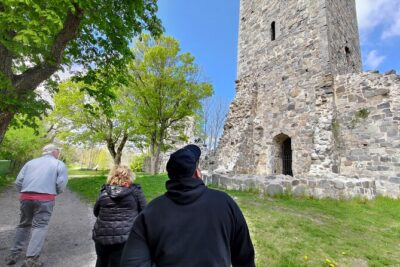
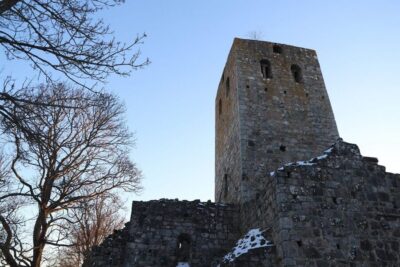
You’ll also get a specific church context with St. Mary’s Church. The town’s layout feels old in a practical way. You’ll notice how small streets and water views shape the experience. This is the point in the day where you can switch from “listening mode” to “walking and noticing mode.”
You may also browse boutiques for souvenirs, including locally made items and crafts. I like this stop because it’s not just a photo moment. The time is enough to do a real circuit, not just pause at a single sign.
Drawback to consider: since lunch happens around here, time can feel split between eating and wandering. If you want longer in Sigtuna, treat this stop as a preview that makes you want a second trip.
Uppsala Cathedral and Gamla Uppsala Mounds: Christian Power Meets Pre-Christian Kingship
The last stretch is what makes this tour feel like a full “Viking and medieval Sweden” arc. You visit Uppsala Cathedral (Uppsala Domkyrka) and then head to Gamla Uppsala with its Royal Mounds.
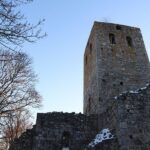
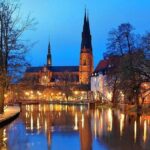
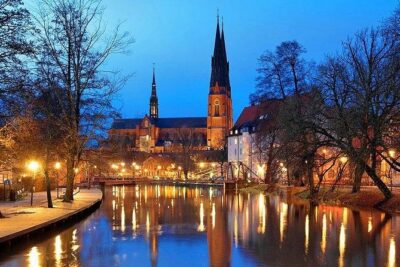
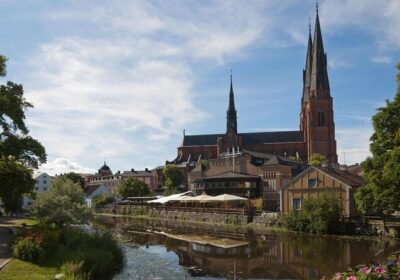
At Uppsala Cathedral, you’ll see Scandinavian Gothic architecture, tall spires, stained glass, and vaulted interiors. The tour also points out key historical and religious relevance, including the Lutheran church setting and the tomb of Reformation king Gustav Vasa. If you choose to climb the bell tower, you can get panoramic views, though that depends on how you pace yourself during the stop.
Then you move to Gamla Uppsala, which is smaller and more archaeological. This area includes three prominent burial mounds dating to the 6th and 7th centuries. Each mound is traditionally linked to named kings: Aun, Egil, and Adils. Archaeology has also found grave goods like weapons and jewelry, which is where you get a concrete sense of status and material culture.
This pairing is smart. Uppsala Cathedral shows medieval religious power and reform-era memory. Gamla Uppsala shows earlier kingship symbolism and burial traditions. When you visit them in sequence, you start to see the long timeline in one city region.
If you’re short on patience for outdoor history, this is still manageable. You’re not hiking. You’re looking at mounds and letting the guide connect legend, excavation, and what the sites represent.
Getting There, Getting Around, and Hearing Every Story
The tour includes hotel pickup and drop-off in central Stockholm, within the provider’s general pickup area. During busy periods, pickup may shift to a different central meeting point even if you’re in the zone, simply to reduce time stuck waiting in the van.
You travel by air-conditioned minibus, with a professional guide in English. The group limit is 17, which helps with pacing and questions.
A practical upside comes from audio. Several departures mention the use of in-ear devices or headsets so you can hear narration during the move between sites. If you’re planning to take photos, you’ll also want your phone fully charged before you set out. One traveler noted there were no phone charging ports, so don’t count on charging in the vehicle.
Comfort tips that matter here:
- Bring a layer for the van and outdoor stops. One group reported the van stayed chilly on a cloudy day.
- Wear comfortable shoes with grip. The stops are short, but ground can be uneven.
- Bring rain gear if skies look uncertain. The schedule has multiple outside stops.
Price and Value for a 9-Hour Viking and Medieval Route
At $274.19 per person for about 9 hours, this tour looks pricey on paper. But it’s priced like a guided day with transportation, a guide, and multiple major sites outside the city.
What you’re paying for:
- Pickup and round-trip transport from central Stockholm
- A professional guide who connects Viking-era sites, runic inscriptions, and medieval churches
- Multiple stops that are marked as admission ticket free in the tour timing details
- Enough time in each place to learn something and not feel completely rushed
What you’re not paying for:
- Food and drinks, including lunch at your own expense
So the real value question is whether you want to pay to remove planning stress. If you were to do this on your own, you’d be juggling transit, timing, and figuring out what each site means. Here, the guide does the interpretation work.
I also think the small-group cap helps the value. With up to 17 people, you’re less likely to feel like a nameless face in the back.
If you hate long days, the price might not feel justified. If you like a packed route, it starts to look like a smart deal.
Who Should Book This Tour, and Who Might Want a Different Plan
This one fits best if you:
- Like Viking history with real places, not just museums
- Enjoy learning how law, runes, and kingship show up in stone and landscape
- Want a day that mixes countryside scenery with major historical stops like Sigtuna and Uppsala
It may be less ideal if you:
- Don’t want a schedule built around many short stops and outdoor viewing
- Prefer more time in one town rather than touching several sites
- Have very young children. It’s not recommended for children under 8.
There’s also a guide dependency factor. The itinerary gives you the ingredients, but the guide controls how information is paced. Several positive experiences mention guides like Urban and Olof standing out for energy, humor, and story clarity. Still, if you end up with a guide who talks for longer at each site, you might feel the day gets heavier.
Should You Book This Viking History and Swedish Countryside Tour?
If you’re in Stockholm and you want a serious history day without renting a car, I’d call this a strong option. You get a coherent Viking-to-medieval arc with standout stops like Jarlabanke’s Bridge, Arkils tingstad, Granbyhällen, and the combination of Uppsala Cathedral plus Gamla Uppsala.
Book it if you love runes, assembly sites, burial symbolism, and church architecture, and you’re happy with a long day outdoors. Skip it if you want a relaxed pace, lots of free time, or hands-on “Viking experience” in the entertainment sense.
My final advice: pack for weather, bring water, and treat the day as a guided learning route. If you do that, you’ll leave with names, places, and a timeline you can actually hold onto.
FAQ
How long is the Viking History and Swedish Countryside Tour to Sigtuna and Uppsala?
The tour runs about 9 hours.
What is included in the tour price?
Hotel pickup and drop-off within the general Central Stockholm pickup area, transport by air-conditioned minibus, and a professional guide are included.
Is food included?
No. Food and drinks are not included. Lunch is available at a local eatery as an own-expense stop.
Are the tours stops admission tickets included?
Many of the specific stops listed have admission ticket free for that location.
What towns and sites are visited?
You’ll visit Viking and medieval sites around Täby and Vallentuna, then Granby, Sigtuna, Uppsala Cathedral, and Old Uppsala (Gamla Uppsala).
Is the tour language English?
Yes, the tour is offered in English.
Is pickup guaranteed at every hotel in Stockholm?
Pickup is offered within a general pickup area in central Stockholm, but pickup at your exact hotel is not guaranteed if you’re outside that pickup area. In high season, you may be directed to another central meeting point.
What group size should I expect?
The tour has a maximum of 17 travelers.
Is this tour suitable for children?
It is not recommended for children under 8 years old.
Reviewed Across Sweden




Viking Ground, Further Afield

More Of Uppsala
Other Swedish trips from the review pile
- ROYAL Castle Skokloster and Viking Sigtuna (private tour)
★ 4.5 · 3 reviews - Stockholm Port to Stockholm Arlanda Airport (ARN) – Departure Private Transfer
★ 3.5 · 3 reviews - Stockholm Ghost Hunt: Self-Guided Tour and Puzzle Adventure
★ 4.5 · 3 reviews - Private Photography workshop in Stockholm
★ 5.0 · 3 reviews - Private blood, ghosts and folklore Old Town 2h Stockholm tour
★ 4.0 · 3 reviews - Ghosts of Stockholm: A Guided Tour of Horror and Dark Folklore
★ 4.5 · 3 reviews
Uppsala City & Cathedral Tours, compared.
 ★ 4.5Viking History, Runes & Countryside 9h Tour to Sigtuna & UppsalaFrom $298283 reviews
 ★ 4.6Stockholm Viking History Full Day Tour to Sigtuna + UppsalaFrom $266218 reviews
 ★ 4.7From Stockholm: Uppsala and Sigtuna Viking Sites TourFrom $235157 reviews
 ★ 4.5Cube of Art Uppsala Museum of Interactive ArtFrom $2169 reviews
 ★ 5.0Private Full Day Viking History Tour from Stockholm Including Sigtuna and UppsalaFrom $67251 reviews
 ★ 4.7Sigtuna and Uppsala Viking History Day TourFrom $25541 reviews
 ★ 3.5Day-Trip- to-UppsalaFrom $24919 reviews
 ★ 5.0Private Day Tour to Uppsala – Uppsala Cathedral, Viking Burials and countrysideFrom $49616 reviews
Browse the lists this tour appears in