
REVIEW · SIGTUNA
Stockholm Old Town and the Viking Museum, a Small Group Walking Tour
Three hours, and Stockholm feels mapped out. I love how the guide connects the city’s monuments to real turning points, and I especially like that Viking Museum entry is included so you skip the usual hassle. The one thing to plan for is some walking on uneven Old Town streets, so comfortable shoes and moderate fitness help.
This is a small-group experience capped at 10 people, and in practice you may end up with a very personal feel. I also like that the tour is led by guides like Bengt (including Bengt Nykvist in at least one booking), who give clear English explanations and keep the pacing easy to follow.
You’ll start near Gamla Stan, work your way across major power sites like Riddarholmen, Riksdagshuset, and the Royal Palace area, then end at Djurgården. The finale includes a guided introduction to the museum, and you’re welcome to stay longer afterward.
In This Review
- Quick highlights that matter
- Gamla Stan starts at the metro, not a maze
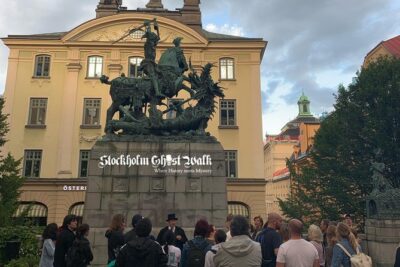
- Riddarholmen Church and Stockholm’s founder legend
- Gustav Vasa at Riddarhuset, plus religion and power
- Vasabron and the warrior kings of the Baltic
- Riksdagshuset and the Estates that ruled
- The Royal Palace area, Karl XII, and the eastward stare
- Jarnpojken, Stortorget, and Sweden’s awards culture
- A walking timeline across Old Town toward 200 years of peace
- Djurgården by ferry, then the Viking Museum is the payoff
- Price and value: why $118.96 can make sense
- Who should book this small group Old Town and Viking Museum tour
- Should you book this tour?
- FAQ
- How long is the Stockholm Old Town and Viking Museum tour?
- Is entry to the Viking Museum included?
- Does the tour include a ferry ride?
- What is the maximum group size?
- Is this tour offered in English?
- Where does the tour start and end?
- What is the cancellation policy?
Quick highlights that matter
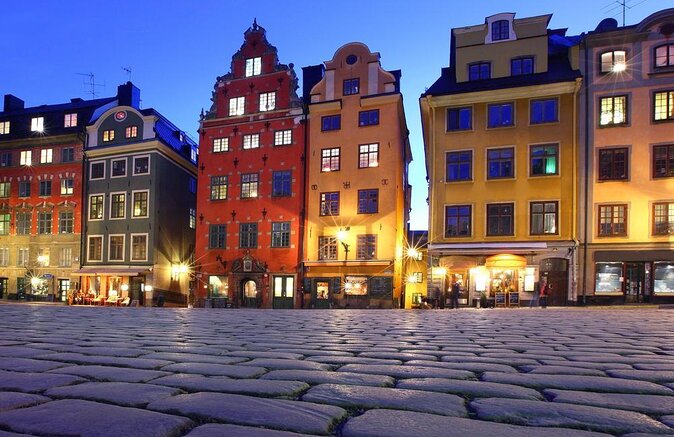
- Gamla Stan orientation fast with early Stockholm history, from the Ice Age to first island settlements
- Riddarholmen and Mälaren views paired with the founder story around Birger Jarl
- Real political timeline from Gustav Vasa and the bloodbath of Stockholm to the Estates system and later suffrage
- Royal Palace statues with direction and dates including Karl XII pointing east and the Poltava defeat in 1709
- Ferry ride to Djurgården included, then the Viking Museum with a guided introduction
- Stay after the tour since your museum visit does not end the moment the walking portion finishes
Stockholm is a big menu. Here is what else we tried
- Stockholm: City Archipelago Sightseeing Cruise with Guide★ 4.3 · 10,798 reviews
- Stockholm: Skansen Open-Air Museum Admission Ticket★ 4.5 · 3,427 reviews
- Stockholm: Archipelago Boat Tour★ 4.4 · 3,110 reviews
- Stockholm: Highlights Boat Tour★ 4.3 · 2,542 reviews
Gamla Stan starts at the metro, not a maze
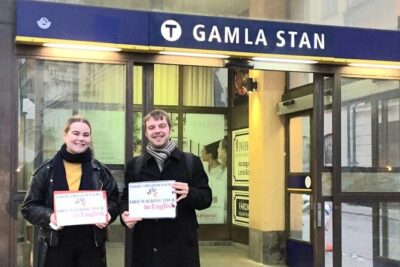
The tour begins at Gamla Stan Metro station, in the underground area near the Pressbyrån kiosk. That tiny detail matters because you get oriented right away, before you’re swallowed by Old Town crowds and twisting streets.
From the start, the guide frames Stockholm as a place shaped by geography, not just postcards. You hear how the story starts long before castles and cobblestones, moving from the ice age era into the earliest settlements on the islands. If you like context, this is a great way to get your brain aligned before you start seeing names like Riddarholmen, Riksdagshuset, and the Royal Palace.
You’ll also get a classic Stockholm view moment near Riddarholmen: the lake Mälaren plus the City Hall area in the distance. It’s the kind of sight that helps you understand why the city grew where it did.
Riddarholmen Church and Stockholm’s founder legend
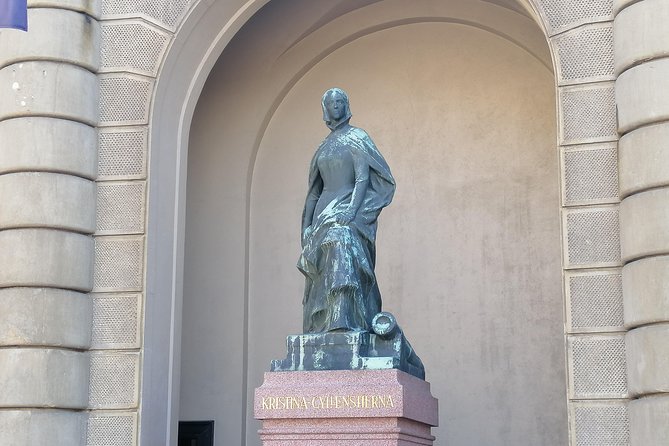
At Riddarholmen, the tour keeps pushing the timeline forward with a very specific anchor: the area outside Riddarholmen Church. Here you’ll meet the presumed founder of Stockholm, Birger Jarl, or at least a statue representing him.
You also get a concrete date that helps the whole founding story land. The tour highlights that 1252 is the year Stockholm was first mentioned in a written text that is still preserved today. That kind of fact makes the founding story feel less like a slogan and more like a paper trail.
This is one of those segments where you’re not just looking at architecture, you’re learning what people meant to protect, build, and control when Stockholm was still new. If you’re the type who likes to understand the why, this stop really works.
Gustav Vasa at Riddarhuset, plus religion and power
Next comes the House of Nobility area, Riddarhuset. Even without going inside, you’ll stop outside and focus on the statue of Gustav Vasa, often described as the father of Sweden.
What I like here is how the guide ties Gustav Vasa to two huge shifts. First is political violence: the bloodbath of Stockholm is brought up as part of the struggle over control. Second is religion: the tour explains that Gustav Vasa changed Sweden from Catholicism to Lutheran Protestantism.
This is not a dry lecture. It’s delivered as a chain of cause and effect. When you hear about the uprising that followed the bloodshed, and then hear how religion was altered afterward, Stockholm starts to feel like a place where decisions echoed for centuries.
Vasabron and the warrior kings of the Baltic
Crossing the Riddarhuset area leads you to Vasabron, where the talk turns to heirs and heiresses of Gustav Vasa. The big name here is Gustav II Adolf, described in the tour as one of Sweden’s greatest warrior kings.
You’ll hear how his era helped reshape the Baltic Sea into something closer to an inland sea, surrounded by Swedish possessions. And then you get the fun, tangible connection: it was during his reign that the Vasa ship was built.
If you already know the Vasa Museum, this stop acts like a warm-up. Even if you do not, you’ll leave knowing that Sweden’s naval ambition was not just a random interest, it was a political strategy with money, shipbuilding, and power behind it.
Other old-town lanes we walked and wrote up
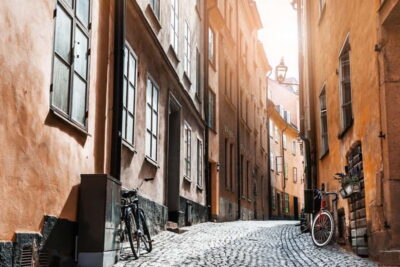
Riksdagshuset and the Estates that ruled
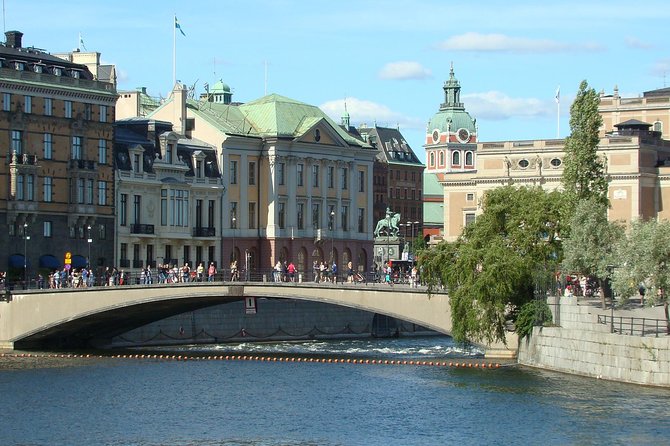
At the Parliament Building, Riksdagshuset, the tour zooms out beyond kings and battles and into how governance worked. You hear that the predecessor of parliament was the Riksdag of the Estates, known as Ståndsriksdagen, where nobility, clergy, burghers, and peasants met separately before discussions could move toward the king.
Then the guide walks you through major milestones: the institution was the highest authority next to the king until it was dissolved in 1866. After that, a parliament with two chambers was introduced, but voting rights were still not equal for all citizens. The first elections with general suffrage came later, in 1921, after a political struggle led by liberals and socialists.
This part is worth it if you want to understand why Sweden’s political system evolved the way it did. You get a mental map of the progression, so today’s calm civic life makes more sense when you see the messy steps it took to reach it.
The Royal Palace area, Karl XII, and the eastward stare
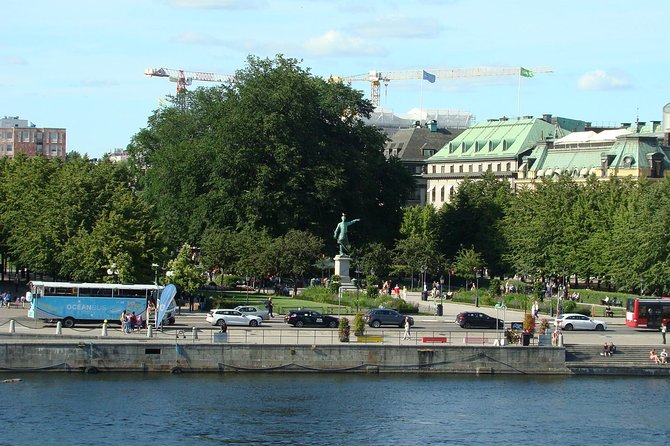
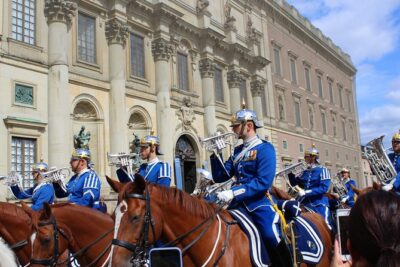
The walk then reaches the Royal Palace area around Lejonbacken on the north side. This is where statues become history lessons you can literally point at.
The guide mentions Peter the Great of Russia putting an end to Swedish dreams of being a major power in Northern Europe. You also hear about Karl XII, the last of the warrior kings discussed on this route, still pointing to the east. The statue direction matters because the tour connects it to where his army, the Caroleans, first had early victories, before defeat by Peter the Great in Poltava in 1709.
Next, the tone shifts toward arts and science. The tour describes the age of enlightenment influence, and then places Gustav III in that frame as an enlightened despot with strong interest in theatre, with contributions in those fields.
I like this transition because it shows Sweden is not only wars and kings. You see cultural ambition sitting beside political survival. That balance makes Stockholm feel more human.
Jarnpojken, Stortorget, and Sweden’s awards culture
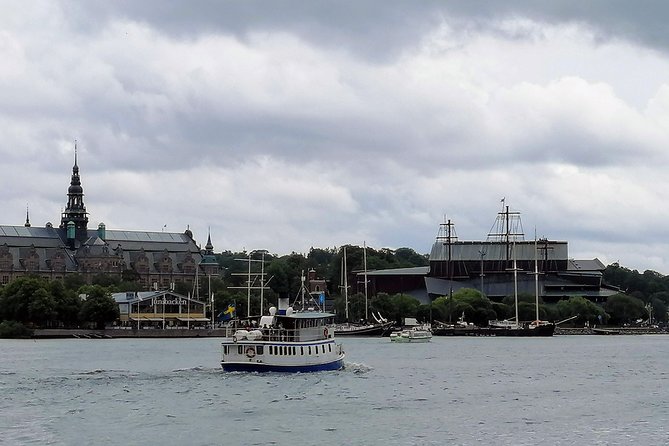
From there, you’ll stop at Jarnpojken, described on the tour as the smallest and nicest statue in Sweden. It’s a quick moment, but it’s also a nice reminder that you can learn something from the smallest details if your guide slows down.
Then you head to Stortorget, a square where the Nobel Prize Museum is located. The tour explains that Swedish Royal Academies designate winners of the most prestigious prices in science and art.
Even if you do not go into the Nobel Museum on this tour, knowing how it connects to institutions helps. It turns Stortorget from just a scenic square into a link between past governance, modern civic values, and global recognition.
A walking timeline across Old Town toward 200 years of peace
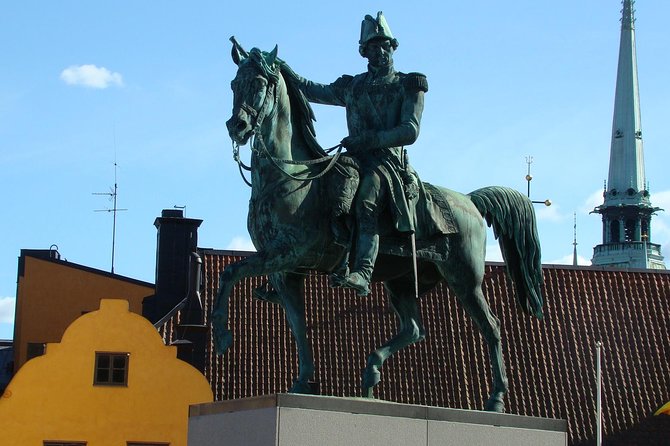
As you move deeper into Stockholm Old Town, the tour keeps building a timeline. One name that comes up clearly is Carl XIV Johan, the first of the Bernadottes. You’ll hear that he was imported to Sweden from France in the early 19th century to try to win back territory lost to Russians.
What I like is that the tour does not end with diplomacy. It also credits Carl XIV Johan with efforts in infrastructure and education. Then you jump to a more modern milestone: in 2014, 200 years of peace was celebrated in Sweden.
The tour ties that long peace to industrial revolution momentum, natural resources, Swedish inventions, and the foundation for a welfare state. It also mentions continued development through the 20th and into the 21st century.
This segment gives you a gentle big picture. You stop seeing Stockholm as a collection of monuments and start seeing it as a system that built stability over time.
Djurgården by ferry, then the Viking Museum is the payoff
One of the best practical parts of this tour is that you do not just march. From the Skeppsbron area, you take the ferry Djurgårdsfärjan to Djurgården, and that ride is included.
Even a short ferry crossing can be a reset. It gives you water views, it breaks the walking rhythm, and it signals that you’re changing neighborhoods, not just continuing the same street.
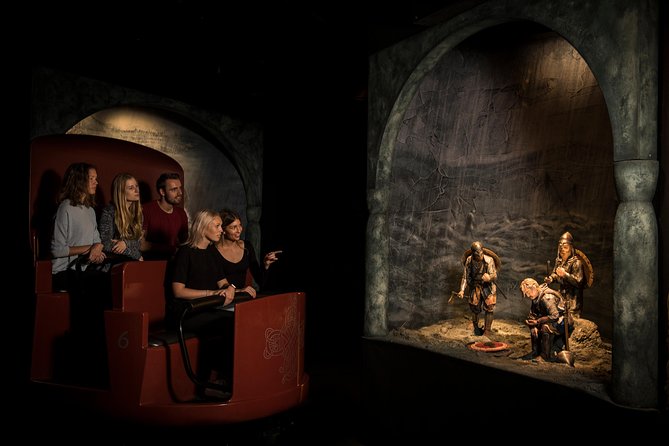
Then you reach the Viking Museum. The museum entry is included, and the guide introduces you to the collections and main attractions. What’s interesting here is the museum’s size and approach. It is described as a small-scale museum with a unique combination of thrilling experiences and historical facts.
You’ll also hear about how the museum is connected to professionals in performing arts and Sweden’s respected historical scientists. That mix helps explain why this stop can feel different from bigger, more traditional museums.
When the guided portion ends, you’re welcome to stay on your own. If you have time, Djurgården is a strong area for extending your day with other well-known sites like the Abba Museum, the Vasa Museum, Gröna Lund, or Skansen, though those are not included in this tour.
Price and value: why $118.96 can make sense
The price is $118.96 per person for about 3 hours, and that cost feels easier to justify when you look at what you’re getting.
First, you get a live guide for the walking portion, with history threaded into the streets rather than delivered as generic facts. Second, Viking Museum admission is included, and the tour is described as avoiding waiting in ticket lines for that entry. Third, the ferry Djurgårdsfärjan ride is included as part of the route.
If you were to do the same mix yourself, you’d pay for a museum ticket on top of your time and navigation effort. A small-group format capped at 10 people is also a value lever. It usually means better chances to ask questions and get details explained without feeling rushed.
The main thing to consider is that you are paying for interpretation. If you already know the history and prefer silent wandering, you might feel you could save money and see the sites on your own. But if you want Stockholm to make sense as you go, the guide plus included museum is a strong match.
Who should book this small group Old Town and Viking Museum tour
I think this tour fits best if you fall into one of these buckets:
- You’re visiting Stockholm for the first time and want a fast, guided orientation through Old Town power centers
- You like history that connects dates, places, and people, not just random names
- You want a smooth transition into Djurgården, with a ferry ride and Viking Museum included
- You appreciate small-group pacing, where the experience can feel more personal even though you’re not in a private car or taxi
It’s also a decent choice for solo travelers who want companionship and conversation. One booking described a small group that consisted entirely of the solo traveler, which shows the cap can sometimes translate into a very personal feel.
Just make sure you’re comfortable with a moderate amount of walking, since the tour lists moderate physical fitness as the expectation.
Should you book this tour?
Book it if you want Stockholm’s highlights plus a Viking-focused museum visit without spending time figuring out what to pair together. You’re getting a guide who can explain the city’s transitions, from early settlement clues to religious shifts, political evolution, and then into a museum built around Viking-era storytelling.
Skip it, or consider doing it on your own, if you plan to spend your day purely at your own pace and you do not care for structured historical context. Also, if you dislike walking on older streets, you may prefer a version with less time on foot.
If you’re aiming for a well-explained, efficient half-day style experience that ends with a museum you can keep exploring, this is a sensible pick.
FAQ
How long is the Stockholm Old Town and Viking Museum tour?
It runs for about 3 hours.
Is entry to the Viking Museum included?
Yes. Admission to the Viking Museum is included in the tour, and your guide introduces key attractions inside.
Does the tour include a ferry ride?
Yes. The ferry Djurgårdsfärjan to Djurgården is included.
What is the maximum group size?
The tour has a maximum of 10 travelers.
Is this tour offered in English?
Yes. The tour is offered in English, and the ticket is described as a mobile ticket.
Where does the tour start and end?
It starts at Munkbrogatan 8, 111 27 Stockholm, Sweden, and ends at The Viking Museum, Djurgårdsstrand 15, 115 21 Stockholm, Sweden.
What is the cancellation policy?
You can cancel for free up to 24 hours in advance for a full refund. If you cancel less than 24 hours before the start time, the amount paid will not be refunded.
The Museum Island, Room By Room




More Old Town Lanes




Stockholm, A Few More Ways


Other Swedish trips from the review pile
- ROYAL Castle Skokloster and Viking Sigtuna (private tour)
★ 4.5 · 3 reviews - Stockholm Port to Stockholm Arlanda Airport (ARN) – Departure Private Transfer
★ 3.5 · 3 reviews - Stockholm Ghost Hunt: Self-Guided Tour and Puzzle Adventure
★ 4.5 · 3 reviews - Private Photography workshop in Stockholm
★ 5.0 · 3 reviews - Private blood, ghosts and folklore Old Town 2h Stockholm tour
★ 4.0 · 3 reviews - Ghosts of Stockholm: A Guided Tour of Horror and Dark Folklore
★ 4.5 · 3 reviews
Viking History & Sigtuna Day Trips, compared.
 ★ 4.5The Viking Museum Exhibition and Viking RideFrom $22667 reviews
 ★ 4.0Entrance ticket to The Viking MuseumFrom $22301 reviews
 ★ 4.5Viking History, Runes & Countryside 9h Tour to Sigtuna & UppsalaFrom $298283 reviews
 ★ 4.6Stockholm Viking History Full Day Tour to Sigtuna + UppsalaFrom $266218 reviews
 ★ 4.5Viking History and Swedish Countryside Tour to Sigtuna & UppsalaFrom $274162 reviews
 ★ 4.7From Stockholm: Uppsala and Sigtuna Viking Sites TourFrom $235157 reviews
 ★ 4.5Viking History Small Group Tour from Stockholm: Half Day Including SigtunaFrom $193111 reviews
 ★ 4.5From Stockholm: Viking Culture Guided Tour with TransferFrom $19381 reviews