
REVIEW · UPPSALA
Guided tour 90min at Old Uppsala mounds and old Uppsala church
A walk through Old Uppsala feels like time travel you can measure in footsteps. This guided 90-minute tour connects the Vendel and Viking Age burial mounds with what recent excavations have turned up, then adds Old Uppsala church history if it is open. I especially like the way Gamla Uppsala kungshögar are explained as major power centers, and I like the practical storytelling about farms, daily life, and finds. One possible drawback: the church visit depends on opening hours, so you may not see the full interior art and medieval details.
If you want big ideas without a huge group, this is built for you. The tour runs on a small scale, max 15 people, and it includes a guided walk around the mounds plus a short church stop. Still, you should come prepared for some walking on uneven ground and a moderate pace.
In This Review
- Key highlights worth planning for
- Old Uppsala mounds are where Sweden’s early power becomes real
- Timing, meeting point, and what your evening logistics look like
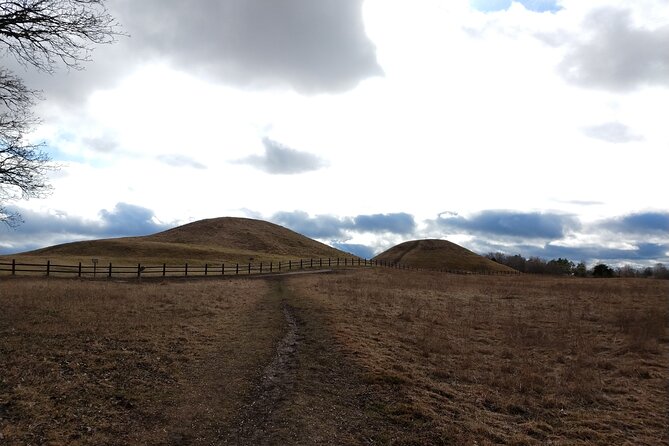
- Stop 1: Gamla Uppsala mounds and the Vendel Period power story
- Stop 2: Old Uppsala church, medieval art, and finds under earlier structures
- A guide can turn “mounds and a church” into a story you can repeat
- Price and value: is $106.73 for 90 minutes worth it?
- Who this tour suits best
- Quick tips to get the most from the church stop
- Should you book this Old Uppsala tour?
- FAQ
- How long is the guided tour?
- Where does the tour start in Uppsala?
- What are the main stops on the tour?
- Is there a mobile ticket?
- How many people are in a group?
- What should my fitness level be?
- Is cancellation free?
Key highlights worth planning for
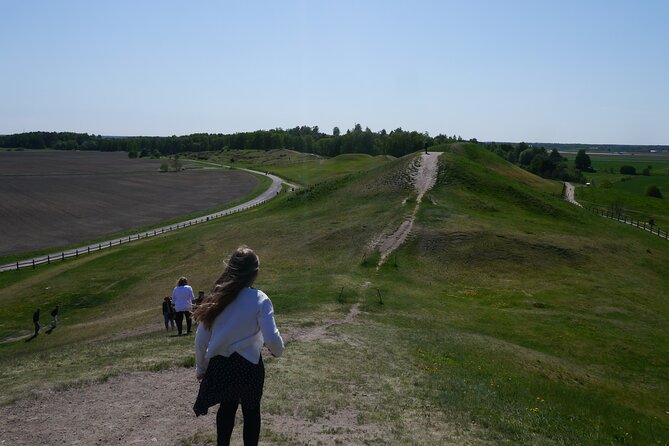
- Walking the Vendel-period burial mounds and hearing what excavations revealed in recent years
- Gamla Uppsala kungshögar explained as some of Sweden’s most powerful early monuments
- Old Uppsala church, if open, including medieval statues and frescoes mentioned in the tour plan
- Longhouse plateaus near the church tied to the 500s and 800s
- Not just monuments, but living details, like farm function and how people lived at the time
- Small group size (up to 15) that keeps the guide’s attention focused
Uppsala rewards a slow walk. More of it here
- Stockholm Viking History Full Day Tour to Sigtuna + Uppsala★ 4.6 · 218 reviews
- Cube of Art Uppsala Museum of Interactive Art★ 4.5 · 69 reviews
- Uppsala: City Highlights and Hidden Gems Walking Tour★ 4.7 · 12 reviews
- Guided tour 90min at Old Uppsala mounds and old Uppsala church★ 4.5 · 5 reviews
Old Uppsala mounds are where Sweden’s early power becomes real
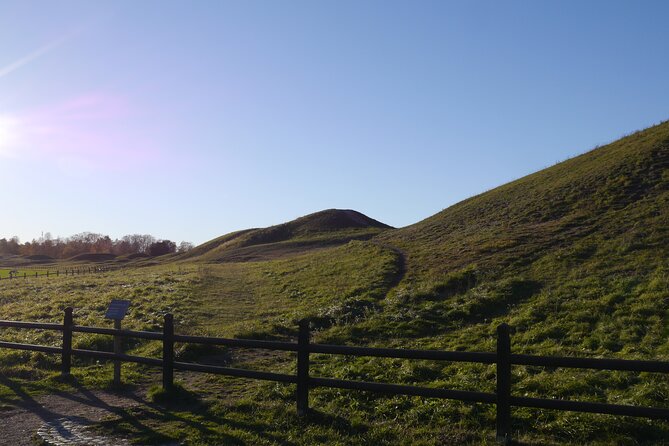
Old Uppsala is one of those places where it is easy to read about the past, but harder to feel it. A guided approach helps you “place” the site. Instead of just standing near grass-covered mounds, you learn what made this landscape important during the Vendel and Viking periods.
I like that this tour treats the mounds as more than monuments. You get talk about excavations and finds from recent years, plus how the post monuments and longhouse plateaus fit into the bigger story. It is the difference between seeing shapes in a field and understanding a ceremonial, political space that mattered to the surrounding farms.
You also get context for why Gamla Uppsala is such a big deal, including the idea of Gamla Uppsala kungshögar being among the strongest burial power symbols in the country. The result is a clearer sense of how authority, ritual, and wealth were displayed long before written records.
Timing, meeting point, and what your evening logistics look like
This tour starts at 5:30 pm in Uppsala, meeting at Disavägen 13, 754 40 Uppsala. It ends back at the meeting point, so you are not hunting for your way home after a focused walk.
Expect about 1 hour 30 minutes total, and plan to stay flexible. The key variable is the church. The tour includes a church visit, but only if Old Uppsala church is open. Since this is an evening start, the opening status matters.
Good to know for comfort: the tour has a maximum group size of 15, and the activity calls for moderate physical fitness. That usually means you will be walking around outdoor ground near the mounds and moving between the two stops without wheelchair-level convenience being mentioned.
Also, you get a mobile ticket. Service animals are allowed, and the meeting area is near public transportation, which makes this easier if you are arriving by train or bus.
Stop 1: Gamla Uppsala mounds and the Vendel Period power story
Stop 1 focuses on Gamla Uppsala, and it is built around a guided walk in the mound area. This is where the tour really earns its value. You are not just looking at a mound and guessing what it might mean. You hear about the burial grounds and how excavations have been interpreting them.
The tour highlights the Vend el and Viking-era significance of the landscape. It explains Gamla Uppsala kungshögar as a major power center, and it connects the big burial sites to the people and the wider area. You also get talk about what is new from “recent years” of excavations, which helps you understand that the story is still being revised as archaeology progresses.
One of the most useful themes here is that the guide ties the mounds to the surrounding environment. The tour mentions farms around the area and their function, then connects that to excavations and finds. That gives you a more complete picture of how people lived, not just how they built ceremonial sites.
Practical note: the itinerary says walking around the mounds takes about 50 minutes. If you like photos, bring them, but also keep your eyes on what the guide points out. The best moments are usually the ones where you learn what specific features in the landscape represent.
Stop 2: Old Uppsala church, medieval art, and finds under earlier structures
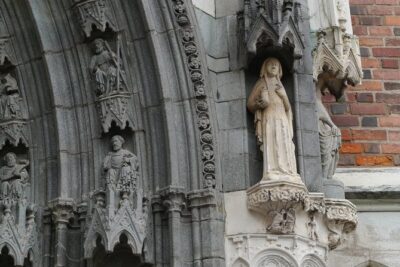
Stop 2 is Gamla Uppsala kyrka, and it is where the tour can change from “great outdoor site” to a broader story spanning centuries. If the church is open, you visit the church interior tied to the medieval setting.
The tour plan specifically references what you might see there: medieval statues and frescoes from the 15th century, plus a sacrificial log dating to the 12th century. You are also told about how this church relates to an early cathedral story, including the claim that it was the earliest cathedral in Sweden excluding Danish Lund. It is also described as one of the earliest beehive seats in Sweden after Sigtuna, already by the 1130s.
That timeline matters because it shows the continuity of sacred space. Archaeology explains the deep pre-Christian era, while the church connects the later medieval world that used earlier ground and older meanings.
The tour also mentions finds under the old cathedral, and it adds another layer near the church: plateaus where Uppsala’s large long halls stood during the 500s and 800s. The story includes finds of gold, silver, and precious stones mentioned as appearing in grenade form, with the note that some came from Sri Lanka. Even if you do not care about the materials themselves, hearing how far-reaching the connections were helps you understand this was not an isolated local scene.
If the church is closed, you will still have the mounds experience. But the missing interior element is exactly why I recommend you check opening hours in your planning so you do not feel cheated by the timing.

A guide can turn “mounds and a church” into a story you can repeat
The most consistently praised part of this kind of tour is the guide. In one standout example, Jonathan Olsson is described as an endless fount of knowledge about the Vendel and Viking periods. That matters because the site can feel abstract unless someone connects the dots.
What a good guide does on this tour is simple: they connect excavations to the landscape. You hear about what archaeologists have found, and then you see how it fits into where you are standing. That is the difference between reading facts and understanding meaning.
I also appreciate that the tour is designed to be more than a lecture at a single spot. The format includes walking around the mounds, not just staying fixed. When that walking and pointing-out work well, the tour feels like you are building an internal map of the site.
Still, be alert to a basic reality: if the church is closed and the group does not walk the site much, the experience can shrink into something closer to a stationary explanation. My advice is to show up with the attitude that you want movement. If you get clear instructions that you will walk the mounds and see what is visible nearby, you are set up for a stronger visit.
Price and value: is $106.73 for 90 minutes worth it?
At $106.73 per person for about 1 hour 30 minutes, this is not a budget add-on. But it is also not priced like a half-day museum-only program. The value comes from three things that match how this region really works.
First, the site is outdoors and spread out. A guide helps you interpret what you see, especially when you are learning about excavations and finds from recent years.
Second, the group size is small, max 15. That usually means more chance to ask questions and get explanations that stick.
Third, the tour combines prehistory and medieval storytelling. You go from burial mounds tied to power and ritual into a church setting where medieval art and earlier cathedral history are part of the same neighborhood.
One more value factor: the tour requires a minimum number of travelers (two) to run. That is normal for private or small-group style experiences, but it is worth noting. If you are booking last-minute or traveling alone, make sure your date still has enough people so you are not left scrambling.
Who this tour suits best
This tour is a strong match if you like any of the following:
- Vendel and Viking-era culture, especially burial sites and what excavations have clarified
- Visitors who enjoy guides who connect objects, dates, and landscape features into one story
- People who want a focused evening activity in Uppsala without a full day commitment
It is less of a match if you want a long, free-roam museum day. This is guided time, with a walk and a potential church interior stop. If you are expecting a multi-hour art museum experience, you may feel the time is short.
Also, consider this based on your comfort with uneven ground. The tour is described as moderate fitness, so wear shoes you trust on outdoor paths near the mounds.
Quick tips to get the most from the church stop
If your goal is to see the interior details, plan around opening hours. The tour explicitly says it visits Old Uppsala church only when it is open, so your best outcome is a date and time when you can actually enter.
If you are the type who likes photos, remember that church interiors can have restrictions. Keep your phone handy, but focus first on the guide’s explanation of what you are looking at.
Also, if you are traveling during shoulder season or on a day when hours are unpredictable, it is smart to approach this tour with a “Plan A and Plan B” mindset. Plan A is the full mound walk plus church interior. Plan B is a strong mound-focused experience even if the church is closed.
Should you book this Old Uppsala tour?
I think this is a good booking if you want your Uppsala visit to connect archaeology to meaning. The mix of Gamla Uppsala kungshögar context, walking the mounds, and the chance to see what the church preserves makes it more than a simple sightseeing circuit.
You should book if:
- You value guided interpretation of excavations and finds
- You want a small-group feel and an efficient 90-minute plan
- You can align your timing with the church opening
You might skip or reconsider if:
- You strongly care about the church interior and your date is at risk for being closed
- You prefer long, self-paced exploration where you can linger without a schedule
If you want a neat, story-driven way to experience one of Sweden’s most important early sites, this tour is a solid choice. Just time it for the church being open, wear comfortable shoes, and arrive ready to read the landscape, not just look at it.
FAQ
How long is the guided tour?
It runs about 1 hour 30 minutes.
Where does the tour start in Uppsala?
The meeting point is Disavägen 13, 754 40 Uppsala, Sweden.
What are the main stops on the tour?
You visit the Old Uppsala mounds area at Gamla Uppsala, then you go to Gamla Uppsala kyrka (Old Uppsala church) if it is open.
Is there a mobile ticket?
Yes, the tour includes a mobile ticket.
How many people are in a group?
The tour has a maximum of 15 travelers.
What should my fitness level be?
The activity calls for a moderate physical fitness level.
Is cancellation free?
Cancellation is free if you cancel up to 24 hours in advance for a full refund.
Other Swedish Outings We Reviewed


Reviewed Across Sweden

More Of Uppsala
Other Swedish trips from the review pile
- Uppsala’s biggest attractions – 1h city walk in Uppsala city.
★ 4.5 · 3 reviews - Adventure parc
★ 4.5 · 3 reviews - Uppsala Must See 2h city walk – 2h tour of all big attractions!
★ 5.0 · 4 reviews - Uppsala bloody history 1h- racial biology, 18th century plague, 19th century prostitution etc.
★ 5.0 · 4 reviews - Guided tour 90min at Old Uppsala mounds and old Uppsala church
★ 4.5 · 5 reviews - Uppsala: City Highlights and Hidden Gems Walking Tour
★ 4.7 · 12 reviews
Uppsala City & Cathedral Tours, compared.
 ★ 4.5Viking History, Runes & Countryside 9h Tour to Sigtuna & UppsalaFrom $298283 reviews
 ★ 4.6Stockholm Viking History Full Day Tour to Sigtuna + UppsalaFrom $266218 reviews
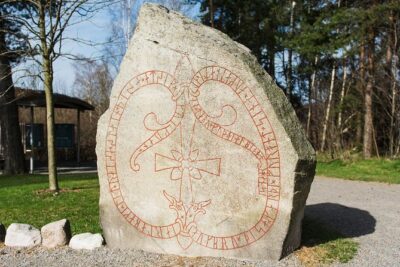 ★ 4.5Viking History and Swedish Countryside Tour to Sigtuna & UppsalaFrom $274162 reviews
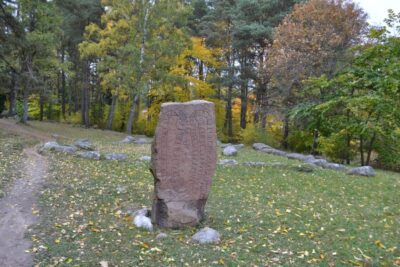 ★ 4.7From Stockholm: Uppsala and Sigtuna Viking Sites TourFrom $235157 reviews
 ★ 4.5Cube of Art Uppsala Museum of Interactive ArtFrom $2169 reviews
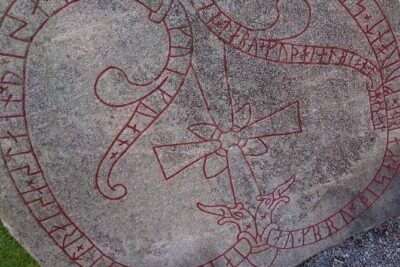 ★ 5.0Private Full Day Viking History Tour from Stockholm Including Sigtuna and UppsalaFrom $67251 reviews
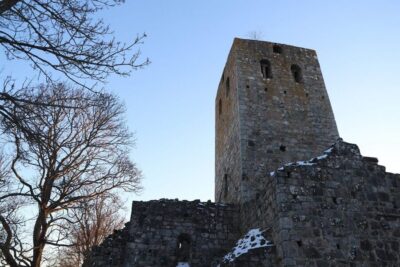 ★ 4.7Sigtuna and Uppsala Viking History Day TourFrom $25541 reviews
 ★ 3.5Day-Trip- to-UppsalaFrom $24919 reviews
Browse the lists this tour appears in