
REVIEW · UPPSALA
Uppsala Must See 2h city walk – 2h tour of all big attractions!
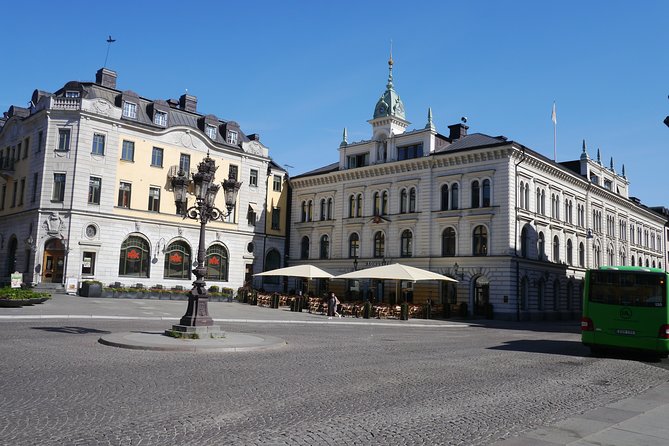
Two hours can change how you see Uppsala. This walk strings together Uppsala Cathedral and Viking runestones plus botanic gardens and Uppsala Castle stories, so you get a clear, useful overview fast. I love how the route hits major landmarks without turning into a long, tiring day, and I also like that the guide adjusts the pace to your needs. One thing to consider is that several stops depend on opening hours, and Uppsala Castle is closed for visitors, so you will mainly view the courtyard rather than go inside.
The tour is an English 2-hour city walk with a small group cap (up to 20), so it feels more like a guided stroll than a herd of tourists. You also start right in central Uppsala at Riddartorget (Knights’ Square), then loop back there at the end.
Because it is late afternoon/early evening (start time 5:30 pm), bring comfortable shoes and a light layer. Even with the brisk schedule, you will want to stay alert for details, especially around the cathedral area and the university buildings.
In This Review
- Key things I’d prioritize on this Uppsala walk
- Price and logistics for a 2-hour overview that covers a lot
- Getting your bearings at Riddartorget before the cathedral zone
- Uppsala Cathedral exterior and nearby Viking age runestones
- Uppsala University Main Building and the “inside if open” approach
- Dekanhuset and the dark 1920 to 1958 science story
- Carolina Rediviva University Library and the Silver Bible in gothic language
- Botaniska Tradgarden: one of the world’s oldest botanical gardens
- Uppsala Castle courtyard murders, with the castle closed
- Old town Uppsala, Dombron, and the river and merchant story
- Upplandsmuseet’s old mill view and the Gustavianum exterior
- St Eriks Kalla and the battle plus sainthood link
- Pace, group size, and guide style that keeps two hours feeling tight
- Who this tour suits best in Uppsala
- Should you book the Uppsala Must See 2h city walk?
Key things I’d prioritize on this Uppsala walk
- A cathedral-plus-Viking starter pack: Uppsala Cathedral from the outside, then nearby Viking age runestones close by.
- University architecture and history, on your feet: quick stops at the main university building, Dekanhuset, and Carolina Rediviva.
- Carolina Rediviva’s Silver Bible (when accessible): if the site is open, you may be able to see the historical museum and the famous Bible in gothic language.
- Botaniska Tradgarden for local nature: a short look at one of the world’s oldest botanical gardens, if open.
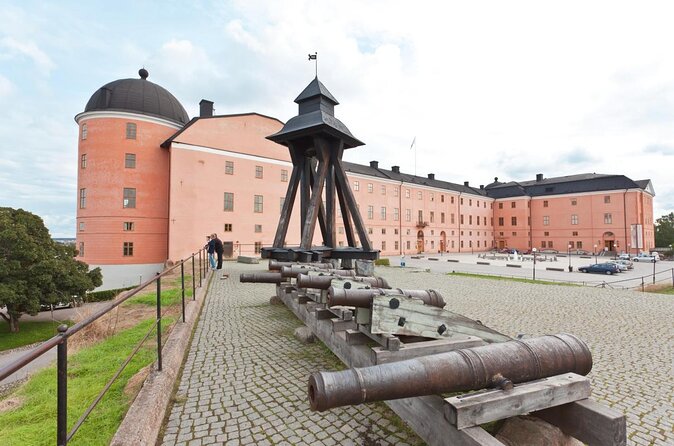
- Uppsala Castle stories without needing an interior visit: the castle is closed for visitors, but the courtyard and the murders behind it are still part of the experience.
- St Eriks Kalla and the old town route: you get the old main square, Dombron, the river story, and the saint-related stop.
Uppsala rewards a slow walk. More of it here
- Stockholm Viking History Full Day Tour to Sigtuna + Uppsala★ 4.6 · 218 reviews
- Cube of Art Uppsala Museum of Interactive Art★ 4.5 · 69 reviews
- Uppsala: City Highlights and Hidden Gems Walking Tour★ 4.7 · 12 reviews
- Guided tour 90min at Old Uppsala mounds and old Uppsala church★ 4.5 · 5 reviews
Price and logistics for a 2-hour overview that covers a lot
The price is $110.15 per person for about 2 hours in English. For a walking tour, that might feel steep at first glance, but you are paying for a guided route that compresses several of Uppsala’s biggest themes into one loop: cathedral and Viking roots, university life and notable buildings, science-and-dark-history stops, and then the castle and old town highlights.
A practical way to judge value: if you try to piece this together on your own, you will spend time figuring out where to go, what’s worth your attention, and what is open. This tour is built to keep you moving with a guide, and you can often save time by choosing a guided “big picture” route before you go deeper later.
A few logistics notes matter here. You start at Riddartorget (Knights’ Square), Biskopsgatan, 753 10 Uppsala. The tour ends back at the meeting point, which makes planning your evening easier. You also get a mobile ticket, and service animals are allowed. The group size is capped at 20, and the walk is best for guests with a moderate physical fitness level.
One more practical detail: since this tour includes stops with “if open” access, you should treat it as a guided plan that may shift based on what is currently open that day.
Getting your bearings at Riddartorget before the cathedral zone
Starting at Riddartorget, you are positioned in the middle of the action. It is a smart choice because you do not spend your time commuting out to the outskirts. From this central square, the route naturally flows toward the cathedral area, then toward the university precinct and onward through older parts of town.
This matters because Uppsala’s best “early win” is orientation. You will quickly see where the major sites sit relative to each other, which helps a lot when you later want to return on your own for photos or slower exploration.
If you like tours where the guide actively keeps things organized, this one fits. One review note points out how the guide can handle things like lost guests and keep things moving at a pace that suits the group, which is exactly what you want when you only have two hours.
Uppsala Cathedral exterior and nearby Viking age runestones
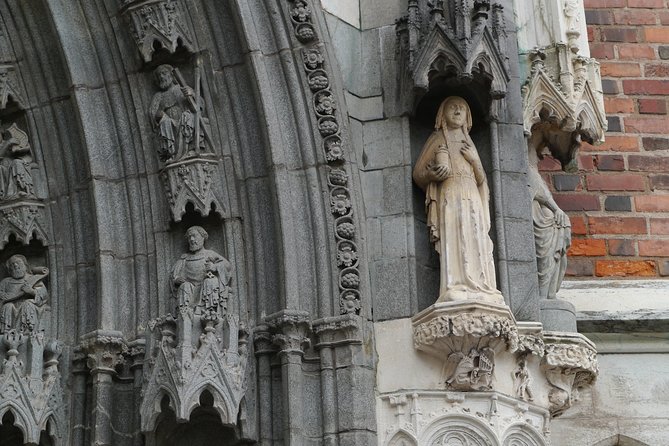
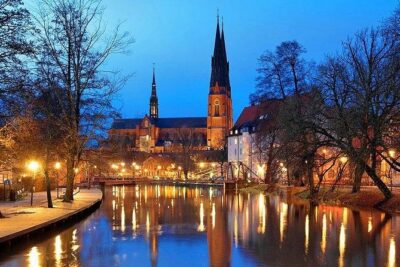
You begin with the biggest cathedral in Uppsala, seen from the outside. Even without entering, this stop is about perspective. A cathedral is not just a building, it is a landmark that sets the emotional tone of the whole area. Seeing it first helps you understand why Uppsala is often described through religion and power, even before you get into the more specific stories.
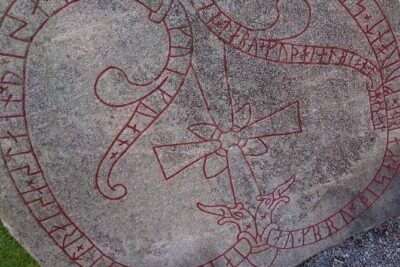
From there, you head to the Viking age runestones close to the cathedral. This is a great pairing because it shows how layered the place is. You are not only looking at medieval and later Uppsala, you are also reading the city’s older traces, the kind that make Uppsala feel anchored in time rather than built from scratch.
What to expect: this is a quick stop, so I’d use it for photos, and for listening closely to the guide’s links between the stone markers and the wider Viking story.
Uppsala University Main Building and the “inside if open” approach
Next up is the Uppsala University Main Building. The tour is set up for either an inside visit or, if it is not open, an exterior walkthrough. Either way, you are getting a short shot of what the university represents in this city.
Why I like this stop in a short tour: universities are often where a city shows its values through architecture and tradition. Here, it also keeps your timeline efficient, so you do not end up losing half your evening hunting for entrances.
Practical tip: if you see people waiting at another door for an inside entry, it can slow your group. Since this tour uses a set schedule, trust the guide’s plan and keep moving with the group.
More Swedish streets covered on foot
Dekanhuset and the dark 1920 to 1958 science story
At Dekanhuset, you get a “darker secret” stop tied to the Swedish race biology institute and its history from 1920 to 1958. This is one of the most meaningful turns on the route, because it is not just pretty buildings. It forces you to look at how science, power, and ideology can intersect.
This stop is also short, so the goal is not an in-depth lecture. Instead, it gives you a starting point. If the topic grabs you, you will know what to look up later, and you’ll have context for why it matters in Uppsala.
Consideration: content like this may feel heavy compared to the cathedral and runestones. If you prefer a lighter tone, you can prepare yourself mentally so it does not take you by surprise.
Carolina Rediviva University Library and the Silver Bible in gothic language
You then reach Carolina Rediviva University Library. If open, the tour may include entry so you can see the historical museum and the world-famous silver bible in gothic language. If it is not open, you still get the value of the stop as a major landmark in the university area.
This is a huge highlight because it is visual and specific. A silver Bible is not vague, it is a concrete object that makes you think about the role of language, scripture, and craftsmanship in earlier Uppsala.
How to make the most of it: arrive mentally ready to read slowly. Even if you only get limited time inside, these are the places where small details stick with you, like how the guide connects the Bible’s language style to the broader time period.
Botaniska Tradgarden: one of the world’s oldest botanical gardens
Next is Botaniska Tradgarden. You explore it with your guide if it is open. The big selling point here is local nature, but with global significance: it is described as one of the world’s oldest botanical gardens.
In a tour packed with architecture and historical stories, the garden stop is a pressure release. It gives you space for a breath, and it also adds something Sweden does well: the balance of civic life with outdoor learning.
What to expect practically: the garden stop is brief, around 10 minutes. Do not treat it like a full garden visit. Treat it like a guided taste, so you can decide later if you want to return for a longer, slower walk.
Uppsala Castle courtyard murders, with the castle closed
You then reach Uppsala Castle (Uppsala Slott). You visit the courtyard and hear about the murders at the castle, but the castle itself is closed for visitors. So, you are not going to roam halls inside as part of this experience.
This is still valuable because it flips expectations. Even without entry, you see the setting, and the guide’s story helps you understand why the castle area matters. When you later pass it on your own, you’ll know the context, instead of just seeing stone walls.
A quick reality check: if you specifically came for an inside castle visit, this tour may not match your goal. But if you are happy with outside viewing plus story-based context, it is a strong fit.
Old town Uppsala, Dombron, and the river and merchant story
After the castle area, you head toward older central town scenes. The tour includes the old main square and Dombron, plus history of the river and merchant Uppsala.
This part of the walk is important because it connects “big institutions” to everyday life. Cathedral, university, and castle are power centers, but merchant life is what keeps a city moving. The guide’s river angle also gives you a sense of why Uppsala developed where it did and how the waterway ties into the city’s growth.
What I’d do here: use these minutes to look around slowly while the guide explains. Dombron and the river connections are the kind of details you can miss if you only take photos and keep walking.
Upplandsmuseet’s old mill view and the Gustavianum exterior
There’s also a stop where you can see the old mill that Upplandsmuseet stands inside. That is a clever inclusion because it shows how spaces get reused. Museums often live in older structures, and those structures can tell a parallel story to the exhibits.
Then you reach Museum Gustavianum, where you walk by and see the anatomical theatre from the outside. Even without entering, this is a distinctive architectural feature tied to learning and scientific history.
Consideration: since Gustavianum is outside-view only, do not expect museum rooms and exhibits. This is a “see it, then understand what it is” stop. If you want exhibits, plan a separate visit later.
St Eriks Kalla and the battle plus sainthood link
You end with Sankt Eriks Kalla, walking past the spring of St Erik and hearing about the battle and his sainthood. This is a short, focused stop, but it adds a spiritual and legendary layer to the Uppsala story.
Why it works at the end: after Viking runestones, university science and history, and castle violence, you finish with a saint-related narrative. It helps the full tour feel like a map of belief and story tradition, not only a checklist of sights.
If you care about symbols, this is a good stop to linger for a minute, even if the schedule moves on. A spring tied to a saint is the kind of place where the setting reinforces the story.
Pace, group size, and guide style that keeps two hours feeling tight
The tour runs about 2 hours and has a maximum of 20 travelers. That is the sweet spot for an overview walk. Small enough that you can hear the guide and ask questions, large enough that it still feels like a real group experience.
One practical thing to like is how the guide handles pacing and individual needs. A past guest highlighted that the guide can accommodate pace and desires, and can even find people who get lost. That matters more than it sounds, because city walking tours can break down when someone has an off moment. Here, the tour is set up to stay on track.
Tip: if you want to ask questions, do it at natural story breaks rather than mid-crosswalk. It makes the guide’s job easier, and it keeps the group moving.
Who this tour suits best in Uppsala
This is a strong choice if you want a fast, structured way to understand Uppsala without spending a full day bouncing between sites. You will enjoy it most if you like history that includes both achievements and uncomfortable chapters, from Viking traces and university culture to the darker science stop tied to 1920 to 1958.
It also fits you if you want an easy evening plan. Starting at 5:30 pm and ending back at the meeting point makes it simple to slot into your itinerary.
You might choose a different option if you need guaranteed interior access every time. Several key locations are listed as “if open,” and the castle is closed for visitors, so your inside time can vary by day.
Should you book the Uppsala Must See 2h city walk?
Book it if you want a guided Uppsala orientation in English, with a route that covers cathedral area Viking age runestones, key university sites, a botanical garden stop, and the castle courtyard story, all within two hours. The price is high for a walking tour, but the value comes from the concentrated route, the small group size, and the guided context that turns landmarks into a story you can remember.
Skip it or pair it with extra time if you are specifically chasing inside access to the university buildings or a full castle visit. Since the plan depends on opening hours and the castle is closed for visitors, you will get the exterior and the story, not a full interior experience.
If you are in Uppsala for a short stay or you want a smart first evening to set up future exploring, this is the kind of tour that helps you see the city in the right order.
Other Swedish Outings We Reviewed


Reviewed Across Sweden

More Of Uppsala
Other Swedish trips from the review pile
- Uppsala’s biggest attractions – 1h city walk in Uppsala city.
★ 4.5 · 3 reviews - Adventure parc
★ 4.5 · 3 reviews - Uppsala Must See 2h city walk – 2h tour of all big attractions!
★ 5.0 · 4 reviews - Uppsala bloody history 1h- racial biology, 18th century plague, 19th century prostitution etc.
★ 5.0 · 4 reviews - Guided tour 90min at Old Uppsala mounds and old Uppsala church
★ 4.5 · 5 reviews - Uppsala: City Highlights and Hidden Gems Walking Tour
★ 4.7 · 12 reviews
Uppsala City & Cathedral Tours, compared.
 ★ 4.5Viking History, Runes & Countryside 9h Tour to Sigtuna & UppsalaFrom $298283 reviews
 ★ 4.6Stockholm Viking History Full Day Tour to Sigtuna + UppsalaFrom $266218 reviews
 ★ 4.5Viking History and Swedish Countryside Tour to Sigtuna & UppsalaFrom $274162 reviews
 ★ 4.7From Stockholm: Uppsala and Sigtuna Viking Sites TourFrom $235157 reviews
 ★ 4.5Cube of Art Uppsala Museum of Interactive ArtFrom $2169 reviews
 ★ 5.0Private Full Day Viking History Tour from Stockholm Including Sigtuna and UppsalaFrom $67251 reviews
 ★ 4.7Sigtuna and Uppsala Viking History Day TourFrom $25541 reviews
 ★ 3.5Day-Trip- to-UppsalaFrom $24919 reviews
Browse the lists this tour appears in