
REVIEW · UPPSALA
Uppsala’s biggest attractions – 1h city walk in Uppsala city.
Uppsala history gets real when you walk it. This 1-hour city walk strings together major sites and the people behind them, from the medieval world up to the early 1900s, with a guide who keeps the stories moving.
I particularly love the way you get both the University and the Domkyrka into the same route. You are not just looking at stone. You are hearing why it matters, including famous names like Celsius, Linné, and Rudbeck.
One thing to consider: this is more of a stop-and-look walk than a long, active stroll. Based on what I’d expect from the pace, you’ll likely spend more time standing near key points than moving nonstop.
In This Review
- Key highlights you’ll notice right away
- Why this Uppsala walk is a smart use of time
- Getting your bearings at Riddartorget and keeping the route easy
- Stop 1: Uppsala University Main Building, University Park rune stones, and the bankrupt decorator
- Stop 2: Gustavianum and the anatomical theater story you will remember
- Stop 3: Uppsala Domkyrka, built 1270s to 1430s, and why the gossip matters
- Stop 4: St. Erik’s Square and the city inside a city, including 1709 to 1711
- Stop 5: Uppsala Castle courtyard, a murder story, and Botanical Garden views
- Price and value: what $91.75 buys you, and what may cost extra
- Pacing, group size, and which kind of traveler will love it
- Small details that can make the tour feel better
- Should you book this Uppsala city walk?
- FAQ
- FAQ
- Where does the tour start?
- Where does the tour end?
- How long is the Uppsala city walk?
- What is the tour ticket format?
- Is the guide authorized?
- What is the maximum group size?
- Are admissions included for Gustavianum and Uppsala Castle?
- Is admission free for Uppsala Domkyrka?
- What kind of fitness level do I need?
- Can I cancel for a full refund?
Key highlights you’ll notice right away
- Stories that connect centuries, from the 1200s through around 1900
- University landmarks plus rune stones, all in a compact route
- The anatomical theater story at Gustavianum, including a myth correction about ventilation
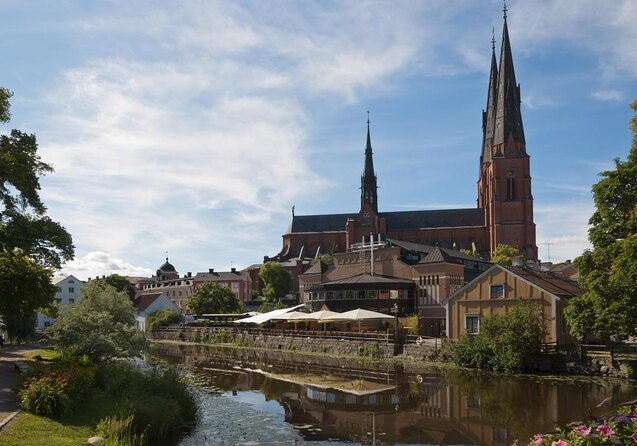
- Uppsala Domkyrka, built between the 1270s and 1430s, with construction gossip included
- Castle courtyard viewpoints toward the Botanical Garden, one of Europe’s oldest
- A small group size (up to 20 travelers), which makes Q and A easier
Uppsala rewards a slow walk. More of it here
- Stockholm Viking History Full Day Tour to Sigtuna + Uppsala★ 4.6 · 218 reviews
- Cube of Art Uppsala Museum of Interactive Art★ 4.5 · 69 reviews
- Uppsala: City Highlights and Hidden Gems Walking Tour★ 4.7 · 12 reviews
- Guided tour 90min at Old Uppsala mounds and old Uppsala church★ 4.5 · 5 reviews
Why this Uppsala walk is a smart use of time
Uppsala can feel big on paper, but this tour turns it into a tight, story-led loop. You start in the city center, then build toward the cathedral and the university institutions that shaped Uppsala’s identity. In a short time, you come away with a mental map, plus context that makes the sights click.
The guide is an authorized Uppsala storyteller, and that matters. Instead of giving you a list of monuments, the narration weaves themes across time periods. You hear about the university’s founding and even the rivalry angle that made it different, including the claim it was set up to be better than the Danes.
And you get the fun stuff too. Murder at Uppsala Castle. Construction scandals during cathedral building. Stories about plague entry into the city. This is the kind of tour that helps you understand why people still talk about Uppsala today, not just because it looks historic, but because the past was messy in a very human way.
Getting your bearings at Riddartorget and keeping the route easy
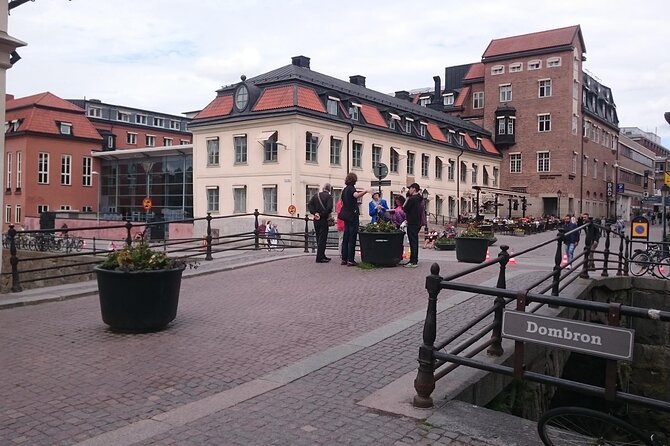
The tour begins at Riddartorget in Uppsala, and it ends back at the same meeting point. That matters if you are arriving by transit or you plan to keep moving afterward to lunch, shopping, or another museum.
It is also built for practicality. The route is near public transportation, and the group is limited to a maximum of 20 travelers, so you are not fighting for hearing space at every corner. The tour is about 1 hour in total, which is ideal if you are visiting Uppsala as a day trip or if you want context before you explore on your own.
Expect moderate walking. The itinerary is made up of multiple short stops, so you will often pause, stand, and look while the guide points out details and sets the scene. If you want a workout-style walk, this may feel a bit slow. If you want a guided orientation with heavy storytelling, it fits well.
Stop 1: Uppsala University Main Building, University Park rune stones, and the bankrupt decorator
You start at the Uppsala University Main Building, a strong first stop because it frames everything else. The guide focuses on the University House and the cathedral area in the same early block, then ties that into the university’s physical setting.
Two details here stand out for me as “this is why a guide helps” material:
First, you hear about the University House builder and why he went bankrupt, tied to the decorations. That kind of behind-the-scenes financial drama is exactly what makes grand buildings feel less untouchable.
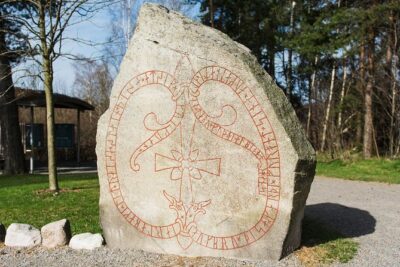
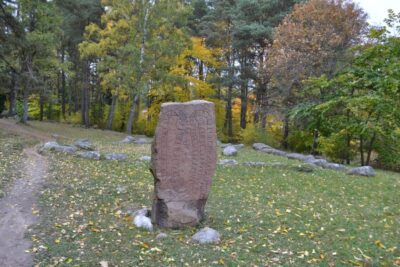
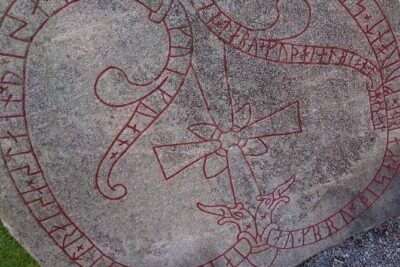
Second, you visit the university park’s rune stones. Rune stones are easy to miss if you only look at the big architecture. When someone gives you the context, they stop being background and become part of the story of how old Uppsala is, not just how impressive the newer institutions are.
If you want photos, this is a good moment to take them. You’ll get a mix of formal architecture plus smaller historical “signals” like rune stones.
Stop 2: Gustavianum and the anatomical theater story you will remember
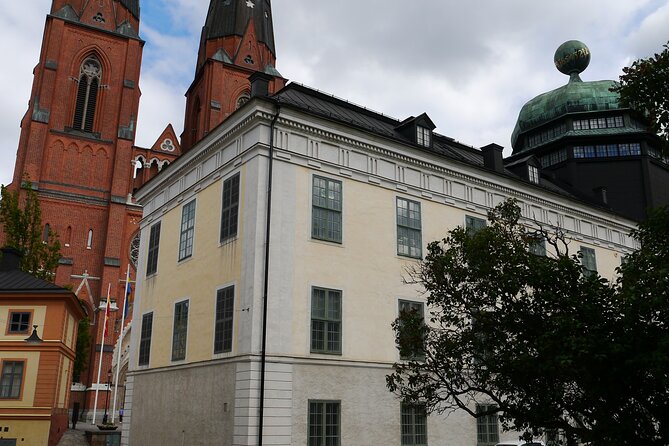
Next you head to Gustavianum, the university museum. This is where the tour’s personality comes through most. The narration turns theatrical in a good way, focused on early university life and scientific ambition.
The big draw is the anatomical theater and the story behind Olof Rudbeck. You’ll hear why it was considered brilliant, and you also get an important correction: the popular idea about ventilation is not supported by how it actually worked.
That myth-busting is more useful than it sounds. It teaches you to look at historical explanations with a little caution, and it gives the museum experience a layer beyond dates and labels.
You also hear about an early academic setup called Academia Carolina, plus how the party hall and collections had to move through additional houses before ending up where they belonged. That might sound like logistics, but it actually shows how an institution grows. Stuff gets displaced. Plans change. And the university keeps going anyway.
One practical note: museum admission is not included here. The tour covers the guided visit, but you may need to pay separately if you want full entry.
More Swedish streets covered on foot
Stop 3: Uppsala Domkyrka, built 1270s to 1430s, and why the gossip matters
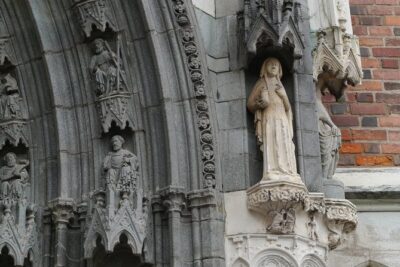
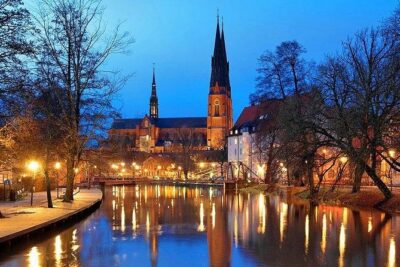
Then you move to Uppsala Domkyrka. This is one of those cathedral stops where the scale hits you fast, because it is described as the largest church in the Nordic countries. Construction ran from the 1270s to the 1430s, which already tells you you are looking at centuries of decisions, labor, and compromise.
The guide also points out medieval details around the cathedral grounds, including kanikhus buildings. These aren’t just decorative. They help you understand how the cathedral functioned as a community center, not only a worship site.
What really makes this stop stick is the storytelling angle on the construction itself. You hear about scandals where limestone pipes were paid more than the soldiers, which led to strikes. That is not trivia, it is the human side of building something huge: pay disputes, work stoppages, and rumor chains are part of how monuments actually get made.
Even if you’ve seen other Nordic cathedrals, this one feels distinctive because of the specific way the guide connects construction choices to the bigger university story. The cathedral is not isolated history here. It is part of Uppsala’s structure of power, learning, and daily life.
The cathedral admission is listed as free for this stop, so you can spend your money on other parts of your day without extra surprises.
Stop 4: St. Erik’s Square and the city inside a city, including 1709 to 1711
Next is Uppsala County, focused around St. Erik’s Square and the Consistory House. This is a welcome change of pace, because you shift from cathedral scale to city administration and social reality.
Here you hear about the plague’s entry into Uppsala, with the key years 1709 to 1711. That kind of timeline helps. It stops you from thinking of the plague as one vague event and makes it feel like a local chapter in Uppsala’s history.
You also hear about Oxblodstorget and meat sales. Small market stories like this add texture. They remind you that while universities and cathedrals symbolize big ideas, people still needed food, trade, and rules.
The guide also covers the cathedral’s defensive setup, including sheds in the wall that surrounded it, plus the Consistory House, which served functions like a prison, police, and student administration during the 1750s.
That idea of a city inside the city is a smart theme for this stop. Uppsala wasn’t just buildings. It was systems, boundaries, enforcement, and community life, tightly managed in ways you might not guess from the look of the streets.
This stop is listed with free admission as well, so it is another reason the tour is good value for an hour.
Stop 5: Uppsala Castle courtyard, a murder story, and Botanical Garden views
Finally, you reach Uppsala Castle (Uppsala Slott). If your brain likes history, this is the moment it perks up. The guide shares a story about a murder at Uppsala Castle, then you pause in the courtyard and look outward.
The viewpoint is set up for one purpose: the Botanical Garden, described as one of the oldest botanical gardens in Europe. Standing there with the context is a better experience than just walking past the garden on your own. You start to see the castle and garden as part of the same older Uppsala pattern: power, learning, and cultivation.
One practical point: Uppsala Castle admission is not included for this stop. The courtyard and viewpoint are part of the tour experience, but if you want to go inside deeper, you should be ready for separate entry.
This stop runs longer than some of the others, so it’s also a good place to slow down, check your photos, and listen carefully. The best parts here are the story and the sightline, not a museum sprint.
Price and value: what $91.75 buys you, and what may cost extra
The price is listed at $91.75 per person for about an hour, with a mobile ticket and all fees and taxes included.
So is it good value? For me, it comes down to how much you like guided interpretation. You are covering five major areas and getting connections across centuries. The big strength is coherence: the guide links the university, the cathedral, and the city systems so you don’t leave with a stack of disconnected facts.
However, two stops have admission not included: Gustavianum and Uppsala Castle. You are not paying for those entries inside the ticket price, so your total day cost may rise if you want to go deeper once the tour ends.
On the other hand, Uppsala Domkyrka and the city-center consistory area are listed as free for the tour stops, which helps keep the experience accessible if you are trying to budget.
Also, tipping is listed as not included as a separate line item, so you can decide what feels fair after the guide’s work.
Pacing, group size, and which kind of traveler will love it
This tour is built for short-attention spans with historical curiosity. It is small enough for real interaction, with a maximum of 20 travelers, and it works well if you want questions answered while you are still standing at the right building.
It’s also a good option for people who want Uppsala without doing a “choose-your-own-adventure” plan. The guide handles the timing and the transitions between sites, so you can focus on learning and walking between clustered locations.
The one drawback to keep in mind is movement. The experience is essentially multiple short stops with lots of standing and pointing. If you love to roam and you hate stationary tours, you might find the pace a little too still.
If you are the opposite, like most history-minded travelers, this format is great. You get the cathedral story while you are looking at the cathedral. You get the anatomical theater correction while you are in front of the museum context. You get the botanical garden perspective while you are in the castle courtyard. That timing makes the information stick.
Small details that can make the tour feel better
Here are a few practical tips based on how the tour is structured:
- Wear comfortable shoes. Even if it is not a long hike, you’ll still be outside through multiple stops.
- Bring a phone or camera with battery. You will want photos at the university and cathedral areas, plus a viewpoint at the castle courtyard.
- If you plan to visit Gustavianum or go inside Uppsala Castle, check ahead so you know what might be extra for you, since those admissions are listed as not included.
- Keep an open mind for corrections. The anatomical theater ventilation topic is the kind of detail you’ll remember later when you hear the same idea from other sources.
Should you book this Uppsala city walk?
I’d book it if you want a high-impact introduction to Uppsala in about an hour, especially if your interests include the university tradition, cathedral building stories, and the way city life evolved around these institutions. It is also a solid pick if you want a guide who can answer questions and add color, including the more dramatic anecdotes like the castle murder and construction disputes.
I’d think twice if you want a tour that feels like a long walk with lots of moving. This is more stop-and-story than sightseeing sprint. Also, factor in that Gustavianum and Uppsala Castle are not included admissions, so your total cost may be higher if you want full museum and interior time.
If you match those preferences, this is a good way to get your bearings fast, then enjoy the rest of Uppsala with a clearer sense of what you are actually looking at.
FAQ
FAQ
Where does the tour start?
It starts at Riddartorget, Uppsala, Sweden.
Where does the tour end?
The activity ends back at the meeting point, at Riddartorget.
How long is the Uppsala city walk?
It lasts about 1 hour.
What is the tour ticket format?
You receive a mobile ticket.
Is the guide authorized?
Yes, the tour is guided by an authorized Uppsala guide.
What is the maximum group size?
The tour has a maximum of 20 travelers.
Are admissions included for Gustavianum and Uppsala Castle?
No. Gustavianum (Uppsala University Museum) and Uppsala Castle have admissions listed as not included.
Is admission free for Uppsala Domkyrka?
Yes. Uppsala Domkyrka is listed with free admission for the stop.
What kind of fitness level do I need?
You need a moderate physical fitness level.
Can I cancel for a full refund?
Yes. Free cancellation is available if you cancel up to 24 hours in advance for a full refund.
Keep Walking: Other Routes We Took



Reviewed Across Sweden


More Of Uppsala
Other Swedish trips from the review pile
- Uppsala’s biggest attractions – 1h city walk in Uppsala city.
★ 4.5 · 3 reviews - Adventure parc
★ 4.5 · 3 reviews - Uppsala Must See 2h city walk – 2h tour of all big attractions!
★ 5.0 · 4 reviews - Uppsala bloody history 1h- racial biology, 18th century plague, 19th century prostitution etc.
★ 5.0 · 4 reviews - Guided tour 90min at Old Uppsala mounds and old Uppsala church
★ 4.5 · 5 reviews - Uppsala: City Highlights and Hidden Gems Walking Tour
★ 4.7 · 12 reviews
Uppsala City & Cathedral Tours, compared.
 ★ 4.5Viking History, Runes & Countryside 9h Tour to Sigtuna & UppsalaFrom $298283 reviews
 ★ 4.6Stockholm Viking History Full Day Tour to Sigtuna + UppsalaFrom $266218 reviews
 ★ 4.5Viking History and Swedish Countryside Tour to Sigtuna & UppsalaFrom $274162 reviews
 ★ 4.7From Stockholm: Uppsala and Sigtuna Viking Sites TourFrom $235157 reviews
 ★ 4.5Cube of Art Uppsala Museum of Interactive ArtFrom $2169 reviews
 ★ 5.0Private Full Day Viking History Tour from Stockholm Including Sigtuna and UppsalaFrom $67251 reviews
 ★ 4.7Sigtuna and Uppsala Viking History Day TourFrom $25541 reviews
 ★ 3.5Day-Trip- to-UppsalaFrom $24919 reviews
Browse the lists this tour appears in